

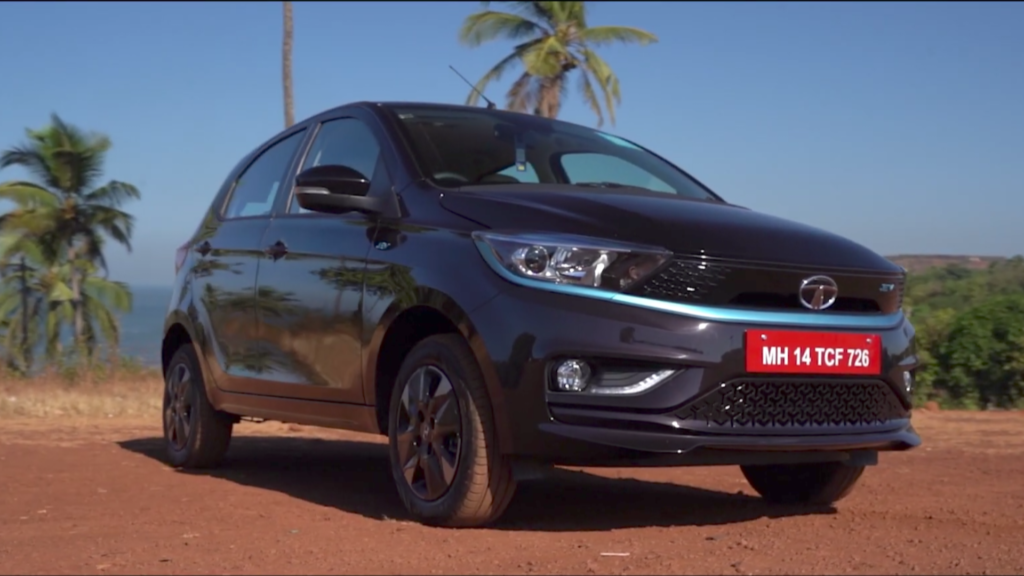
Featured image credit: Image: DriveSpark via Wikimedia Commons (CC BY 3.0). Source
By Piyush P. Yadav
Every EV Auto India price and spec page tells you what a car claims on paper. This one asks a different question: once Indian buyers actually own these cars, what do they say? We went through the long-running, independently moderated owner threads on Team-BHP — India’s most established car-enthusiast forum, where staff reviewers compile pros and cons directly from real owners’ reported experience — for the models on our own price list: the Tata Tiago EV, the Hyundai Creta Electric and the Mahindra XEV 9S. We also looked at MG’s own “EV Sahi Hai” video campaign, which we’re flagging clearly as a brand-run testimonial series rather than an independent source.
Tata Tiago EV: cheap to run, strictly a city car
Team-BHP’s review, compiled by its editorial team from owner and test feedback, is blunt about what the Tiago EV is and isn’t. On running cost, the verdict is a “stupendously cheap fuel cost of 1 rupee / km” when charged at home — the number that keeps coming up whenever Tiago EV owners talk about why they bought it. But the same review is equally direct about the car’s limits: a “~200 km range means this is strictly a city car,” with “no long highway runs.” That combination — genuinely cheap around town, genuinely limited beyond it — is the recurring theme in the thread’s 1,000-plus replies, not just the initial review.
Hyundai Creta Electric: a “superbly engineered all-rounder” with a range trade-off
The Creta Electric review opens by calling it a “superbly engineered all-rounder that delivers a satisfying experience,” and owners in the thread echo that on drivability and cabin quality. The honest counterweight, flagged in the same review, is that it has “smaller battery packs and shorter range compared to rivals such as the Tata Curvv & Mahindra BE 6” — exactly the kind of trade-off that doesn’t show up on a spec sheet until someone has actually lived with the car. We’ve separately worked out what the Creta Electric actually costs on-road city by city, which is worth reading alongside this range trade-off.
Mahindra XEV 9S: a 7-seater “focused on comfort and practicality”
Mahindra’s newest INGLO-platform SUV gets a similarly balanced verdict: “a well-priced 7-seater Electric SUV that focuses on comfort and practicality,” with reviewers noting the “79 kWh battery pack should deliver 450–500 km real-world range,” enough for road-tripping with a family rather than just city commuting. That real-world range figure is notably more conservative than the claimed MIDC number — a gap worth keeping in mind, and one we’ve written about separately when comparing the XEV 9S six-seater’s captain-seat pricing against its rivals.
A brand’s own campaign isn’t the same as an independent review
MG’s “EV Sahi Hai” campaign features named owners — a doctor, a pilot, a tech entrepreneur — describing why they’re glad they switched, with recurring themes of low running cost and more charging availability than expected. These are worth knowing about because they reflect real, common first-year EV owner experiences we hear about elsewhere too. But it’s a campaign MG commissions and publishes itself, not an independent testimonial platform, and we’re citing it as exactly that: a brand’s chosen stories, not a random sample.
What this means if you’re deciding between models
Read across all three Team-BHP threads and a pattern holds: nobody disputes that home charging makes running costs dramatically lower than petrol — that claim survives contact with real ownership everywhere we looked. What varies by model is exactly where the range and practicality trade-offs land, and those are specific enough (a 200 km city-only Tiago EV versus a 450–500 km family-trip-capable XEV 9S) that they matter more than any single headline “range” number when you’re actually choosing. If you’re weighing the cost side of that decision, our breakdown of what a bigger battery pack actually costs per kilometre is a useful next read, and if you’re wondering about the elephant in the room for any EV purchase, we’ve separately verified what battery replacement actually costs versus what’s just estimated.
How we researched this
Every quoted line above comes from a specific, linked, publicly accessible source — Team-BHP’s editorial vehicle reviews (compiled by staff reviewers from owner feedback and long-term ownership threads) for the Tiago EV, Creta Electric and XEV 9S, and MG’s own EV Sahi Hai campaign page. We’ve kept quotes short and attributed rather than reproducing full reviews, and we’re not treating a car company’s own campaign the same way we treat an independently moderated forum. Nothing here is a substitute for a test drive — owner sentiment tells you what to ask about, not what you personally will experience.
Sources & Further Reading
- Tata Tiago Electric Review — Team-BHP
- 2025 Hyundai Creta Electric Review — Team-BHP
- Mahindra XEV 9S Review — Team-BHP
- EV Sahi Hai — Real Stories of EV Owners (MG campaign)
Frequently asked questions
Are EV owners in India actually happy with their cars?
On running cost, yes almost universally — every source we reviewed, independent and brand-run alike, agrees home-charged EVs cost roughly ₹1/km to run versus much higher petrol costs. Satisfaction with range and practicality varies more by model and how the car is actually used.
What’s the most common complaint from real EV owners?
Range anxiety and charging-point access at home come up most, followed by concerns specific to each model — for example, the Tiago EV’s ~200 km real-world range limiting it to city use, or firmer suspension trade-offs on the Creta Electric.
Should I trust a manufacturer’s own owner-testimonial campaign?
Treat it as one useful data point, not an independent review. A brand picks which stories to publish, so campaigns like MG’s EV Sahi Hai will skew positive by design — cross-check against independently moderated forums like Team-BHP for the fuller picture, including the cons.
Where can I read full, unedited owner reviews myself?
Team-BHP’s electric-cars sub-forum has dedicated, long-running review threads for most models sold in India, often running to hundreds or thousands of replies from owners over years of real-world use — see the Sources section above for the three threads we drew from.