

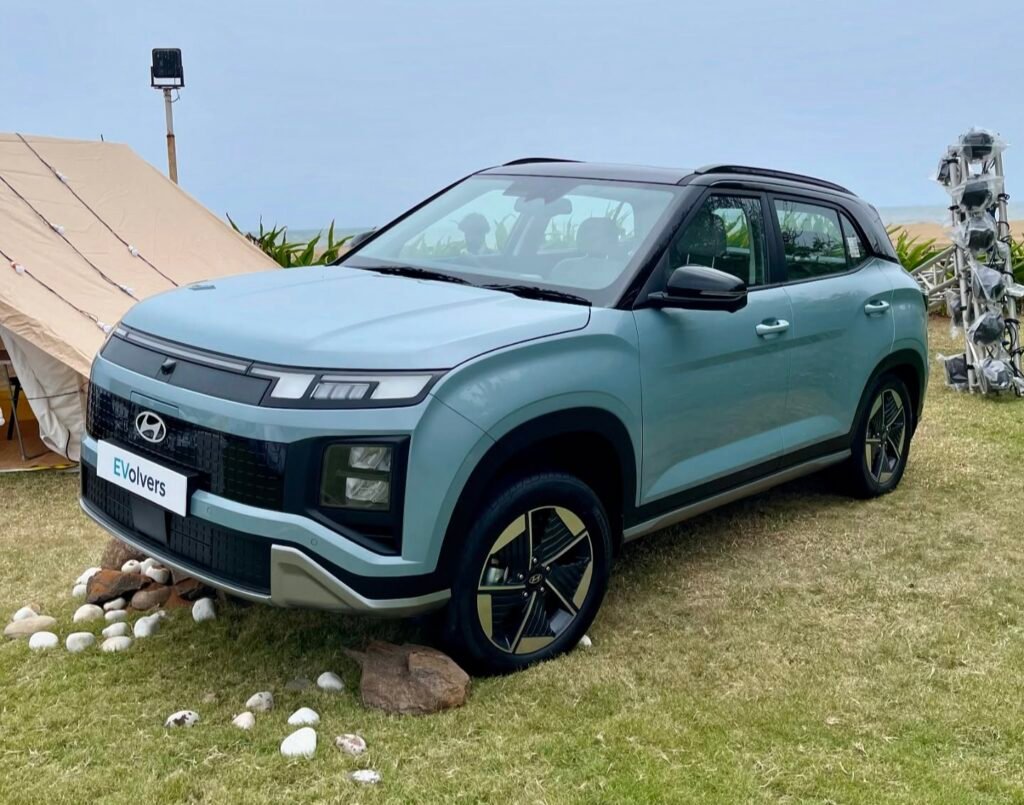
Featured image credit: Image: Avante2025 via Wikimedia Commons (CC BY 4.0). Source
By Piyush P. Yadav | 11 September 2026
Almost every electric car sold in India under Rs 30 lakh now comes with a choice of two battery packs, and the bigger one costs between Rs 1.5 lakh and Rs 4.6 lakh more depending on the model. Dealers tend to push the long-range version because the margin is better and because “more range” is an easy sell. But the right answer depends on how far you drive, whether you can charge at home, and how often you leave the city. This guide works through the six mass-market EVs that offer two packs, puts a rupee figure on each extra kilometre of range, and gives a simple rule for deciding. Prices are ex-showroom Delhi as listed on CarDekho and manufacturer sites in September 2026; check your city, because Hyundai and Tata both revised prices in June and September.
The six cars and what the bigger pack costs
The fairest way to compare is at the lowest trim that offers each pack, because that isolates the battery premium from the equipment premium. Where the bigger pack is only sold with a higher trim, that is noted, because in those cases you are paying for both.
| Model | Small pack (cheapest variant) | Big pack (cheapest variant) | Premium for big pack | Extra claimed range | Cost per extra km |
|---|---|---|---|---|---|
| Tata Punch EV | 30 kWh, Smart Plus 30, Rs 10.39 lakh, 365 to 375 km ARAI | 40 kWh, Smart Plus 40, Rs 11.19 lakh, 468 km ARAI | Rs 0.80 lakh (same trim) | About 98 km | Rs 816 |
| Tata Nexon EV | 30 kWh, Creative Plus MR, Rs 12.49 lakh, 275 km | 45 kWh, Creative 45, Rs 14.34 lakh, 489 km | Rs 1.85 lakh | 214 km | Rs 865 |
| MG Windsor EV | 38 kWh, Excite, Rs 14.70 lakh, 332 km | 52.9 kWh, Exclusive Pro, Rs 17.90 lakh, 449 km | Rs 3.20 lakh (includes Excite to Exclusive Pro trim step) | 117 km | Rs 2,735 (trim included) |
| Tata Curvv EV | 45 kWh, Rs 17.49 lakh, 502 km MIDC | 55 kWh, Rs 19.25 lakh, 585 km MIDC | Rs 1.76 lakh | 83 km | Rs 2,120 |
| Hyundai Creta Electric | 42 kWh, Executive, Rs 18.03 lakh, 420 km | 51.4 kWh, Executive (O), Rs 19.99 lakh, 510 km | Rs 1.96 lakh | 90 km | Rs 2,178 |
| Mahindra BE 6 | 59 kWh, Pack One, Rs 18.90 lakh, about 535 km | 79 kWh, Pack Two, Rs 23.50 lakh, about 682 km | Rs 4.60 lakh (includes Pack One to Pack Two trim step) | About 147 km | Rs 3,129 (trim included) |
The Punch EV and Nexon EV are the standouts. On the Punch EV the 40 kWh pack costs just Rs 80,000 more than the 30 kWh at the same Smart Plus trim, about Rs 816 per extra kilometre. On the Nexon EV, Rs 1.85 lakh buys 15 kWh more battery and 214 km more claimed range, Rs 865 per extra kilometre, and the long-range car also gets the more powerful 142 bhp motor and faster DC charging. The Creta Electric and Curvv EV charge more than twice as much per extra kilometre, because Hyundai’s 51.4 kWh pack adds only 9.4 kWh and Tata’s 55 kWh Curvv pack adds just 10 kWh. Note that Tata has streamlined the Curvv EV line-up in 2026 and some dealers now list only 55 kWh variants; the 45 kWh figures here are the last published list prices. The Windsor and BE 6 look expensive because MG and Mahindra bundle the big pack with a higher trim; if you were going to buy that trim anyway the battery premium is smaller than the table suggests.
Step one: work out your real daily need
Claimed ranges are MIDC or ARAI test figures, and every car on this list delivers 20 to 40 per cent less in Indian traffic with the air-conditioning on. We measured this across 15 cars in our guide to claimed versus real-world EV range. A safe rule for planning is to take 70 per cent of the claimed figure, and then use only the middle 60 per cent of the battery day to day, because you will rarely charge to 100 per cent and never want to arrive below 10 per cent.
| Pack | Claimed range | Realistic range (70 per cent) | Comfortable daily use (10 to 80 per cent charge) |
|---|---|---|---|
| Nexon EV 30 kWh | 275 km | About 190 km | About 135 km |
| Nexon EV 45 kWh | 489 km | About 340 km | About 240 km |
| Creta Electric 42 kWh | 420 km | About 295 km | About 205 km |
| Creta Electric 51.4 kWh | 510 km | About 355 km | About 250 km |
| Windsor 38 kWh | 332 km | About 230 km | About 165 km |
| Windsor 52.9 kWh | 449 km | About 315 km | About 220 km |
The point of the last column is that even the smallest pack here, the Nexon EV’s 30 kWh, comfortably covers 135 km a day between a 10 and 80 per cent charge. The average Indian urban car covers 30 to 50 km a day. If you charge at home every night, a standard-range pack will never be a constraint inside the city, and the extra money buys you nothing on a weekday.
Step two: how often do you leave the city?
The long-range pack earns its price on the highway, and specifically on the trip that is just beyond the small pack’s reach. Delhi to Jaipur is 280 km; Mumbai to Pune is 150 km; Bengaluru to Mysuru is 145 km; Chennai to Pondicherry is 160 km; Hyderabad to Vijayawada is 275 km. A 30 kWh Nexon EV does Mumbai-Pune or Bengaluru-Mysuru with margin but needs a charging stop on Delhi-Jaipur or Hyderabad-Vijayawada; the 45 kWh car does all of them without stopping. If you make a 250 km-plus trip more than once a month, the long-range car saves you a 40-minute fast-charge stop each way, and that is worth Rs 1.85 lakh to most people. If you make that trip twice a year, it is not; you will spend Rs 1.85 lakh to avoid four charging stops.
Highway charging also costs more than home charging. At the Rs 18 to 24 per kWh public DC tariffs we documented in our comparison of India’s charging networks, a 30 kWh top-up on the road costs about Rs 600, against roughly Rs 200 at home. A bigger pack lets you do more of your charging at the cheap rate, which is a small but real running-cost advantage for frequent travellers.
Step three: the hidden reasons the bigger pack can be worth it
Range is the obvious reason, but three others matter and are rarely mentioned at the dealership.
- Degradation headroom. Every lithium-ion pack loses capacity over time, typically 8 to 15 per cent over eight years. A 45 kWh pack at 85 per cent still has more usable energy than a new 30 kWh pack. If you plan to keep the car ten years, the big pack ages more gracefully, which we explained in our guide to battery degradation and state of health.
- Charging speed. DC fast chargers deliver power in proportion to pack size at the same C-rate, so a bigger pack usually accepts more kilowatts and adds more kilometres per minute at a highway charger. The Nexon EV 45 also gets a higher-rated onboard charger than the 30.
- Resale. Used-EV buyers pay a premium for the long-range variant because range anxiety is their biggest worry. Our analysis of used electric car resale values found long-range variants consistently hold a larger share of their original price than standard-range ones of the same age.
- Power. In the Nexon EV and BE 6, the bigger pack comes with a more powerful motor. In the Creta Electric and Windsor it does not.
Step four: the reasons to save the money
- Weight. A 45 kWh pack weighs roughly 100 kg more than a 30 kWh one. In the city that costs efficiency, so the bigger car uses slightly more energy per kilometre.
- Home charging time. On a 3.3 kW wall box, a 30 kWh pack refills from 20 per cent in about seven hours; a 45 kWh pack takes about eleven. On a 7.2 kW box both are done overnight, so this only matters if you cannot install the faster charger.
- Insurance and road tax. Both scale with ex-showroom price, so the Rs 1.85 lakh premium becomes roughly Rs 2 lakh on-road in states that tax EVs and adds a few thousand rupees a year to the premium.
- Opportunity cost. Rs 1.85 lakh is a 7.2 kW home charger installed, five years of insurance, or the difference between a base and a fully loaded trim. A Nexon EV Fearless MR at Rs 13.29 lakh is better equipped than a Creative 45 at Rs 14.34 lakh.
The decision rule
Pick the standard-range pack if all three of these are true: you can charge at home, your daily driving is under 100 km, and you make a trip over 250 km fewer than six times a year. Pick the long-range pack if any one of these is true: you cannot charge at home and rely on public chargers, you regularly drive 250 km-plus in a day, or you plan to keep the car beyond eight years. If you are on the fence, the Punch EV’s Rs 816 and the Nexon EV’s Rs 865 per kilometre make the long-range car the easy call on those two; on the Creta Electric at Rs 2,178 per kilometre, the standard pack is the better value unless you are a genuine highway driver.
Whichever pack you choose, the on-road price will differ by state, and the gap between the two packs widens in states that charge road tax on EVs. Our worked examples of on-road EV prices in Delhi, Mumbai, Hyderabad and Bengaluru show how much that adds.
Sources & Further Reading
- CarDekho: Tata Nexon EV variants and prices
- CarDekho: Hyundai Creta Electric variants and prices
- CarDekho: MG Windsor EV variants and prices
- Tata.ev: Punch EV price list
Frequently Asked Questions
How much more does the long-range battery cost on the Tata Nexon EV?
Rs 1.85 lakh ex-showroom at the cheapest trim, comparing the Creative Plus MR at Rs 12.49 lakh with the Creative 45 at Rs 14.34 lakh. That buys 15 kWh more battery, 214 km more claimed range and a more powerful motor, about Rs 865 per extra kilometre.
Is the bigger battery worth it if I only drive in the city?
Usually not. Even a 30 kWh pack covers about 135 km a day between a 10 and 80 per cent charge, three times the average urban commute. If you charge at home and rarely leave the city, the standard pack is the better value.
Does a bigger battery last longer?
The cells age at the same rate, but a bigger pack has more headroom. After 10 to 15 per cent degradation, a 45 kWh pack still holds more energy than a new 30 kWh one, which is why long-range variants also resell for a larger share of their price.
Which EV has the best value long-range upgrade?
The Tata Punch EV at about Rs 816 and the Nexon EV at about Rs 865 per extra claimed kilometre. The Hyundai Creta Electric’s 51.4 kWh upgrade costs about Rs 2,178 per kilometre because it adds only 9.4 kWh, and the MG Windsor and Mahindra BE 6 bundle their bigger packs with higher trims.
Can I upgrade my EV to a bigger battery later?
No, not on any mass-market electric car sold in India. The pack is a structural member bolted into the floor and is matched to the car’s battery management system, wiring, cooling circuit and often the motor itself: the 45 kWh Nexon EV runs a more powerful 142 bhp motor and a higher-rated onboard charger than the 30 kWh. Service networks replace a pack with the same specification under warranty; they do not sell capacity upgrades. This is a decision you make once, at purchase, which is why it is worth doing the rupees-per-kilometre maths before you sign.
Does the long-range battery take longer to charge at home?
Yes, roughly in proportion, and it matters only if your home charger is slow. On a 3.3 kW socket a 30 kWh pack refills from 20 per cent in about seven hours while a 45 kWh pack takes about eleven, which is the difference between a finished overnight charge and one that is not done by morning. On a 7.2 kW wall box both complete overnight comfortably, so if you are buying the bigger pack, budget for the faster charger as part of the decision. At a DC fast charger the bigger pack is usually quicker in kilometres added per minute, because it accepts more power at the same C-rate.
Is the long-range battery worth it if I cannot charge at home?
This is the strongest single case for the bigger pack, stronger than occasional highway use. Without home charging every kilowatt-hour comes at public tariffs of Rs 12 to Rs 26 per kWh instead of Rs 6 to Rs 10, and a larger pack stretches the interval between paid sessions so you are not hunting for a free gun twice a week. It also buys schedule flexibility, which is the real constraint when you depend on chargers you do not control. On that basis the Punch EV at about Rs 816 and the Nexon EV at about Rs 865 per extra claimed kilometre are straightforward buys; the Creta Electric at about Rs 2,178 is a harder case even here.