

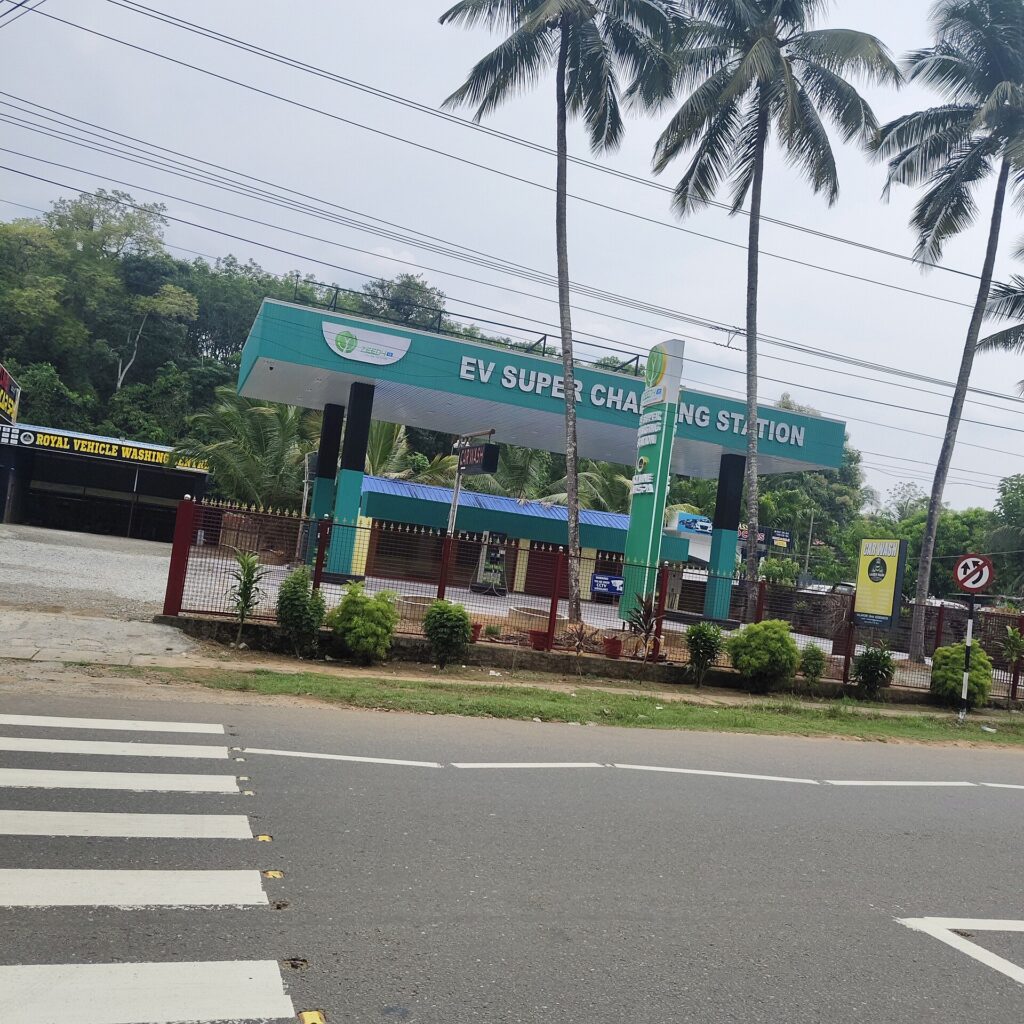
Featured image credit: Image: Sujithshivam511 via Wikimedia Commons (CC BY-SA 4.0). Source
By Piyush P. Yadav
India’s electric vehicle incentive map just got a lot messier. On 1 August 2026, the central government’s PM E-DRIVE purchase subsidy for electric two-wheelers lapsed after one final extension, meaning every new e-scooter and e-bike bought since then has gone without the Rs 5,000 cash-back that buyers had grown used to. In the same window, Karnataka — one of the states that offered a blanket road tax waiver on EVs — moved to roll that exemption back and replace it with a slab-based tax. Meanwhile Delhi, Maharashtra, Tamil Nadu and Gujarat are still running full incentive programmes, and the Ministry of Heavy Industries has separately cut import duty on premium electric cars to attract global automakers. The result is that “what does the government give me for buying an EV” no longer has one national answer — it depends heavily on which state you register in and which vehicle category you buy. This guide lays out exactly where things stand today, state by state, so buyers and dealers are not caught out by outdated numbers.
What Changed at the Centre: PM E-DRIVE’s Two-Wheeler Subsidy Has Ended
PM E-DRIVE (PM Electric Drive Revolution in Innovative Vehicle Enhancement) replaced FAME-II in October 2024 with a Rs 10,900-crore outlay. Its demand incentive for electric two-wheelers had already been reduced over successive phases before settling at Rs 2,500 per kWh, capped at Rs 5,000 per vehicle. That component was extended once past its original 31 March 2026 deadline, but the extension itself expired on 31 July 2026, and no further extension has followed. From 1 August 2026, a new electric scooter or motorcycle registered in India does not qualify for any central purchase subsidy, which can push effective on-road prices up by roughly Rs 5,000–10,000 depending on the model and battery size.
It is worth being precise about what has and hasn’t ended, since the scheme has several moving parts — a point covered in more depth in our explainer on PM E-DRIVE’s remaining components and how to claim the e-voucher. The demand incentive for registered e-rickshaws, e-carts and other electric three-wheelers is unaffected and continues until 31 March 2028. Support for electric buses, trucks and ambulances, along with public charging infrastructure grants, also remains live. So the change specifically hits personal two-wheeler buyers — by far the largest EV segment by volume in India — while commercial and public-transport electrification keeps its central funding.
Why the Two-Wheeler Subsidy Was Allowed to Lapse
The scheme was always designed to taper as the electric two-wheeler market matured, and industry penetration in that segment has climbed well past the low single digits it was at when FAME-II began. Government officials and industry analysts have framed the wind-down as a sign that e-scooters no longer need demand-side cash support to compete with petrol two-wheelers on running cost, even if upfront price parity has not fully arrived. Buyers should also note that the 5% GST rate on EVs — versus 18% or up to 40% on comparable petrol and diesel vehicles under the GST 2.0 structure in force since 22 September 2025 — remains untouched and continues to be the single biggest built-in price advantage EVs retain nationally, subsidy or no subsidy.
The State Picture Is Now Genuinely Divergent
With the central two-wheeler subsidy gone, the state you live in matters more than it has in years. Some states are holding firm on generous exemptions; at least one large state is actively rolling its exemption back. Below is where the major EV markets stand as of September 2026.
Delhi
Delhi continues to offer a 100% waiver on road tax and registration fees for all electric vehicles priced up to Rs 30 lakh, a benefit that runs until 31 March 2030 under its EV Policy. On top of the tax waiver, Delhi’s purchase incentive structure offers up to Rs 30,000 for two-wheelers and up to Rs 1.5 lakh for four-wheelers, plus a Rs 6,000 subsidy toward home charger installation. Delhi has also gone further than most states on the demand side of adoption by mandating that ride-hailing and delivery aggregators — Ola, Uber, Rapido and Zomato among them — transition their fleets to 100% electric on a fixed timeline, a policy detailed in our coverage of Delhi’s aggregator electrification mandate.
Maharashtra
Maharashtra’s EV policy waives 100% of road tax and registration fees for EVs until March 2030, alongside a purchase incentive of Rs 5,000 per kWh across categories, capped at Rs 1.5 lakh for electric cars and Rs 2.5 lakh for e-buses. The state also throws in a toll waiver on the Mumbai–Pune Expressway and the Samruddhi Mahamarg (Nagpur–Mumbai) for electric vehicles, a perk few other states match.
Gujarat
Gujarat takes a different approach: rather than a full waiver, EVs attract a nominal 1% road tax instead of the standard rate charged on petrol and diesel vehicles. Its purchase incentive is Rs 20,000 for two-wheelers and up to Rs 1.5 lakh for electric cars, and the state additionally offers a 100% exemption on electricity duty for EV charging, which lowers the running cost of home and public charging alike.
Tamil Nadu
Tamil Nadu offers a 100% road tax exemption on electric vehicles, extended through 31 December 2027, along with a registration fee waiver. Unlike Delhi, Maharashtra and Gujarat, Tamil Nadu’s cash incentives are narrower and more targeted, so buyers there are leaning more heavily on the tax exemption than on a large upfront rebate.
Karnataka: The State Actually Rolling Back Incentives
Karnataka is the clearest outlier and the most newsworthy state-level development this quarter. Having previously offered a full road tax exemption on all EVs, the state is moving to a slab-based tax structure: electric vehicles priced up to Rs 10 lakh will be taxed at 5%, those between Rs 10 lakh and Rs 25 lakh at 8%, and vehicles priced above Rs 25 lakh at 10%. Electric two-wheelers are the one category being kept exempt from this new levy. For a state that helped anchor Bengaluru’s early EV adoption with its blanket waiver, this is a meaningful policy reversal, and other states will be watched closely to see whether they follow suit as EV sales volumes grow and the tax-revenue trade-off becomes harder to ignore.
Uttar Pradesh
Uttar Pradesh’s EV road tax waiver, once among the most generous in the country, expired in October 2025 and has not been renewed. Buyers registering new EVs in UP now pay the standard road tax applicable to conventional vehicles, making it one of the first large states to have fully sunset its incentive rather than tapering it.
State EV Incentive Comparison (September 2026)
| State | Road Tax on EVs | Purchase Incentive | Notable Extra |
|---|---|---|---|
| Delhi | 100% waiver (up to Rs 30 lakh EVs), till Mar 2030 | Up to Rs 30,000 (2W); up to Rs 1.5 lakh (4W) | Rs 6,000 home-charger subsidy; aggregator EV mandate |
| Maharashtra | 100% waiver, till Mar 2030 | Rs 5,000/kWh; cap Rs 1.5 lakh (cars), Rs 2.5 lakh (buses) | Toll waiver on Mumbai–Pune Expressway, Samruddhi Mahamarg |
| Gujarat | 1% (nominal, not full waiver) | Rs 20,000 (2W); up to Rs 1.5 lakh (cars) | 100% electricity duty exemption for EV charging |
| Tamil Nadu | 100% waiver till Dec 2027 | Limited/targeted, no large blanket cash rebate | Registration fee waiver |
| Karnataka | Slab-based: 5% (up to Rs 10L), 8% (Rs 10–25L), 10% (above Rs 25L); 2W exempt | Being phased out alongside tax rollback | Two-wheelers still tax-exempt |
| Uttar Pradesh | Standard tax; waiver expired Oct 2025 | None currently active | — |
The pattern is clear: incentives are no longer converging toward a uniform national floor the way they briefly seemed to a couple of years ago. Instead, states with stronger EV manufacturing bases or bigger air-quality mandates (Delhi, Maharashtra) are holding or extending support, while states weighing the revenue cost of blanket exemptions (Karnataka, Uttar Pradesh) are pulling back. Buyers comparing on-road prices across state lines — a growing practice as e-commerce and dealer networks blur state boundaries — need to factor this in explicitly, a dynamic that compounds the underlying price gap our breakdown of why electric cars still cost more than petrol cars lays out at the factory-gate level.
Import Duty: A Separate Track Aimed at Global Automakers
Running parallel to the domestic subsidy story is a distinct policy lever aimed at foreign manufacturers. Under the Scheme to Promote Manufacturing of Electric Passenger Cars in India (SPMEPCI), the Ministry of Heavy Industries cut customs duty on imported electric cars to 15% — down sharply from the standard rates that otherwise apply — for companies willing to commit to local investment. To qualify, an OEM must invest at least Rs 4,150 crore (roughly $500 million) within three years, set up a local production facility by the end of year three, and hit local value-addition targets of 25% by year three and 50% by year five. The concession is capped at 8,000 imported vehicles a year, each priced above $35,000, and runs for five years. This is widely read as the policy opening that paved the way for Tesla’s India entry and is likely to shape which other global brands commit to local manufacturing rather than staying import-only. It has no direct bearing on the mass-market two-wheeler and sub-Rs-15-lakh car segments where the PM E-DRIVE and state incentives discussed above actually move buying decisions, but it matters for where India’s EV supply chain — including the traction motors and localisation rules covered in our recent piece on PM E-DRIVE’s new PMP localisation requirements — ends up being built over the next five years.
What This Means If You’re Buying an EV Now
- Two-wheeler buyers should budget for the full sticker price; the Rs 5,000 central cash-back is gone unless a new scheme is announced, though the 5% GST rate still applies.
- Three-wheeler, e-bus, e-truck and e-ambulance buyers are unaffected — those PM E-DRIVE incentives run through March 2028.
- State exemptions still matter enormously — a buyer in Delhi or Maharashtra registering the same car pays materially less in road tax than a buyer in Karnataka or Uttar Pradesh, so it is worth checking the current state notification before assuming an older, more generous figure still applies.
- Karnataka buyers specifically should confirm the applicable slab for their vehicle’s price band before finalising a purchase, since the new structure is priced in bands rather than a flat rate.
- Premium import buyers should note the SPMEPCI duty cut applies only to qualifying OEMs’ vehicles above $35,000 under an annual quota — it is not a blanket import duty cut.
Sources & Further Reading
- Autocar India — PM E-Drive subsidy extended until July 31 for electric two-wheelers
- IEEFA — PM E-DRIVE amendments: Aligning incentives with a maturing market
- Entrepreneur India — Karnataka Ends EV Tax Break, Vehicles to Get Costlier
- Autocar Professional — Govt approves new EV policy to cut import tax on cars to 15%
Frequently Asked Questions
Is the PM E-DRIVE subsidy for electric scooters completely over?
The purchase demand incentive for electric two-wheelers ended on 31 July 2026 after one extension. Subsidies for electric three-wheelers, buses, trucks and ambulances under the same scheme continue until March 2028, and the 5% GST rate on EVs is unaffected.
Which Indian states still offer a full road tax waiver on EVs?
As of September 2026, Delhi (till March 2030, on EVs up to Rs 30 lakh), Maharashtra (till March 2030) and Tamil Nadu (till December 2027) offer 100% road tax waivers. Gujarat charges a nominal 1% instead of a full waiver.
What is Karnataka’s new EV tax structure?
Karnataka is moving from a blanket EV road tax exemption to a slab system: 5% for EVs priced up to Rs 10 lakh, 8% for Rs 10–25 lakh, and 10% above Rs 25 lakh. Electric two-wheelers remain exempt from the new levy.
Does the reduced 15% import duty apply to all imported EVs?
No. The 15% duty under the SPMEPCI scheme applies only to qualifying manufacturers who commit to at least Rs 4,150 crore of local investment and meet local value-addition milestones, and it is capped at 8,000 vehicles per year priced above $35,000 each.
Do electric cars get any central government purchase subsidy in India?
No. PM E-DRIVE never covered privately bought electric cars — its demand incentives went to two-wheelers (now ended), three-wheelers, buses, trucks and ambulances. The central benefit for an electric car is the tax structure rather than a cheque: 5% GST against 28% plus cess on comparable petrol and diesel cars. Everything else on an e-car comes from the states, which is exactly why the Karnataka and Delhi positions now matter more to your on-road price than anything in Delhi’s central budget.
Can I still claim the Section 80EEB tax deduction on an electric vehicle loan?
Only if your loan was sanctioned by a bank or NBFC between 1 April 2019 and 31 March 2023 — that window has closed and no loan taken since then qualifies. Buyers who got in before the deadline can keep deducting the interest, capped at Rs 1.5 lakh a year, every year until the loan is repaid, but only while filing under the old tax regime. Opt for the new regime in any year and the deduction disappears for that year.
If I move my EV to another state, do I keep the road tax exemption?
No — road tax is a state levy attached to where the vehicle is registered, not a permanent feature of the car. Shift your residence permanently and the vehicle generally has to be re-registered in the new state within 12 months, paying that state’s lifetime tax at its current EV rate; a Maharashtra or Delhi EV re-registered in Karnataka would now meet the new 5%, 8% or 10% slabs. You can apply to the original state for a pro-rata refund of unused lifetime tax, but where the EV was fully exempt there is nothing to refund.