

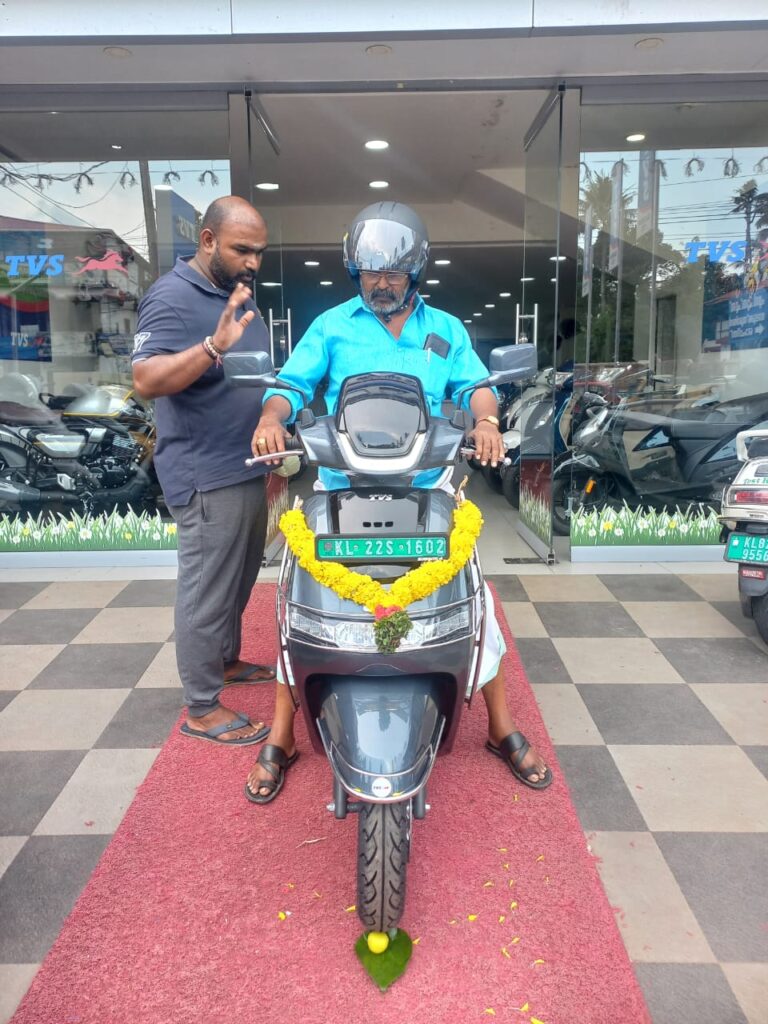
Featured image credit: Image: Maneesh Sreekariyam via Wikimedia Commons (CC BY-SA 4.0). Source
By Piyush P. Yadav
Is the PM E-DRIVE subsidy still available? Yes. The electric two-wheeler incentive that was widely expected to lapse on 31 July 2026 was extended on 11 August 2026 to 31 March 2028, at a reduced rate of Rs 2,500 per kWh capped at Rs 5,000 a scooter, and the scheme’s total outlay was raised to Rs 11,900 crore. The three-wheeler, e-truck, e-ambulance, e-bus and charging components continue on their own terms, with one exception: the L5 electric three-wheeler component closed on 26 December 2025 when its allocation ran out. This guide gives the current status of every component, the exact eligibility rules, the step-by-step claim process at the dealership, how to confirm the subsidy has actually been applied to your invoice, and how to check the scheme’s remaining funds, which is the number that will decide whether it lasts to 2028.
How we worked this out
The scheme parameters are from the Ministry of Heavy Industries’ 11 August 2026 revision as we reported it in our coverage of the PM E-DRIVE extension to March 2028, cross-checked on 10 September 2026 against ClearTax’s scheme guide and the claim process described by TVS Motor for its own dealers. The e-voucher procedure is the one the ministry’s operational guidelines prescribe and that every authorised dealer follows; it has not changed with the extension. Figures for components other than two-wheelers are the allocations announced at notification in September 2024 as revised.
Status of every PM E-DRIVE component, September 2026
| Component | Incentive | Status | Window |
|---|---|---|---|
| Electric two-wheelers (L1, L2) | Rs 2,500 per kWh, capped at Rs 5,000 or 15 per cent of ex-factory price, whichever is lower; ex-factory price ceiling Rs 1.5 lakh | Live; Rs 2,767 crore allocated for up to 45,79,120 vehicles | Vehicles registered 1 April 2025 to 31 March 2028; claims by 31 December 2027 |
| Electric three-wheelers, L5 (autos and cargo) | Rs 25,000 per vehicle (year one), Rs 12,500 (year two) | Closed 26 December 2025, allocation exhausted | Closed |
| E-rickshaws and e-carts (L3) | Reduced second-year rate; see our e-rickshaw guide | Live, fund-limited | To 31 March 2028 |
| Electric trucks (N2, N3) | Rs 2.7 lakh to Rs 9.6 lakh per truck by weight class; requires a scrappage certificate for an old diesel truck | Live | To 31 March 2028 |
| Electric ambulances | Rs 500 crore allocation; per-vehicle norms notified separately | Live | To 31 March 2028 |
| Electric buses | Rs 4,391 crore for 14,028 buses for state transport undertakings via CESL; capped at 20 per cent of the CESL-discovered price | Live; tenders under way | To 31 March 2028 |
| Public charging | Rs 2,000 crore for chargers on highways and in cities | Live | To 31 March 2028 |
| Total outlay | Rs 11,900 crore (raised from Rs 10,900 crore) | Scheme ends 31 March 2028 |
Electric cars are not in the scheme at all. There has been no central purchase incentive for private electric cars since FAME II ended; car buyers get the 5 per cent GST rate, which we explained in our guide to GST on electric vehicles, and whatever their state offers, which we track in our state EV subsidy deadlines tracker.
What the two-wheeler subsidy is worth on real scooters
Because the cap is Rs 5,000 and the rate is Rs 2,500 per kWh, any scooter with a battery of 2 kWh or more receives the same Rs 5,000. The ex-factory ceiling of Rs 1.5 lakh excludes the top of the market, and ex-factory is lower than ex-showroom, so a scooter listed at Rs 1.55 lakh may still qualify; the dealer’s system will say.
| Scooter | Battery | Calculated (Rs 2,500 per kWh) | Paid (after cap) |
|---|---|---|---|
| TVS iQube 2.2 kWh | 2.2 kWh | Rs 5,500 | Rs 5,000 |
| Bajaj Chetak 2501 | 2.5 kWh | Rs 6,250 | Rs 5,000 |
| Ather Konarc | 2.1 kWh | Rs 5,250 | Rs 5,000 |
| Vida VX2 Go 2.2 kWh | 2.2 kWh | Rs 5,500 | Rs 5,000 |
| Ola S1 X 2 kWh | 2.0 kWh | Rs 5,000 | Rs 5,000 |
| Honda QC1 | 1.5 kWh | Rs 3,750 | Rs 3,750 |
| Ather 450X (ex-showroom about Rs 1.51 lakh) | 3.7 kWh | Rs 9,250 | Rs 5,000 only if ex-factory price is under Rs 1.5 lakh; otherwise nil |
The subsidy is small enough that it no longer decides which scooter to buy; our list of the best electric scooters under Rs 1 lakh is priced net of it. What it does decide is whether the paperwork is done properly, because a claim rejected for a bad Aadhaar match is Rs 5,000 the dealer will not refund.
Eligibility rules that actually trip people up
- One vehicle per Aadhaar. The incentive is available once per person across the life of the scheme. A second scooter in the same name gets nothing, and the portal will reject the voucher.
- Individuals only for two-wheelers. Company or fleet registrations are not eligible for the L1/L2 incentive; fleets are served by the three-wheeler and truck components.
- The model must be on the approved list. Manufacturers register each model with the ministry after certifying localisation and battery safety under AIS-156. A scooter not on the list, however cheap, gets no subsidy; the dealer can show you the model’s approval on the portal.
- Ex-factory, not ex-showroom. The Rs 1.5 lakh ceiling is on the price the factory invoices the dealer, before dealer margin. It is a few thousand rupees below the ex-showroom figure on the website.
- Registration date decides the window. A scooter invoiced in March 2028 but registered in April 2028 falls outside the scheme.
How to claim: the Aadhaar e-voucher, step by step
There is no application you file yourself. The subsidy is applied at the dealership, on the invoice, through an Aadhaar-linked electronic voucher. The sequence is fixed by the ministry’s guidelines.
- Confirm eligibility at the dealer. Ask the dealer to check the model and variant on the PM E-DRIVE portal and to confirm your Aadhaar has not been used for a previous claim. Do this before paying the booking amount.
- Dealer generates the e-voucher. At the point of sale, when the vehicle’s registration with the RTO is initiated, the dealer creates an e-voucher on the portal with a unique identification number tied to the chassis number and your Aadhaar.
- Aadhaar e-KYC by face. The dealer authenticates you through the PM E-DRIVE app using face-based Aadhaar e-KYC. You must be present in person; the app matches your face to the Aadhaar record. This is the step that fails when the Aadhaar photograph is old or the mobile number on Aadhaar is not active.
- You receive and sign the voucher. A download link is sent by SMS to your Aadhaar-registered mobile. Download the voucher, check the vehicle details and amount, sign it and return it to the dealer.
- Dealer countersigns and uploads. The dealer signs the voucher and uploads the completed document to the portal. The claim is now lodged; the manufacturer, not you, is reimbursed by the ministry.
- Subsidy on the invoice. The incentive appears as a deduction on your tax invoice, reducing the price you pay. It is not a refund after the fact and should not be described as one.
What to check before you leave the showroom
- The invoice shows a line for the PM E-DRIVE incentive and the amount matches the table above.
- The e-voucher number on your copy matches the number on the invoice.
- The SMS from the portal came to your number, not the dealer’s.
- No “processing” or “documentation” charge has been added for the subsidy. The dealer is not permitted to charge for it.
How to check the scheme’s status and remaining funds
The public dashboard on the PM E-DRIVE portal, run by the Ministry of Heavy Industries, shows cumulative vehicles supported and incentive disbursed by segment. Two numbers matter for a buyer. The first is the two-wheeler count against the 45,79,120-vehicle allocation: at the market’s current pace of about 1.7 lakh electric two-wheelers a month, of which perhaps three-quarters qualify, the allocation would last roughly three years, which is comfortably past March 2028. The second is the disbursed rupee total against Rs 2,767 crore, which tracks the same thing in money. The L5 three-wheeler component closing in December 2025, fifteen months early, is the precedent: when a component’s money is gone, it closes without notice, and vouchers generated after the closure are void. If the dashboard shows the two-wheeler component above about 85 per cent utilised, buy before it reaches 100.
Who this is for, and the limits
This guide covers the central scheme only. State incentives, such as Delhi’s Rs 30,000 for electric two-wheelers under its 2026 policy, are separate, claimed through state portals and can be stacked with PM E-DRIVE. The per-kWh rate and cap are those in force at publication; the ministry has revised them twice since 2024 and can do so again. If you are buying a scooter priced above Rs 1.5 lakh, or a second electric two-wheeler, assume no subsidy and treat anything you receive as a bonus.
Sources & Further Reading
- DriveSpark: PM E-DRIVE subsidy for electric two-wheelers extended till FY28
- ClearTax: PM E-DRIVE scheme eligibility, how to claim subsidy, benefits
- TVS Motor: PM E-DRIVE subsidy 2026, eligibility and claim process
- BikeDekho: PM E-DRIVE subsidy extended for electric two-wheelers priced up to Rs 1.5 lakh
People also ask
Is the PM E-DRIVE scheme still available?
Yes. On 11 August 2026 the Ministry of Heavy Industries extended it to 31 March 2028 with a Rs 11,900 crore outlay. The electric two-wheeler incentive continues at Rs 2,500 per kWh, capped at Rs 5,000. The L5 three-wheeler component closed on 26 December 2025 when its funds ran out; other components remain open.
How much is the PM E-DRIVE subsidy?
For electric two-wheelers, Rs 2,500 per kWh of battery capped at Rs 5,000 or 15 per cent of ex-factory price, on scooters priced under Rs 1.5 lakh ex-factory. Electric trucks get Rs 2.7 lakh to Rs 9.6 lakh with a scrappage certificate. E-buses receive up to 20 per cent of the CESL price. Electric cars get nothing under the scheme.
How do I claim the PM E-DRIVE subsidy?
At the dealership. The dealer generates an Aadhaar-linked e-voucher on the PM E-DRIVE portal when registering the vehicle, completes face-based Aadhaar e-KYC through the app, sends you the voucher by SMS to sign, countersigns and uploads it, and deducts the incentive on your invoice. There is no separate application.
What is the PM E-DRIVE voucher and how do I download it?
It is an electronic voucher with a unique number tied to your Aadhaar and the vehicle’s chassis number. After the dealer completes your e-KYC, the portal sends a download link by SMS to your Aadhaar-registered mobile. Download, check the details, sign and hand it back; the dealer uploads the signed copy.
Which ministry launched PM E-DRIVE and when?
The Ministry of Heavy Industries. The scheme was approved by the Union Cabinet in September 2024 and notified on 29 September 2024 with a Rs 10,900 crore outlay for 1 October 2024 to 31 March 2026, replacing FAME II. It was extended to 31 March 2028 on 11 August 2026.
Can I get the PM E-DRIVE subsidy on a second scooter?
No. The two-wheeler incentive is limited to one vehicle per Aadhaar for the life of the scheme, and only for individuals. A second scooter in the same name, or a company-registered scooter, is not eligible.
Is PM E-DRIVE the same as FAME II?
No — it replaced it, and the coverage is narrower. FAME II ran from 2019 to March 2024 and did support private electric four-wheelers; PM E-DRIVE took over from 1 October 2024 and deliberately dropped private cars, concentrating the money on two- and three-wheelers, buses, trucks, ambulances and public charging. The claim mechanics changed too. FAME II cut the price through the manufacturer against a certified model list, whereas PM E-DRIVE runs on the Aadhaar-linked e-voucher described above, which is precisely what makes the one-vehicle-per-person limit enforceable rather than aspirational.
Can I claim PM E-DRIVE and my state’s EV subsidy on the same scooter?
Yes. They are separate schemes with separate budgets and they stack. PM E-DRIVE is the central incentive deducted on the dealer’s tax invoice; the state benefit is claimed through the state’s own portal and is often the larger of the two — Delhi’s 2026 policy offers up to Rs 30,000 on an electric two-wheeler against Rs 5,000 from the Centre. Ask the dealer in which order the two are applied, because some states compute their incentive on the price after the central subsidy and others on the full ex-showroom figure, and the difference is real money.
What happens if the Aadhaar face e-KYC fails at the dealership?
The e-voucher cannot be generated, so the subsidy cannot be applied to that invoice — do not pay the balance or take delivery until it clears. Two causes account for most failures: a mobile number on the Aadhaar record that is inactive or no longer yours, since the voucher link is sent by SMS to that number and no other, and a face the app cannot match to an old Aadhaar photograph. Both are fixed with a biometric or mobile update at an Aadhaar Seva Kendra, after which the dealer can retry. Registering the vehicle first and sorting the Aadhaar out afterwards does not work, because the voucher is created at the registration step and cannot be issued retrospectively.