

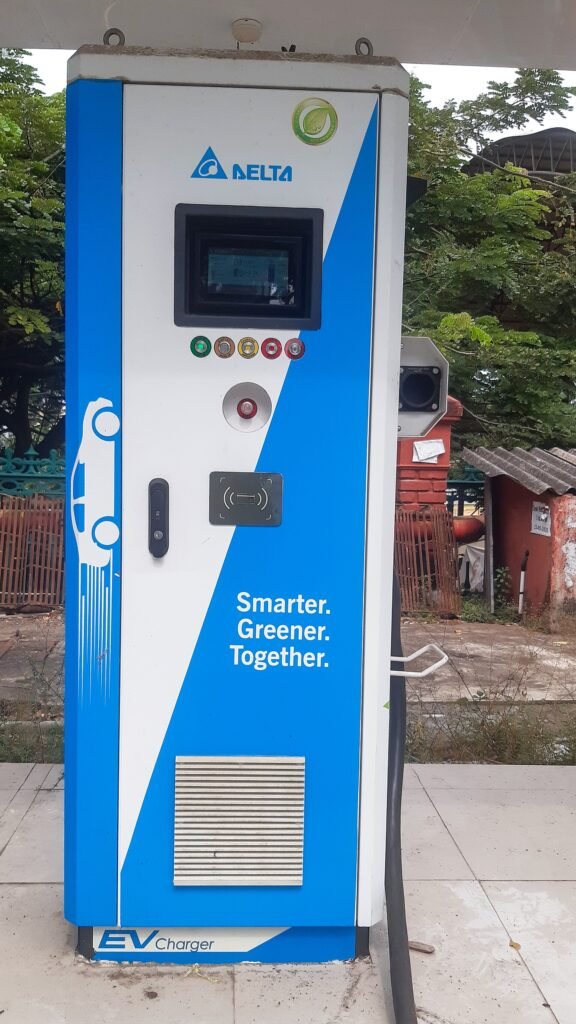
Featured image credit: Image: Shagil Kannur via Wikimedia Commons (CC BY-SA 4.0). Source
By Piyush P. Yadav
September 2026 is a month of expiring windows for state-level EV purchase subsidies. Assam’s 2021 policy reached the end of its five-year term on 4 September with no successor announced. Odisha’s incentives, extended twice this year, now stop on 30 September. Meanwhile the newer schemes in Delhi and Maharashtra are only a few months old and run to 2030, and the central PM E-DRIVE payout on two-wheelers has been cut to a flat Rs 5,000. If you are buying an EV before the festive season, the state you register in now determines whether you get Rs 1.5 lakh off a car or nothing at all. This is the current map, state by state, of what is open, what is closing, and what has already lapsed.
The distinction that matters: purchase subsidy vs road tax waiver
Most confusion about “EV subsidy” comes from mixing two different benefits. A purchase subsidy is cash off the price, usually calculated per kWh of battery and capped, paid either as a dealer discount or reimbursed later. A road tax and registration waiver is a percentage exemption applied at the RTO, worth 6 to 14 per cent of the vehicle’s price depending on the state. Many states that have stopped paying purchase subsidies still waive road tax. Our state-wise road tax and registration exemption guide covers the second benefit in detail. This article is about the first: actual cash incentives on purchase, and which are still live.
Where the money still is: September 2026 status
| Scheme | Two-wheeler incentive | Four-wheeler (private car) incentive | Valid until | Status on 6 Sept 2026 |
|---|---|---|---|---|
| PM E-DRIVE (central) | Rs 2,500/kWh, capped at Rs 5,000 | None for private cars | 31 March 2028 | Open |
| Delhi EV Policy 2026 | Rs 10,000/kWh capped at Rs 30,000 in year 1, tapering to Rs 6,600/kWh (cap Rs 20,000) in year 2 and Rs 3,300/kWh (cap Rs 10,000) in year 3; plus Rs 10,000 scrappage bonus | Rs 1 lakh scrappage-linked incentive on EVs under Rs 30 lakh when a BS-IV or older Delhi car is scrapped | 31 March 2030 | Open, effective 1 July 2026 |
| Maharashtra EV Policy 2025 | Rs 5,000/kWh capped at Rs 10,000, first 1 lakh vehicles | Rs 5,000/kWh up to Rs 1.5 lakh, but only for commercial and fleet cars, not private buyers | 31 March 2030 | Open |
| Odisha EV Policy 2021 (extended) | Per-kWh subsidy capped at Rs 20,000 (as reported by MeraEV; confirm the current rate with the transport department) | Per-kWh subsidy capped at Rs 1.5 lakh for cars with 30 kWh or larger batteries | 30 September 2026 | Closing in 24 days |
| Assam EV Policy 2021 | Rs 10,000/kWh, capped at Rs 20,000 | Rs 10,000/kWh, capped at Rs 1.5 lakh | Five-year term ended around 4 September 2026 | Lapsed, no successor announced |
| Telangana | Road tax waiver only | Road tax waiver only | 31 December 2026 | No cash subsidy |
| Tamil Nadu | Road tax waiver only | Road tax waiver only | 31 December 2027 | No cash subsidy |
| Uttar Pradesh | Road tax waiver only | Road tax waiver only | 13 October 2027 | Purchase subsidy lapsed |
| Rajasthan (REVP 2022) | SGST reimbursement-based scheme | SGST reimbursement-based scheme | Around September 2027 (five-year term) | Open |
| Gujarat, Goa, Kerala, West Bengal, Punjab, Karnataka | None | None | Lapsed between October 2023 and 2026 | Expired |
Compiled from state notifications and the EV subsidy deadline tracker maintained by ScooterWale (updated 24 August 2026). Amounts are as published in the respective policies; disbursal in practice depends on the state’s fund position and the dealer’s willingness to pass the incentive on at the point of sale.
Odisha: 24 days left on the most generous car subsidy still open
Odisha is the story of the month. The Odisha Electric Vehicle Policy 2021 was originally due to end on 31 December 2025. The Commerce and Transport Department first extended it to 31 March 2026, then to 30 June 2026, and finally, by a notification dated 20 June 2026 issued under para 11.5 of the policy, to 30 September 2026. Each notification confirmed that all incentives, subsidies and benefits under the policy continue for the extended period.
What that means for a buyer registering in Bhubaneswar, Cuttack or Rourkela this month:
- Two-wheelers: a per-kWh subsidy capped at Rs 20,000, on top of the central Rs 5,000.
- Four-wheelers: a per-kWh subsidy capped at Rs 1.5 lakh for cars with 30 kWh or larger packs. On a Tata Nexon EV 45 or a Mahindra BE 6, that is the full Rs 1.5 lakh, and it applies to private buyers, unlike Maharashtra.
- Buses: Rs 2 lakh for non-AC, Rs 3 lakh for AC and Rs 4 lakh for AC deluxe.
- Road tax and registration: 100 per cent waived until the same date.
Odisha has not announced a fourth extension or a new policy. Given that the previous extensions came in the final days before expiry, a further extension is possible but cannot be assumed. Anyone planning an EV purchase in Odisha should complete registration, not just booking, before 30 September.
Assam: the first state policy to run out this month
The Electric Vehicle Policy of Assam, 2021 came into force on 4 September 2021 for five years or until a new policy was notified, whichever came first. It was one of the more generous frameworks on paper: Rs 10,000 per kWh for two-, three- and four-wheelers, capped at Rs 20,000, Rs 50,000 and Rs 1.5 lakh respectively, subject to a ceiling of 40 per cent of the ex-factory price. It targeted 2 lakh EVs by 2026, split as 1 lakh two-wheelers, 75,000 three-wheelers and 25,000 cars, and 25 per cent EV share of new registrations.
The five-year term ended on 4 September 2026. No successor policy has been notified and the state has not publicly confirmed whether pending applications will be honoured. Buyers in Guwahati should treat the purchase subsidy as unavailable until the government says otherwise.
Delhi: the newest and now the richest two-wheeler scheme
Delhi’s cabinet approved the Delhi EV Policy 2026 on 29 June, notified it on 30 June, and it took effect on 1 July 2026, running to 31 March 2030. We covered the framework when it was announced alongside the PM E-DRIVE extension to March 2028. The key mechanics for buyers:
- Two-wheeler subsidy of Rs 10,000 per kWh in the first year, capped at Rs 30,000, on scooters priced up to Rs 2.25 lakh. It steps down to Rs 6,600 per kWh (cap Rs 20,000) in year two and Rs 3,300 per kWh (cap Rs 10,000) in year three, so the incentive is deliberately front-loaded.
- A Rs 10,000 scrappage bonus for trading in an old petrol or CNG two-wheeler.
- For cars, a Rs 1 lakh incentive tied to scrapping a Delhi-registered BS-IV or older car and buying an EV priced under Rs 30 lakh within six months of receiving the Certificate of Deposit.
- Continued road tax and registration fee exemption.
A 3 kWh scooter registered in Delhi this financial year can therefore collect Rs 30,000 from the state, Rs 5,000 from the centre and a further Rs 10,000 if an old scooter is scrapped, a total of Rs 45,000 off a vehicle that might list at Rs 1.1 lakh. That is the largest two-wheeler stack anywhere in India right now.
Maharashtra: generous on paper, narrow for private car buyers
Maharashtra’s EV Policy 2025, effective 1 April 2025 to 31 March 2030, pays Rs 5,000 per kWh on two-wheelers capped at Rs 10,000, for the first 1 lakh vehicles on a first-come basis, and Rs 5,000 per kWh up to Rs 30,000 on three-wheelers. The four-wheeler incentive of Rs 5,000 per kWh up to Rs 1.5 lakh exists, but it is restricted to commercial and transport vehicles such as taxis and fleet cars. A private buyer in Mumbai or Pune gets the road tax and registration waiver but no cash subsidy. This is often misreported, so check the eligibility clause before factoring it into a budget.
The central layer: what PM E-DRIVE still pays
PM E-DRIVE was extended to 31 March 2028 with an additional Rs 11,900 crore, but the two-wheeler incentive was halved to Rs 2,500 per kWh with a Rs 5,000 cap. There is no central purchase incentive for private electric cars. The scheme’s money is now weighted towards e-buses, e-trucks, e-ambulances and charging infrastructure. Separately, the concessional 5 per cent GST on EVs remains the largest single tax benefit for car buyers, and applies in every state; our GST on electric vehicles explainer shows how it interacts with the 18 per cent rate on standalone batteries and charging.
Practical checklist before you sign
- Confirm the registration date cut-off, not the booking date. Odisha’s window closes on 30 September for vehicles registered by then.
- Ask the dealer whether the subsidy is upfront or reimbursed. Several states reimburse via a portal weeks or months after registration.
- Check the price cap. Delhi’s two-wheeler cap is Rs 2.25 lakh ex-showroom and its car incentive applies only under Rs 30 lakh.
- Do not rely on Section 80EEB. The income-tax deduction on EV loan interest expired for loans sanctioned after 31 March 2023.
- Watch the road tax clock separately. Telangana’s waiver ends 31 December 2026, and Karnataka has already ended its exemption.
Sources & Further Reading
- Odisha Commerce and Transport Department notification extending the EV Policy to 30 September 2026
- Sambad English: Odisha extends EV subsidy disbursal deadline
- Government of Assam: Electric Vehicle Policy of Assam, 2021
- ScooterWale: EV subsidy last date 2026, every central and state deadline
- Bolt.Earth: Delhi’s EV Policy 2026 incentives explained
Frequently Asked Questions
Which states still give a cash subsidy on electric cars for private buyers in September 2026?
Odisha, until 30 September 2026, with a cap of Rs 1.5 lakh for cars with 30 kWh or larger batteries. Delhi offers Rs 1 lakh, but only when linked to scrapping an old BS-IV or older Delhi-registered car. Maharashtra’s car subsidy is restricted to commercial vehicles.
Has the Odisha EV subsidy been extended beyond September 2026?
Not as of 6 September 2026. The latest notification, dated 20 June 2026, extends the policy to 30 September 2026. Previous extensions came very close to the deadline, so watch for a further notification, but do not count on one.
Is the Assam EV subsidy still available?
The Assam EV Policy 2021 ran for five years from 4 September 2021 and its term has now ended. No replacement policy has been announced.
How much subsidy does an electric scooter get in Delhi under the 2026 policy?
Rs 10,000 per kWh capped at Rs 30,000 in the first year, for scooters priced up to Rs 2.25 lakh, plus a Rs 10,000 scrappage bonus. Combined with the central Rs 5,000, a Delhi buyer can get up to Rs 45,000 off.
Does the state EV subsidy depend on where I buy the vehicle or where I register it?
Where you register it. State incentives are attached to registration in that state, so buying in Bhubaneswar and registering the vehicle in Kolkata gets you nothing from Odisha and nothing from West Bengal, whose scheme has lapsed. State portals verify the registration details against the RC, and several policies also cap how many subsidised vehicles one buyer or one household can claim. If you are relocating around the time of purchase, register in the state whose policy is still live before you move.
Is the state subsidy a discount at the dealership or a refund paid later?
It varies by state and it changes what you need on hand at delivery. Odisha pays by direct benefit transfer into the buyer’s bank account after the vehicle is registered, claimed through the state transport department’s portal, which typically takes several weeks. Delhi’s and Maharashtra’s schemes are designed to be passed on by the dealer at the point of sale. The central PM E-DRIVE incentive on two-wheelers is applied upfront as a price reduction through an Aadhaar-authenticated e-voucher. Confirm in writing which mechanism your dealer is using before you sign.
If I book before the deadline but take delivery after it, do I still get the subsidy?
Do not assume so. Most state notifications, Odisha’s included, tie the incentive to vehicles purchased and registered during the operative period, which is why the safe course is to complete registration before 30 September rather than simply paying a booking amount. Dealers sometimes claim the booking date locks eligibility, and in some states that has held in practice, but it is not written into every policy and there is no appeal if the department disagrees. Get the dealer’s commitment in writing, and register before the cut-off wherever you can.