

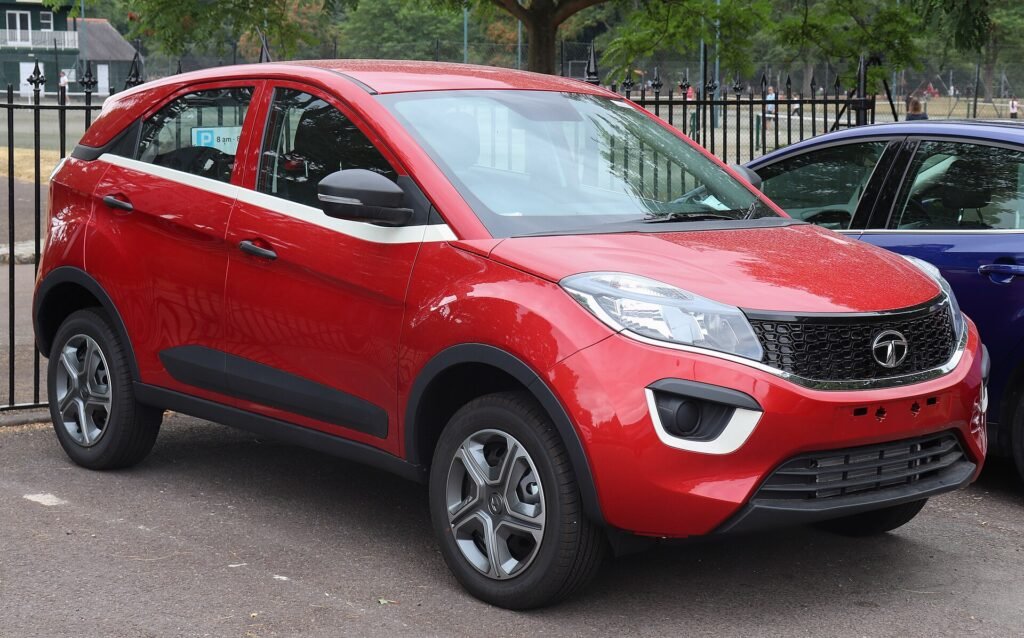
Featured image credit: Image: Vauxford via Wikimedia Commons (CC BY-SA 4.0). Source
By Piyush P. Yadav
Electric cars in India are now old enough that a real used market exists, and the numbers coming out of it are sobering for anyone who assumed an EV holds value like a petrol car. Mass-market EVs can lose 20 to 30 per cent of their original price in the first 12 months alone, and the average EV in India retains only around 40 to 55 per cent of its value after three years, against 55 to 65 per cent for a comparable petrol or diesel car. Yet the picture is not uniform: some models are holding up far better than others, and buying used strategically can still make sense. Here is what the data actually shows.
How EV depreciation compares with petrol cars
| Metric | Electric car (average) | Petrol/diesel car (average) |
|---|---|---|
| Value lost in first 12 months | 20 to 30 per cent | Typically 15 to 20 per cent |
| Average annual depreciation | About 14 per cent a year (based on real used-EV listings) | Roughly 10 to 12 per cent a year |
| Value retained after 3 years | 40 to 55 per cent | 55 to 65 per cent |
The gap exists for reasons specific to a fast-moving market. New EV models arrive with longer range, faster charging and lower prices every year, which makes a three-year-old EV feel more dated, relatively, than a three-year-old petrol car whose fundamentals barely change. Buyers also remain uncertain about battery health in a used EV in a way they are not about a used engine, and that uncertainty is priced in as extra depreciation, fair or not.
Not every EV depreciates the same
The Tata Nexon EV, India’s best-selling electric SUV for several years, is the clearest exception to the average. Well-supported models like the Nexon EV often retain 70 to 75 per cent of value after three years, well above the segment average, and two- to three-year-old examples commonly trade in the Rs 9 lakh to Rs 13 lakh range depending on variant and battery health. Volume, brand trust and a wide service network are doing the work here: buyers of a three-year-old Nexon EV know parts, service and resale liquidity will not be a problem, so they pay closer to fair value.
Set against that is at least one widely reported counter-example: a 2021 Nexon EV XZ+ that cost Rs 15 lakh new was reportedly offered only around Rs 4.5 lakh at dealerships after four years, a roughly 70 per cent loss. The gap between that case and the 70-75 per cent retention figure typically comes down to individual factors — accident history, battery health, service record and whether the specific variant remained in demand — which is exactly why a used-EV purchase needs more diligence than a used petrol car, not less.
What actually drives used-EV value
- Battery health above everything else. A used EV with a documented, healthy state of health commands a real premium over one with an unknown or degraded pack. As we explained in our guide to EV battery degradation and state of health, 2 to 3 per cent annual capacity loss is normal; buyers should ask for evidence of that, not assume it.
- Charging history. A car shown to have mostly used slow home AC charging is worth more than one with a history of constant DC fast charging, which is harder on the cells.
- Warranty transferability. Because lifetime and extended battery warranties on models such as the Curvv EV, Harrier EV and Syros EV apply only to the first private owner, a used buyer of those cars inherits only the standard 8-year/1.6 lakh km term. That materially affects what the car should be worth relative to its original lifetime-warranty price; see our full brand-by-brand breakdown in our EV battery warranty guide.
- Brand and service network. Tata and Mahindra’s scale gives their used EVs a liquidity advantage that smaller-volume brands’ used EVs do not have yet.
- Software and hardware generation. An EV is closer to a smartphone than a petrol car in this respect: a model that has been superseded by a materially better version, with longer range or faster charging at a similar price, depreciates faster regardless of its own condition.
Should you buy a used EV in 2026?
The case for buying used is straightforward: someone else has absorbed the steepest part of the depreciation curve, so the running-cost advantage of an EV, detailed in our five-year EV versus petrol ownership cost comparison, arrives without paying the new-car premium. A three-year-old Nexon EV at Rs 10 lakh to Rs 13 lakh delivers most of the running-cost benefit of a new one for 30 to 40 per cent less capital.
The case for caution is battery uncertainty and warranty reversion. A used-EV buyer should insist on a battery health check, ideally through the manufacturer’s own diagnostic tool at an authorised service centre, before finalising a price, and should factor in that any lifetime warranty the first owner enjoyed does not carry over.
Practical checklist before buying a used EV
- Get a state-of-health reading from an authorised service centre, not just a demo drive impression of range.
- Ask for the charging history if the seller or a connected app can provide it, and favour cars mostly charged at home.
- Confirm in writing what warranty term, if any, transfers to you as the new owner.
- Check the car’s software version and whether over-the-air updates are still supported, since some early models have been end-of-lifed for updates.
- Favour high-volume models such as the Nexon EV or Punch EV for resale liquidity when you eventually sell again.
Sources & Further Reading
- CarToq: Electric SUV owner faces 70 per cent depreciation in four years
- Business Standard: The second-hand test — India’s looming problem of valuing used electric cars
- CarArth: Should you buy a used EV in India in 2026 — battery health, resale risk and hidden costs
FAQ
Do electric cars depreciate faster than petrol cars in India?
Yes, on average. EVs retain roughly 40 to 55 per cent of value after three years versus 55 to 65 per cent for petrol cars, though well-supported models like the Tata Nexon EV can retain 70 to 75 per cent.
What should I check before buying a used EV?
A battery state-of-health reading from an authorised service centre, the charging history if available, what warranty transfers to you, and the software update status.
Does a used EV’s battery warranty transfer to a new owner?
Extended or lifetime warranties on models like the Curvv EV, Harrier EV and Syros EV apply only to the first private owner. A used buyer gets the standard 8-year/1,60,000 km term instead.
Which used EV holds its value best in India?
The Tata Nexon EV, thanks to its sales volume, wide service network and brand trust, typically retains 70 to 75 per cent of value after three years, above the segment average.