

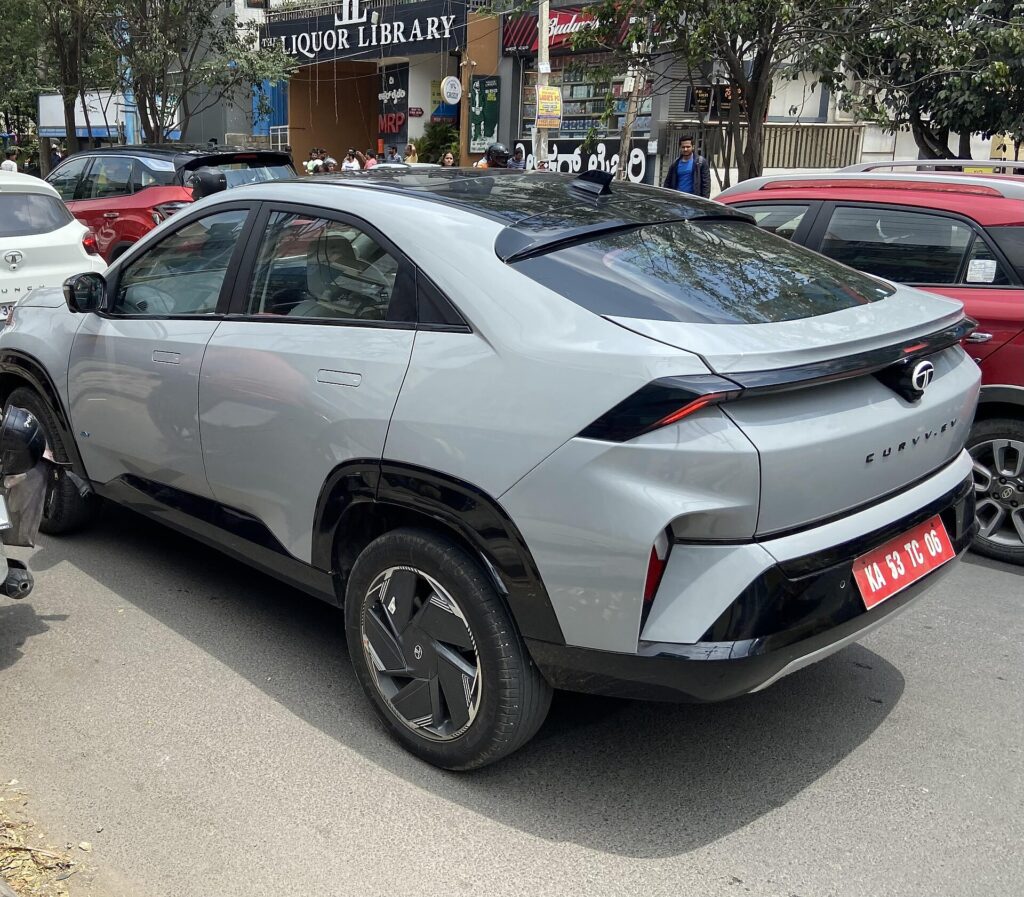
Featured image credit: Image: VideshiBhaktNRI via Wikimedia Commons (CC0). Source
By Piyush P. Yadav. Festive season 2026 has turned into the biggest discount window Indian EV buyers have seen all year, with cash benefits, exchange bonuses and loyalty offers stacking up to over Rs 3 lakh on some models. But not every “festive offer” is what it looks like at first glance — several of the biggest headline numbers are clearing out pre-facelift or pre-update stock, not the current-generation car you’ll actually be shown at the dealership. Here is what the discounts on the table this September actually amount to, model by model, and a simple way to decide whether any of them are worth signing for.
The Discounts on the Table This Festive Season
Discount structures vary by brand and even by variant within the same model, so the effective saving depends heavily on which trim you’re buying and whether it is old or current stock. Here is a snapshot of what dealers are advertising in September 2026:
| Model | Maximum Benefit | Break-up | Catch |
|---|---|---|---|
| Tata Curvv EV | Up to Rs 3.35 lakh | Rs 3 lakh cash discount + up to Rs 35,000 exchange/scrappage bonus | Applies only to pre-SeriesX-update variants; base Creative trim caps at Rs 2.85 lakh |
| Tata Harrier EV | Up to Rs 2.75 lakh | Rs 1 lakh intervention offer + up to Rs 75,000 exchange/scrappage + up to Rs 1 lakh loyalty bonus (Fearless/Empowered trims) | Base Adventure trim gets a smaller Rs 2.5 lakh package; loyalty bonus needs an existing Tata EV in the family |
| Tata Tiago EV / Punch EV | Up to Rs 1.45 lakh | Cash discount plus exchange benefits | Applies to pre-facelift stock only, subject to availability |
| Tata Nexon EV | Up to Rs 45,000 | Rs 10,000 cash discount + up to Rs 35,000 exchange/scrappage bonus | All variants, but a modest saving compared with the Curvv and Harrier |
| Mahindra XUV400 EV | Rs 2.5 lakh | Straight cash discount | Ageing platform being phased out in favour of the BE 6 and XEV 9e/9S |
| Kia Carens Clavis EV | Up to Rs 95,000 | Rs 20,000 cash + Rs 20,000 exchange + Rs 15,000 corporate + Rs 20,000 loyalty + Rs 20,000 scrappage | Full stack requires meeting every individual condition (corporate buyer, loyalty, scrappage certificate) |
| Kia Syros EV | Rs 20,000 | Scrappage bonus only | Newest EV in its segment, so discounting is minimal |
| Hyundai Creta Electric | Up to Rs 35,000 | Rs 15,000 cash + Rs 20,000 scrappage, or Rs 15,000 exchange + Rs 15,000 upgrade bonus | Choose one path (scrappage or upgrade), not both |
| BYD (select models) | Non-cash benefits | Finance from 7.77%, 2-year complimentary maintenance, extended warranty up to 200,000 km, charging coupons | No direct price cut; value is in financing and ownership cost, not the sticker |
Figures are dealership-advertised benefits reported in September 2026 and can vary by city, dealer stock and financier; always get the exact break-up in writing before booking.
Why the Discounts Differ So Much by Model
The size of a discount usually tells you more about a manufacturer’s inventory problem than about how good a deal you’re getting. The Tata Curvv EV’s Rs 3.35 lakh top offer is concentrated on pre-SeriesX-update stock — Tata needs to clear that inventory before the newer variant takes over showroom space, which is also why the current SeriesX trims are capped at a much smaller Rs 65,000 benefit. The same logic applies to the Tiago EV and Punch EV, where the big numbers are reserved for pre-facelift units.
By contrast, a genuinely new or in-demand model like the Kia Syros EV carries almost no discount (just a Rs 20,000 scrappage bonus), because there’s no ageing stock to push out. The Mahindra XUV400 EV’s flat Rs 2.5 lakh cut fits the same pattern — it’s an older platform being wound down as Mahindra shifts volume to the BE 6 and XEV 9e/9S range. If you’re weighing whether to buy now against waiting for a newer version, it’s worth reading how upcoming Diwali-season launches could reset these prices again in this look at every electric car launching before Diwali 2026.
How to Actually Evaluate a Festive Discount
A four-lakh headline number means little without answering these questions first:
- Is it current-generation stock? As the Curvv EV and Tiago EV/Punch EV examples show, the largest discounts are frequently tied to outgoing variants. Ask explicitly whether the unit on offer is pre-update or current-spec.
- Does the bonus require conditions you can actually meet? Exchange bonuses need a car to trade in; scrappage bonuses need a certificate from a registered scrapping facility; loyalty bonuses need an existing EV from the same brand in the household. Strip these out if you don’t qualify, and compare only the cash-in-hand discount.
- How does it change the five-year cost of ownership, not just the sticker price? A Rs 45,000 discount on a Nexon EV is a rounding error next to the fuel-cost gap it already has over a petrol equivalent — see the actual five-year cost-of-ownership numbers for the Punch, Nexon and Creta Electric for how much bigger the running-cost gap is than any one-time discount.
- What’s the on-road price after the discount, not just the ex-showroom figure? State-wise road tax and registration can add anywhere from 8-12% of the ex-showroom price, which can swallow a chunk of a mid-size discount; this on-road price breakdown for Delhi, Mumbai, Hyderabad and Bengaluru shows how much the discount is actually worth once city-specific charges are added back in.
Budget-Wise: Which Discounted EV Suits Which Buyer
Under Rs 10 lakh
The Tata Tiago EV and Punch EV pre-facelift stock, discounted by up to Rs 1.45 lakh, remain the cheapest way into a four-wheeler EV this festive season. The trade-off is that you’re buying outgoing design and feature sets, so check exactly which variant the discount applies to before committing.
Rs 10-15 lakh
The Tata Nexon EV’s Rs 45,000 benefit is modest, but the car’s higher base price already reflects a longer range and larger battery than the Tiago/Punch. The Mahindra XUV400 EV’s flat Rs 2.5 lakh cash discount is the most aggressive in this band on paper, though buyers should weigh that against Mahindra’s own newer BE 6 and XEV 9e/9S line-up before choosing an ageing platform purely for the discount.
Rs 15-20 lakh
This is where the Tata Curvv EV’s up-to-Rs-3.35-lakh offer and the Kia Carens Clavis EV’s stacked Rs 95,000 benefit sit. The Curvv’s number is bigger, but only on pre-update stock — if the current SeriesX trim is what’s actually available at your dealer, the real benefit shrinks to Rs 65,000, closer to the Carens Clavis EV’s package.
Rs 20 lakh and above
The Tata Harrier EV’s up-to-Rs-2.75-lakh package is the largest discount in this bracket, but a third of it (the loyalty bonus) is only available to existing Tata EV owners. BYD’s festive offers on its premium models skip cash discounts altogether in favour of sub-8% financing, free maintenance and an extended warranty to 200,000 km — worth comparing on total cost rather than sticker price alone, especially since the BaaS route is a separate way manufacturers are also cutting entry costs; see what Mahindra’s Battery-as-a-Service pricing on the XEV 9S actually costs per kilometre for a comparable example.
Before You Sign: Three Checks That Matter More Than the Discount
- Confirm the exact variant and stock batch in writing. Verbal promises about “up to” figures routinely apply only to the top trim or oldest stock on the lot.
- Ask if you’d be better off with the longer-range battery instead of chasing the discount on a base trim. The extra outlay for a bigger pack often pays back faster than people expect — this comparison of what the bigger battery costs on the Nexon EV, Creta Electric, Windsor and BE 6 works out the rupees-per-kilometre math.
- Separate the discount from the financing offer. A low advertised interest rate (like BYD’s 7.77% festive rate) can sometimes offset a smaller cash discount over the loan tenure — always ask for the total interest outgo, not just the headline rate.
Sources & Further Reading
- Tata Harrier EV discounts go up to Rs 2.75 lakh in September 2026 — Autocar India
- Latest Car Discount Offers, September 2026 — MyCarHelpline
- BYD India launches Festive Offers on Premium Electric Vehicles — Autoguide India
Frequently Asked Questions
Which EV has the biggest festive discount in September 2026?
On paper, the Tata Curvv EV’s up-to-Rs-3.35-lakh package is the largest, but it applies mainly to pre-SeriesX-update stock. The Tata Harrier EV’s up-to-Rs-2.75-lakh offer is the biggest genuine discount on current-generation stock, though a portion of it is a loyalty bonus limited to existing Tata EV owners.
Are festive-season EV discounts available on all variants?
No. Most manufacturers tier the discount by trim and by whether the stock is current or outgoing. Base variants and current-generation trims typically get a smaller package than mid-spec or pre-update units, so always ask for the exact figure for the specific variant you want.
Should I wait for Diwali instead of buying during the festive discount window now?
It depends on the model. Several new EVs are scheduled to launch before Diwali 2026, which could reset prices on comparable existing models. If the car you want isn’t facing an imminent update, taking a solid current discount now can make more sense than waiting on a launch date that could slip.
Do exchange and scrappage bonuses count as real savings?
Only if you actually have a vehicle to trade in or scrap. Treat these as conditional benefits and compare offers primarily on the unconditional cash discount, since that’s the only part every buyer can claim.
Will EV prices drop further after the festive season, or should I buy now?
Discount depth tracks inventory, not the calendar, so the window to watch is the model-year rollover rather than Diwali itself. December typically brings the hardest clearance of the year as dealers push out outgoing manufacturing-year stock, but most carmakers then raise list prices from 1 January — the January 2026 round ran from roughly 0.6% at Hyundai up to 6% at BMW, with input costs and currency pressure cited as the reasons. So if you want an outgoing variant, waiting for year-end clearance can pay; if you want current-generation stock, waiting past December usually means paying a higher list price for the same car.
Does buying discounted pre-facelift or outgoing EV stock affect the warranty, service or resale value?
The vehicle and battery warranties run from the date of sale and registration, not from the month the car was built, so buying outgoing stock does not shorten your cover, and service support continues normally for a variant that is merely superseded. Resale is where it shows: used-EV prices are benchmarked against model year and current-generation spec, so a pre-facelift unit bought now will be valued against the newer car when you sell. Ask for the manufacture month on the invoice before paying, and read part of the discount as the market already pricing in that faster depreciation.
Is a low festive interest rate better than a bigger cash discount?
Compare them in rupees, not percentages. A cash discount cuts the amount you finance, so it reduces the price and the total interest together, while a low advertised rate such as BYD’s 7.77% festive scheme only pays off across the full tenure and is usually tied to one financier, a minimum down payment or a set loan term. Ask the dealer for the total interest outgo under both structures on the same loan amount and tenure, then choose the lower total cost — and check whether accepting the subvented rate forfeits the cash discount, since brands commonly allow one or the other, not both.