

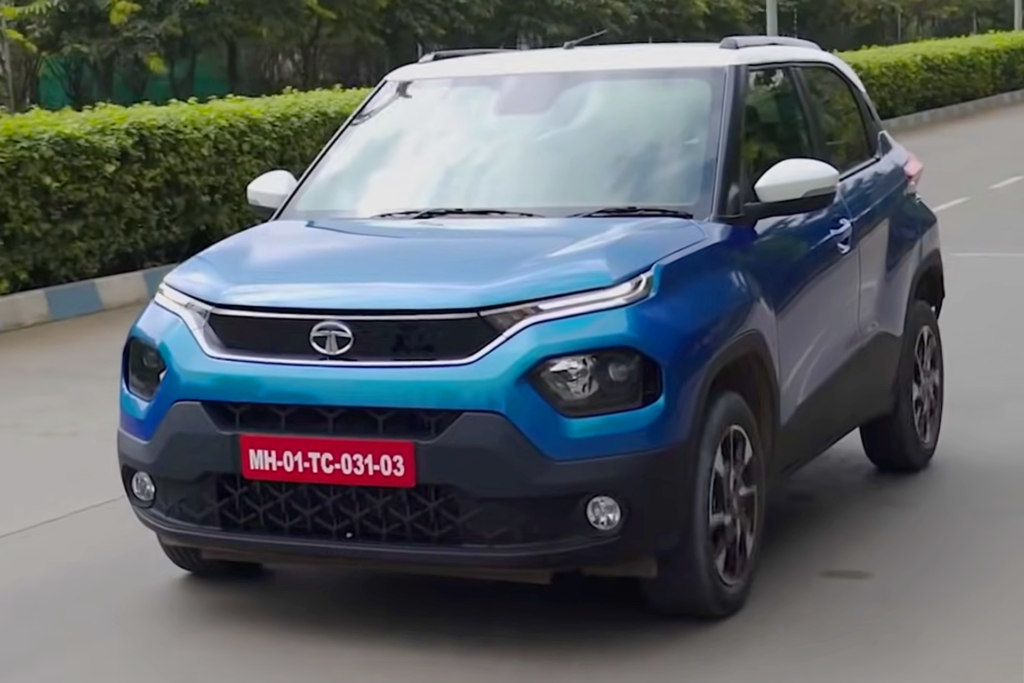
Featured image credit: Image: Athira Murali via Wikimedia Commons (CC BY 3.0). Source
By Piyush P. Yadav
Most EV buying guides stop at the ex-showroom price. But two costs that land in the first month of ownership, the loan and the insurance, can add or save more than Rs 1 lakh over five years and are rarely compared properly. Banks now run dedicated green car loan schemes with small rate concessions and longer tenures; insurers apply a mandatory 15 per cent discount on third-party cover for EVs but price own-damage cover 20 to 40 per cent higher because of the battery. This guide walks through what the major banks charge in 2026, why the Section 80EEB tax break no longer applies to new loans, how an EV insurance premium is built, which add-ons actually matter, and a worked five-year example on a Tata Nexon EV.
Part 1: Financing an electric car in 2026
What the banks are charging
EV loan rates in 2026 sit in a band of roughly 8 to 13 per cent per annum depending on the lender, your credit score and the tenure. Public sector banks cluster at the lower end and several offer a green concession of 0.10 to 0.50 percentage points below their standard car loan rate.
| Bank | EV / green car loan rate (p.a.) | Tenure | Notes |
|---|---|---|---|
| State Bank of India (Green Car Loan) | 8.80% to 9.85%, with a 25 bps concession on the standard car loan rate | 3 to 8 years | Up to 100% of on-road price; processing fee Rs 1,000 to Rs 4,000 |
| Bank of Baroda | 7.90% to 9.45% | Not specified | Fixed and floating options |
| Canara Bank | 8.60% to 9.30% | Not specified | Varies by risk grade |
| Union Bank of India | From 8.70% | Not specified | Competitive for salaried borrowers |
| Punjab National Bank | From 8.75% | Not specified | Concessions for government and PSU employees |
| HDFC Bank | From 8.20% | Not specified | Quick approvals, higher loan amounts |
| ICICI Bank | From 9.10% | Not specified | Flexible tenure and repayment |
| Axis Bank | From 9.20% | Not specified | Same as regular car loan rates |
| Kotak Mahindra Bank | 7.35% to 14.00% | Not specified | Very wide band depending on profile |
Rates as published by the banks and compiled by Indian Banker (February 2026) and BankBazaar (6 September 2026). Advertised floors usually require a credit score above 750 and a salaried profile. Always ask for the rate you personally qualify for, not the headline.
The features that matter more than 25 basis points
- Tenure. SBI’s green loan allows 8 years against the more common 7 for petrol cars. On a Rs 15 lakh loan at 9 per cent, stretching from 5 to 8 years cuts the EMI from about Rs 31,100 to about Rs 22,000, at the cost of paying roughly Rs 2.4 lakh more interest over the term.
- Loan-to-value. SBI funds up to 100 per cent of the on-road price, which matters because EV on-road prices are close to ex-showroom in states with road tax waivers.
- Prepayment terms. Floating-rate loans to individuals cannot carry a foreclosure penalty under RBI rules; fixed-rate loans can. Check before choosing fixed.
- Battery-as-a-Service. If you buy a Mahindra, Tata or Maruti EV under a BaaS plan, the vehicle loan covers only the car without the battery, and the per-km battery rental is a separate contract. Our Mahindra BaaS cost maths shows when that works out cheaper.
Section 80EEB: the tax break that no longer applies to new buyers
Section 80EEB of the Income Tax Act allowed a deduction of up to Rs 1.5 lakh a year on interest paid on an EV loan. It is still widely quoted in dealer pitches, but the eligibility window closed for loans sanctioned after 31 March 2023. Only borrowers whose loans were sanctioned between 1 April 2019 and 31 March 2023 can continue to claim it, and only under the old tax regime. No revival was announced in the February 2026 Budget. For a 2026 purchase, assume zero income-tax benefit on the loan.
Part 2: Insuring an electric car in 2026
How the premium is built
A comprehensive motor policy has two halves, and they move in opposite directions for EVs.
| Component | EV vs petrol | Why |
|---|---|---|
| Third-party liability premium | 15 per cent cheaper for EVs, mandated by IRDAI | Regulator’s incentive for clean vehicles; slabs based on motor kW instead of engine cc |
| Own-damage premium | 20 to 40 per cent higher for EVs | Higher insured declared value and battery replacement risk |
| Add-ons | Rs 4,800 to Rs 12,300 a year for a sensible EV bundle | Zero depreciation, battery protection, charger cover, flatbed roadside assistance |
The third-party discount is real but small in rupee terms. For a car with a motor above 65 kW, the EV third-party premium is about Rs 6,712 against Rs 7,897 for the petrol equivalent, a saving of Rs 1,185. The own-damage gap is much larger: a Nexon EV’s own-damage premium of roughly Rs 28,600 compares with about Rs 18,700 for a petrol Nexon, a difference of Rs 9,900, because the EV is insured for a higher value and its battery is the most expensive single component to replace.
Why battery cover is the add-on you cannot skip
Standard comprehensive policies typically exclude water damage to the battery pack and damage from charging surges or voltage spikes. Given that flooding is the most common cause of total-loss EV claims in Indian cities, a battery protection add-on at Rs 1,500 to Rs 4,000 a year is the single most valuable line on the quote. Combine it with zero depreciation: without it, a battery claim attracts a 50 per cent depreciation deduction, which on a Rs 3.5 lakh Nexon EV pack means Rs 1.75 lakh out of your own pocket.
| Add-on | Indicative annual cost | What it does |
|---|---|---|
| Zero depreciation | Rs 2,500 to Rs 6,000 | Removes depreciation deduction on parts, including the battery |
| Battery protection cover | Rs 1,500 to Rs 4,000 | Covers water ingress, short circuit and surge damage to the pack |
| Charger and cable cover | Rs 500 to Rs 1,500 | Covers the wallbox and portable charger against theft and damage |
| Roadside assistance with flatbed | Rs 300 to Rs 800 | EVs cannot be towed on their wheels; flatbed recovery is essential |
What battery replacement actually costs
The reason insurers price EV own-damage cover higher is visible in the replacement bills. Indicative pack prices: Tata Tiago EV Rs 1.2 to 1.8 lakh, Tata Nexon EV Rs 3 to 4 lakh, MG ZS EV Rs 4 to 5 lakh, Hyundai Ioniq 5 Rs 8 to 10 lakh. In each case that is 15 to 28 per cent of the car’s price. Manufacturer warranties, which we compared in our EV battery warranty brand comparison, cover defects and degradation but not accident, flood or surge damage. That gap is what insurance fills.
Worked example: Tata Nexon EV over five years
The table below uses the premium trajectory published by Honest Money (April 2026) for a Nexon EV against a petrol Nexon, with comprehensive cover and the standard add-on bundle.
| Year | Nexon petrol premium | Nexon EV premium | EV extra |
|---|---|---|---|
| 1 | Rs 24,316 | Rs 39,904 | Rs 15,588 |
| 2 | Rs 22,500 | Rs 37,100 | Rs 14,600 |
| 3 | Rs 19,800 | Rs 33,200 | Rs 13,400 |
| 4 | Rs 17,600 | Rs 29,800 | Rs 12,200 |
| 5 | Rs 15,900 | Rs 27,000 | Rs 11,100 |
| Total | Rs 1,00,116 | Rs 1,67,004 | Rs 66,888 |
So the EV costs about Rs 13,400 a year more to insure. Set against fuel savings that typically run Rs 60,000 to Rs 1 lakh a year for a 15,000 km driver, the insurance penalty is real but does not change the overall picture, which we set out in our five-year EV versus petrol cost comparison. It does, however, mean the first-year outlay on an EV is higher than the sticker price suggests once insurance is added.
Checklist before you sign the loan and the policy
- Get the loan quote in writing with the green concession applied. Some branches do not apply it unless asked.
- Compare EMI at 5 and 7 years, not just the longest tenure offered. The longest tenure minimises EMI but maximises interest.
- Do not budget for Section 80EEB. It does not apply to loans sanctioned after March 2023.
- Insist on battery protection and zero depreciation add-ons. Skip engine protection, which is irrelevant on an EV, if it appears on the quote.
- Check the IDV. Insurers sometimes set the insured declared value on the ex-showroom price including the battery even when you have bought under BaaS and do not own the battery.
- Confirm flatbed recovery is included. A standard tow can damage an EV’s drivetrain.
- Factor in state incentives at registration. Road tax waivers and any purchase subsidy reduce the on-road price and therefore the loan; our state-wise road tax guide lists what is still available.
Sources & Further Reading
- State Bank of India: Green Car Loan
- BankBazaar: SBI Green Car Loan rates and features
- Indian Banker: EV car loan interest rates in India, bank-wise
- Honest Money: EV car insurance India 2026, premium, battery cover, add-ons
- Goodreturns: Section 80EEB deduction status
Frequently Asked Questions
Are EV loan interest rates lower than regular car loans?
Slightly. Several banks offer a green concession of 0.10 to 0.50 percentage points. SBI’s Green Car Loan is 25 basis points below its standard car loan rate, with rates in the 8.80 to 9.85 per cent range and tenure up to 8 years.
Can I claim the Section 80EEB tax deduction on a 2026 EV loan?
No. The deduction applies only to EV loans sanctioned between 1 April 2019 and 31 March 2023. Loans taken in 2026 are not eligible.
Is EV insurance cheaper or more expensive than petrol car insurance?
More expensive overall. The mandatory third-party premium is 15 per cent lower for EVs, but own-damage cover is 20 to 40 per cent higher because of the battery. A Nexon EV costs about Rs 13,000 to Rs 15,000 more a year to insure than a petrol Nexon.
Which insurance add-ons does an electric car need?
Zero depreciation and battery protection cover are essential, since standard policies exclude water and surge damage to the pack and apply 50 per cent depreciation on battery claims. Charger cover and flatbed roadside assistance are inexpensive and worth adding.