

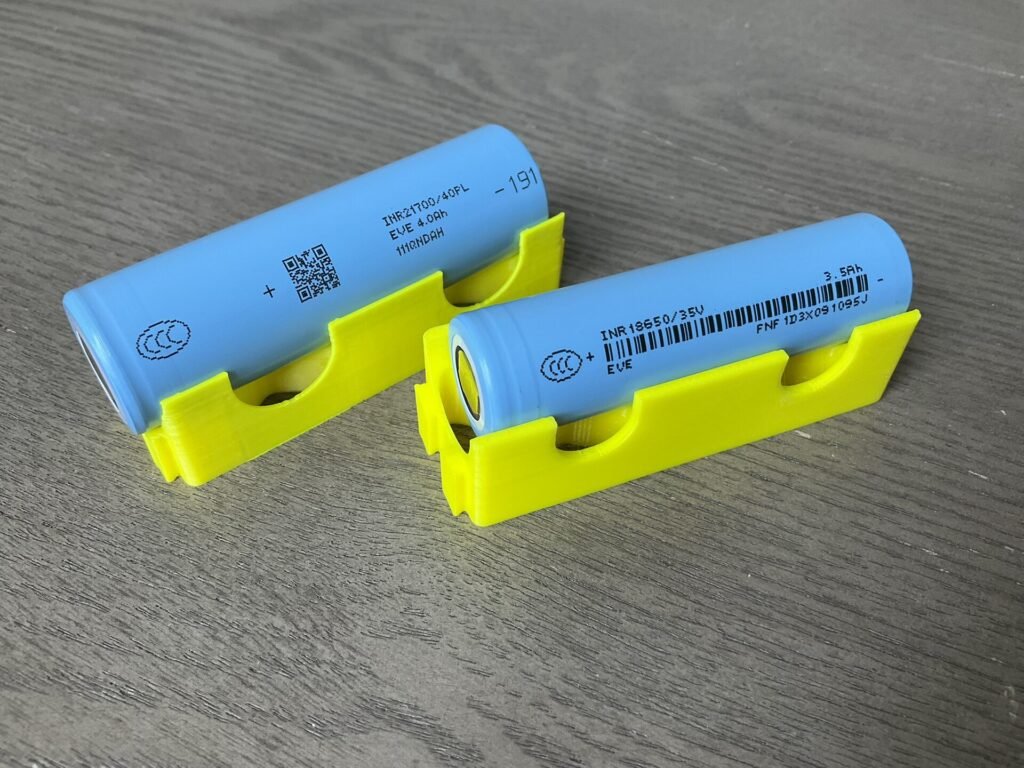
Featured image credit: Image: Sevenethics via Wikimedia Commons (CC0). Source
India’s battery manufacturing ambitions took two big steps forward this summer. Reliance Industries has commissioned the first phase of its 40 GWh battery gigafactory in Gujarat, and the government opened global bidding for 10 GWh of grid-scale battery storage capacity under a fresh Rs 18,100 crore PLI push. Together, they’re the clearest signal yet that India is racing to build the domestic cell-manufacturing base its EV and renewable-energy targets depend on.
Reliance’s 40 GWh Gigafactory Goes Live
At its 2026 AGM, Reliance Industries confirmed it has begun commissioning the first phase of its battery gigafactory in Gujarat, targeting an annual output of 40 GWh — with plans to scale modularly toward 100 GWh annually over time. That single facility, once fully ramped, would represent a meaningful share of India’s entire near-term battery manufacturing ambition.
For context, 40 GWh of annual cell output is roughly enough to supply battery packs for several hundred thousand electric passenger vehicles a year, depending on pack size — a scale that starts to make India’s EV and battery-storage supply chains meaningfully less import-dependent.
Government Opens Bids for 10 GWh of Grid Storage Capacity
Separately, the Indian government released tender documents on July 15, 2026 inviting global bids for Advanced Chemistry Cell (ACC) manufacturing facilities focused on grid-scale stationary storage, with bids due by October 13, 2026 and a pre-bid conference held on July 29, 2026. This tender sits under the Production-Linked Incentive (PLI) scheme for ACC Battery Storage, which carries a total outlay of Rs 18,100 crore.
Unlike EV-focused battery programs, this tender is aimed squarely at grid balancing and renewable-energy storage — batteries that store solar and wind power for use when generation dips, a capability India needs at scale to hit its broader net-zero-by-2070 targets.
India’s Bigger Gigafactory Roadmap
| Initiative | Scale / Target | Status (mid-2026) |
|---|---|---|
| Reliance Gujarat gigafactory | 40 GWh/year (scaling to 100 GWh) | First phase commissioning underway |
| Government ACC grid-storage PLI | 10 GWh | Bidding open; bids due Oct 13, 2026 |
| National gigafactory ambition | ~30 gigafactories, 290 GWh by 2030 | Multiple projects in planning/construction |
| Amara Raja lithium-ion cell line | Domestic cell production | Delayed to FY2027 |
India’s stated ambition — roughly 30 gigafactories delivering a combined 290 GWh of annual capacity by 2030 — is a genuinely large build-out by global standards, but it’s also running into real bottlenecks: not every announced project is on schedule. Amara Raja, one of the domestic battery majors, has already pushed its lithium-ion cell production timeline back to FY2027, a reminder that gigafactory announcements and gigafactory output are two very different things.
Why This Matters Beyond EVs
Domestic cell manufacturing capacity affects EV buyers indirectly but significantly — battery cells remain the single largest cost component of any EV, and India currently imports the large majority of its lithium-ion cells, mostly from China. Every GWh of domestic capacity that comes online is a step toward:
- Lower long-term battery pack costs as local supply reduces import duties and logistics costs baked into current EV pricing
- Reduced exposure to global supply-chain disruptions that have periodically driven up cell prices worldwide
- Grid-storage capacity that supports the renewable energy transition powering those same EVs — tying into the smart-charging and V2G provisions in India’s draft National Electricity Policy 2026
For more on how battery chemistry choices are evolving in parallel — including sodium-ion’s push into the two-wheeler segment — see our sodium-ion batteries in India report. And for how charging infrastructure investment is tracking alongside battery manufacturing, see our EV charging network mid-2026 update.
What to Watch Next
The October 13, 2026 bid deadline for the government’s grid-storage tender is the next concrete milestone to track — the winning bidders and their proposed timelines will signal how quickly India’s grid-storage capacity can realistically scale. On the EV side, Reliance’s gigafactory ramp-up pace over the next 12-18 months will be the clearest test of whether India’s 2030 gigafactory targets are achievable or aspirational.
Related Reading
- Zenergize Raises $4 Million as India’s Battery Ecosystem Shifts From Cell Capacity to Battery Software
- India Imports 100% of Its EV Motor Magnets: The Rs 7,280 Crore Rare Earth Plan
- Mahindra Battery-as-a-Service Explained: Full Rs 3.75/km Cost Maths
- No Extension, No Clarity: What Happens Now That India’s EV Motor Localisation Deadline Has Passed
Frequently Asked Questions
How big is Reliance’s new battery gigafactory?
Reliance’s Gujarat gigafactory is targeting an annual output of 40 GWh in its first phase, with plans to scale modularly to 100 GWh annually. The first phase began commissioning in 2026, as announced at Reliance’s 2026 AGM.
What is India’s government battery storage tender about?
The government released tenders on July 15, 2026 inviting global bids for 10 GWh of Advanced Chemistry Cell manufacturing capacity for grid-scale stationary storage, under a Rs 18,100 crore PLI scheme. Bids are due by October 13, 2026.
How many battery gigafactories is India planning by 2030?
India’s broader ambition is roughly 30 gigafactories delivering a combined 290 GWh of annual battery manufacturing capacity by 2030, though several individual projects — including Amara Raja’s lithium-ion cell line — have faced delays.
Does domestic battery manufacturing affect EV prices in India?
Yes, indirectly. Battery cells are the largest cost component of any EV, and India currently imports most of its lithium-ion cells. Growing domestic capacity is expected to gradually reduce import costs and supply-chain risk, which should support more competitive EV pricing over time.
Which companies are actually making lithium-ion cells in India right now?
Under the PLI Advanced Chemistry Cell scheme, Ola Electric’s Krishnagiri gigafactory was the first Indian plant to produce cells at volume, using 4680-format NMC cells. Amara Raja has begun phase one of its Telangana Giga Corridor, Exide Energy Solutions is commissioning a 6 GWh line in Bengaluru that is designed to expand to 12 GWh, Tata’s Agratas is phasing in its 40 GWh Sanand plant, and Reliance New Energy has now commissioned its own 40 GWh facility. Most of these are still in early ramp-up, so actual output remains small against India’s demand.
Are the batteries in electric vehicles sold in India today made in India?
The pack usually is; the cells mostly are not. Nearly every Indian EV maker assembles the battery pack locally — modules, battery management system, cooling, wiring and the crash-protective enclosure — but the cells inside are still largely imported, mainly from China and South Korea. Cell localisation is exactly what the gigafactory buildout is meant to change, and the shift will be gradual because new cell lines take time to reach stable automotive-grade quality and yields after commissioning.
What is the difference between a battery gigafactory and a battery assembly plant?
A gigafactory manufactures the cells themselves: coating electrodes, stacking or winding them, filling with electrolyte and running formation cycles. An assembly plant buys finished cells and builds them into modules and packs. India has had pack assembly capacity for years — it is comparatively cheap to set up — while cell manufacturing is the capital-intensive step now being localised, which is why plant announcements are measured in GWh of annual cell capacity and in thousands of crores of investment.
By Piyush P. Yadav