

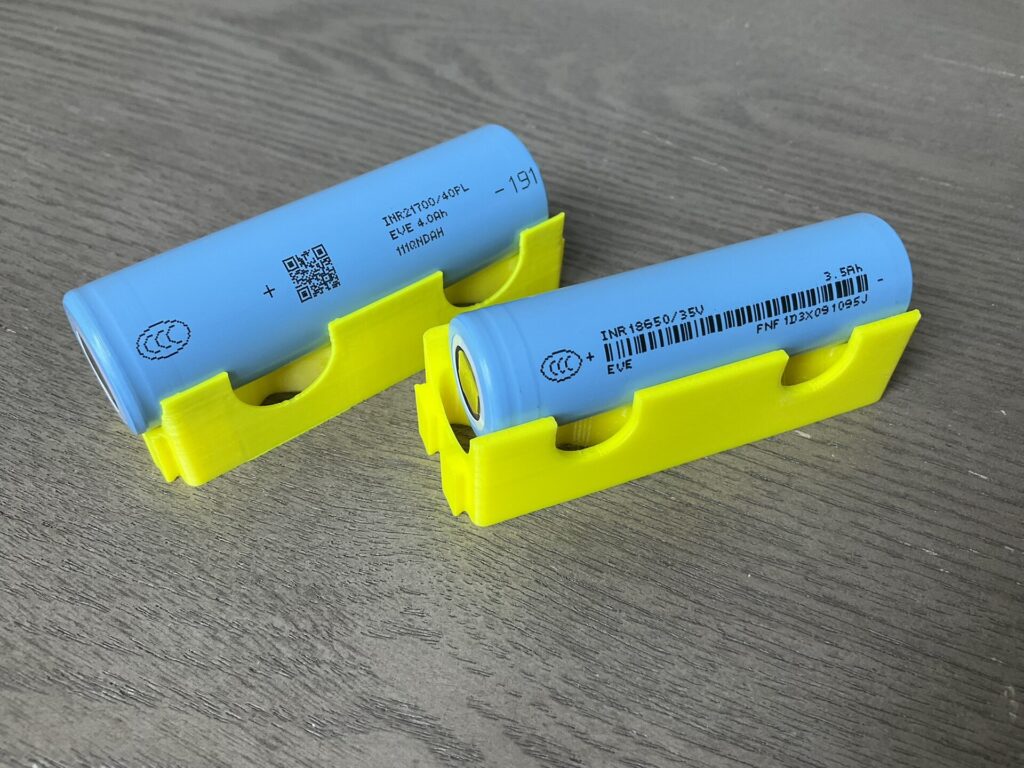
Featured image credit: Image: Sevenethics via Wikimedia Commons (CC0). Source
For fifteen years the electric vehicle industry has had one answer to the question of how to store energy: lithium. Lithium iron phosphate, lithium nickel manganese cobalt, lithium this and lithium that. The chemistry varies but the scarce metal at the centre does not, and India imports essentially all of it.
Sodium is different in one respect that matters enormously. It is the sixth most abundant element in the Earth’s crust, it is present in ordinary salt, and no country controls its supply. In 2026, sodium-ion batteries stopped being a laboratory curiosity and entered mass production, with CATL beginning deployment in passenger cars and Changan preparing what is expected to be the world’s first mass-produced sodium-ion passenger EV.
The obvious question for Indian readers is whether this matters here, and if so, where. The answer is more interesting than a simple yes or no. By Piyush P. Yadav.
How sodium-ion batteries work
The operating principle is the same as lithium-ion. Ions shuttle between a cathode and an anode through an electrolyte, releasing energy on discharge and storing it on charge. The difference is the ion doing the shuttling.
Sodium ions are larger and heavier than lithium ions. That single physical fact drives most of the trade-offs. A bigger, heavier ion moves less readily through electrode materials and stores less energy per unit of mass, which is why sodium-ion cells have historically lagged on energy density.
Sodium-ion also permits a genuinely useful manufacturing advantage: it can use aluminium current collectors on both electrodes, where lithium-ion requires copper on the anode side. Aluminium is cheaper and lighter than copper, and it allows a sodium-ion cell to be discharged to zero volts safely for transport, which lithium-ion cannot.
Where the technology stands in 2026
CATL’s next-generation sodium-ion battery reaches an energy density of up to 175 Wh/kg and supports a claimed driving range above 500 km in passenger-vehicle applications. It has passed China’s latest national safety standard for electric-vehicle traction batteries. Changan’s Nevo A06 is expected to be the first mass-produced passenger EV using these cells, targeted for around the middle of 2026.
Set that 175 Wh/kg figure in context.
| Chemistry | Typical cell energy density | Main advantage | Main limitation |
|---|---|---|---|
| NMC lithium-ion | Roughly 200-280 Wh/kg | Highest energy density | Cobalt and nickel cost, thermal sensitivity |
| LFP lithium-ion | Roughly 150-200 Wh/kg | Safety, cycle life, no cobalt | Lower density, weak cold performance |
| Sodium-ion | Up to 175 Wh/kg | Abundant raw material, cold performance, safety | Density still below best lithium, immature supply chain |
Sodium-ion at 175 Wh/kg has effectively caught up with the lower end of LFP. That is a significant milestone. It does not make sodium-ion competitive with high-nickel NMC in a premium long-range car, and it probably never will. But it makes sodium-ion viable in every application where LFP is currently good enough. Our comparison of LFP versus NMC battery chemistry in Indian EVs explains why LFP already dominates the mass-market segment here.
Why this matters specifically for India
India’s battery problem is not really a technology problem. It is a dependency problem. Lithium, cobalt, nickel, graphite and the processing capacity for all of them sit largely outside the country, and recent export controls have made that dependency uncomfortably visible. Our reporting on India’s EV battery supply chain and Chinese export controls traces how exposed the chain currently is.
Sodium changes the arithmetic of that dependency. Sodium compounds are abundant and geographically dispersed. A sodium-ion supply chain is inherently harder for any single country to choke.
Three characteristics make sodium-ion particularly well suited to Indian conditions.
Cost per kilowatt-hour
The raw material advantage is real. Sodium precursors cost a fraction of lithium ones, and replacing copper with aluminium removes another expensive input. In price-sensitive segments, where a few thousand rupees of battery cost decides whether a product sells, that matters more than a few Wh/kg.
Temperature tolerance
Sodium-ion performs notably better than lithium-ion at low temperatures, retaining more usable capacity in cold conditions. For northern India in winter and for high-altitude regions, that is a genuine functional advantage, not a specification-sheet footnote. Our explainer on why electric car range drops in cold weather covers the mechanism behind this.
Safety margin
Sodium-ion cells are generally more thermally tolerant than nickel-rich lithium chemistries. In a market where two-wheeler battery fires have periodically dominated headlines and damaged consumer confidence, an inherently more forgiving chemistry has commercial value beyond the engineering.
Where sodium-ion will actually land in India
This is the part where expectations need managing. Sodium-ion is not going to appear in Indian electric cars any time soon, and anyone suggesting otherwise is ahead of the evidence.
The realistic near-term applications, expected to scale roughly between 2026 and 2028, are elsewhere.
| Application | Fit for sodium-ion | Reasoning |
|---|---|---|
| Stationary storage | Excellent | Weight and volume barely matter; cost and cycle life dominate |
| Electric three-wheelers | Strong | Short daily range, extreme price sensitivity, weight tolerable |
| Electric two-wheelers | Good | Modest range needs, cost-driven buyers, safety benefit valuable |
| Small city cars | Possible later | Needs further density gains to be practical |
| Long-range electric SUVs | Poor | Density penalty too costly in weight and packaging |
Stationary storage is where sodium-ion should arrive first and most decisively. A grid battery does not care what it weighs. It cares about cost per kilowatt-hour, cycle life and safety, and sodium-ion is competitive on all three.
Three-wheelers are the most interesting vehicle case. An electric auto-rickshaw covers a predictable daily distance, operates on thin margins where battery cost is decisive, and can tolerate extra weight without much penalty. Our analysis of whether an electric auto-rickshaw is actually profitable in India shows how tightly those economics are bound to battery cost.
What has to happen first
Several obstacles stand between today’s announcements and sodium-ion cells in Indian products.
- Manufacturing scale. Cost advantages on paper only materialise at volume. Early sodium-ion cells will not be dramatically cheaper than mature, high-volume LFP.
- Supply chain build-out. Cathode materials, electrolytes and hard-carbon anodes for sodium-ion need their own industrial base, which barely exists in India.
- Pack and vehicle engineering. Different voltage characteristics and thermal behaviour mean battery management systems and packs must be designed for sodium, not adapted from lithium.
- Standards and certification. Indian safety and testing standards need to accommodate the chemistry explicitly.
- Proven field data. Real cycle life in Indian heat and dust, over years, is not yet known.
That last one deserves emphasis. Laboratory cycle-life numbers and Indian road reality have diverged before. Manufacturers and buyers should both expect the first generation of sodium-ion products to teach expensive lessons.
What this does not change
Sodium-ion is not a replacement for lithium-ion. It is an addition to the menu. The most likely outcome is a segmented market where sodium-ion takes stationary storage and cost-driven light vehicles, LFP holds the mass-market car and premium two-wheeler space, and high-nickel lithium chemistries retain long-range and performance applications.
India’s investments in lithium cell manufacturing therefore remain sound. The country needs both. What sodium-ion offers is optionality, and for an import-dependent market, optionality has strategic value independent of any cost saving. The progress and delays in India’s existing cell programmes, covered in our India cell manufacturing scorecard, show how hard building that capacity has been.
The bottom line
Sodium-ion in 2026 is a technology that has crossed from promising to real, but has crossed in China, in applications India will adopt second rather than first. For Indian buyers, nothing changes this year or next. For Indian policymakers and manufacturers, the signal is worth reading carefully: a battery chemistry built on an abundant, unrestricted raw material is exactly what a country in India’s position should want, and the window to build capability in it is open now rather than later.
Sources & Further Reading
- CarNewsChina: CATL to mass-produce sodium-ion batteries in 2026
- S&P Global AutoTechInsight: CATL sodium-ion deployment in passenger cars
- DIYguru: Future of EV batteries in India, LFP, sodium-ion and solid-state
- EY India: Sodium-ion batteries and India’s energy independence
Frequently Asked Questions
Are sodium-ion batteries better than lithium-ion?
Not universally. Sodium-ion uses far more abundant raw materials, performs better in cold conditions and is generally more thermally tolerant. But its energy density peaks around 175 Wh/kg against 200-280 Wh/kg for NMC lithium-ion, so it stores less energy for the same weight. It suits cost-driven and stationary applications rather than long-range cars.
When will sodium-ion batteries come to Indian EVs?
Large-scale deployment in India is expected roughly between 2026 and 2028, and mainly in electric two-wheelers, three-wheelers and stationary storage rather than cars. Passenger-car use is further out and depends on further energy-density gains plus a domestic supply chain for sodium-ion cathodes, electrolytes and hard-carbon anodes.
Why does sodium-ion matter for India specifically?
India imports nearly all of its lithium, cobalt and nickel, and recent export controls have exposed that dependency. Sodium is abundant and geographically dispersed, so a sodium-ion supply chain is much harder for any single country to restrict. It offers India strategic optionality rather than just a cheaper cell.
Will sodium-ion replace LFP batteries in India?
Unlikely. The probable outcome is segmentation, with sodium-ion taking stationary storage and cost-sensitive light vehicles while LFP holds the mass-market car and premium two-wheeler segments and high-nickel chemistries retain long-range applications. India needs investment in both.
How long do sodium-ion batteries last?
Longer than LFP on cycle count, which is the chemistry’s strongest card. CATL rates the grid-storage version of its Naxtra sodium-ion cell at up to 15,000 charge-discharge cycles with a claimed 30-year calendar life, against roughly 4,000 to 6,000 cycles for a typical LFP cell, and its Tianxing II sodium pack for light commercial vehicles at over 10,000 cycles. Those are 2026 manufacturer figures and independent field data in Indian heat is still thin, but even half that advantage changes the arithmetic for a shared fleet or a storage asset, where cost per cycle matters more than energy density.
Which companies are making sodium-ion batteries in India?
None at scale yet. Reliance owns Faradion, the UK sodium-ion developer it bought for about $135 million in 2022, and has slated sodium-ion lines at its Jamnagar battery gigafactory, which is to begin in the second half of 2026 at 40 GWh a year and scale modularly towards 100 GWh. KPIT Technologies developed an Indian sodium-ion cell and licensed it to Trentar in 2025 for a planned 3 GWh plant aimed at three-wheelers, commercial vehicles and backup power. Today’s actual volume is Chinese — CATL, HiNa and BYD — so treat Indian sodium-ion capacity as announced rather than operating.
Does India have the raw materials for sodium-ion cells?
For the sodium itself, comfortably. Sodium runs at about 23,600 parts per million in the earth’s crust against roughly 20 ppm for lithium, and India already has a substantial soda-ash industry whose output can be upgraded to battery-grade sodium carbonate — the gap there is purity, not availability. What India does not have is domestic supply of the rest of the cell: hard-carbon anode material, the layered-oxide or Prussian-white cathodes and the matched electrolytes, nearly all of which come from China today. Sodium-ion removes the lithium, cobalt and nickel exposure; on its own it does not remove the import dependence.