

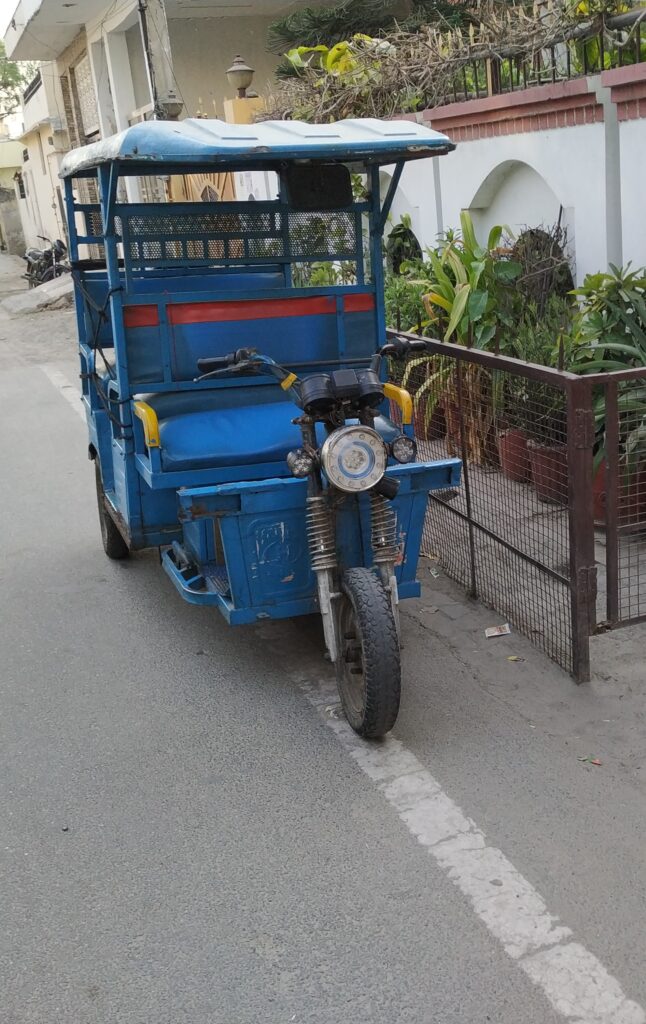
Featured image credit: Image: Libreravi via Wikimedia Commons (CC BY-SA 4.0). Source
India’s electric vehicle conversation is dominated by cars. The actual volume is somewhere else entirely. Mahindra Last Mile Mobility announced on 19 August 2026 that it had crossed four lakh cumulative electric vehicle sales, becoming the first commercial vehicle manufacturer in India to reach that mark.
Four lakh vehicles. Those are electric three-wheelers and small cargo carriers, not SUVs. They have collectively covered more than nine billion kilometres and avoided roughly 1.85 lakh tonnes of carbon dioxide. No Indian passenger electric car programme is close to that scale, and the reason is straightforward economics rather than policy or sentiment.
By Piyush P. Yadav
The milestone, and what sits inside it
| Metric | Figure |
|---|---|
| Cumulative EV sales | Over 4,00,000 units |
| Announcement date | 19 August 2026 |
| Distance covered by the fleet | Over 9 billion km |
| CO2 avoided | Approximately 1.85 lakh tonnes |
| Market position | India’s number one electric CV maker, four consecutive financial years |
| Target | 10 lakh EVs on Indian roads by 2031 |
The portfolio spans the Treo range, the UDO, Zor Grand, e-Alfa and the ZEO, covering both passenger and cargo last-mile applications.
Nine billion kilometres divided across four lakh vehicles is an average of roughly 22,500 kilometres per vehicle. That is a working average across a fleet that includes vehicles sold last month alongside vehicles sold years ago. These are not weekend cars. They are earning assets that run hard, every day.
Why three-wheelers electrified before cars
The reason is duty cycle. An electric vehicle’s economic case rests on trading a higher purchase price for a much lower running cost. That trade only pays off if you accumulate kilometres fast enough to recover the premium before the vehicle wears out.
A private car in India might do 12,000 kilometres a year. A commercial three-wheeler in a city does that in three or four months.
| Use case | Annual distance | Payback pressure |
|---|---|---|
| Private car | Around 12,000 km | Slow, measured in years |
| Ride-hailing car | 40,000 to 60,000 km | Fast |
| Cargo three-wheeler | 30,000 to 50,000 km | Fast |
| Passenger auto rickshaw | 40,000 to 70,000 km | Very fast |
There are three more reasons the segment converted first.
Predictable routes, so range is not a constraint
A last-mile vehicle operates within a known radius and returns to a known base. That removes the range anxiety and charging uncertainty that still shapes private car buying decisions.
Small batteries, so the price premium is small
A three-wheeler pack is a few kilowatt-hours against 40 to 80 kWh in an electric car. The absolute price gap versus a petrol or CNG equivalent is measured in tens of thousands of rupees rather than lakhs, so it is recoverable quickly.
Operators buy on total cost, not on feel
A fleet operator runs a spreadsheet. A private buyer weighs brand, styling and resale. Spreadsheets moved to electric several years before sentiment did. We worked through those numbers in detail in is an electric auto rickshaw profitable in India.
The competitive field
Mahindra leads, but the electric commercial segment is genuinely contested and increasingly segmented by vehicle size.
| Segment | Representative models | Typical price band |
|---|---|---|
| Electric three-wheeler, passenger | Mahindra Treo, e-Alfa | Rs 3 to 4 lakh |
| Electric three-wheeler, cargo | Mahindra Zor Grand, Euler Storm EV | Rs 4 to 6 lakh |
| Electric four-wheel micro cargo | Mahindra ZEO | Rs 7.52 to 7.99 lakh |
| Electric small commercial vehicle | Tata Ace EV 1000 | Rs 11.30 to 11.50 lakh |
| Electric medium and heavy truck | Tata Prima E.28K, Eicher Pro 2055 EV | Substantially higher |
The Mahindra ZEO is priced from Rs 7.52 lakh for the V1 FSD variant and Rs 7.69 lakh for the V2 FSD, with delivery van bodies at Rs 7.82 lakh and Rs 7.99 lakh. The Tata Ace EV 1000 runs a 21.3 kWh LFP pack with a certified 161 km range at Rs 11.30 to 11.50 lakh.
Ashok Leyland is entering the four-wheel electric small commercial vehicle space from its Hosur light commercial vehicle facility, with electric versions based on the Dost and Bada Dost ranges. That will put direct pressure on the Tata Ace EV in the segment immediately above the ZEO.
The subsidy picture is better here than anywhere else
This is the part that separates commercial EVs from everything else in Indian electric mobility right now. The central two-wheeler incentive under PM E-DRIVE closed on 31 July 2026. Support for e-rickshaws, e-carts and other three-wheelers continues to March 2028.
That is a meaningful divergence. A buyer purchasing an electric scooter in September 2026 gets no central cash support. A buyer purchasing an electric three-wheeler still does, for another 18 months.
The catch is that the allocation for specific three-wheeler categories can exhaust before the scheme’s end date, which is exactly what happened in the two-wheeler segment. We covered the practical consequence in electric auto-rickshaw financing and why the PM E-DRIVE subsidy is already gone for some buyers. Check current availability at the time of purchase rather than assuming the headline end date applies to you.
Where the segment goes next
Three-wheelers and micro cargo are substantially electrified. The frontier has moved up the weight classes, and the economics get harder as it does.
A heavy truck needs a battery pack an order of magnitude larger, which means an order of magnitude larger price premium and a charging requirement that ordinary depot infrastructure cannot meet. The payback maths that works effortlessly for a three-wheeler becomes marginal for a 28-tonne tipper.
Two things are addressing that. The first is targeted deployment in applications where the route is short, repetitive and fully controlled, such as cement and mining logistics, which is why UltraTech’s 600 electric trucks are going into that specific use case first. The second is financing support rather than purchase subsidy, through the proposed scheme offering loan guarantees instead of subsidies for 50,000 electric buses and 50,000 electric trucks.
That shift, from paying down the purchase price to underwriting the loan, is the sensible instrument for assets this expensive. A subsidy on a truck costing over a crore would be prohibitively expensive per unit. A guarantee that lets a fleet borrow at a workable rate costs the exchequer far less per vehicle deployed.
What an operator should take from this
If you run last-mile logistics or a passenger three-wheeler operation, four observations follow from the four lakh milestone.
- The technology risk is gone. Nine billion kilometres of fleet experience is a large enough sample to establish that these vehicles work in Indian conditions. You are not an early adopter any more.
- Service network matters more than specification. At four lakh vehicles, the market leader has a dense service and parts network. For a vehicle that only earns when it is moving, that is worth more than a few kilometres of extra range.
- Resale is establishing itself. A four lakh unit installed base creates a genuine used market, which is a material change from three years ago when residual value was purely speculative.
- Act on the three-wheeler subsidy window. Support runs to March 2028 on paper but allocation can run out sooner. If the purchase is planned, earlier is cheaper.
The wider point
India’s electric transition is frequently measured by electric car share, which sits in low single digits of passenger vehicle sales. By that yardstick India looks slow.
Measured by commercial vehicles, three-wheelers and two-wheelers, India is one of the fastest electrifying vehicle markets in the world. Four lakh commercial EVs from a single manufacturer, nine billion kilometres driven, in a segment that runs on arithmetic rather than enthusiasm, is the more honest indicator of where the transition actually stands.
The vehicles doing the most work in India’s EV transition are the ones nobody photographs.
Sources & Further Reading
- Mahindra — Mahindra Last Mile Mobility crosses 4 lakh EV sales (press release)
- Autocar Professional — Mahindra Last Mile Mobility crosses 4 lakh EV sales
- CarDekho Trucks — Ashok Leyland to launch four-wheeled electric SCVs
- EVreporter — Listing of small and light electric four-wheel commercial vehicles in India
Frequently Asked Questions
How many electric vehicles has Mahindra Last Mile Mobility sold?
Over four lakh cumulative units, announced on 19 August 2026. That makes it the first commercial vehicle manufacturer in India to reach the milestone. The fleet has covered more than nine billion kilometres and avoided roughly 1.85 lakh tonnes of carbon dioxide.
Why did electric three-wheelers take off faster than electric cars in India?
Duty cycle. A commercial three-wheeler covers 30,000 to 70,000 km a year against roughly 12,000 km for a private car, so the lower running cost recovers the price premium far faster. Small battery packs keep that premium low, and fixed routes remove range and charging uncertainty.
Is there still a government subsidy on electric three-wheelers?
Yes. Support for e-rickshaws, e-carts and other three-wheelers under PM E-DRIVE continues to March 2028, unlike the two-wheeler incentive which closed on 31 July 2026. However, allocation for specific categories can exhaust before the end date, so verify current availability at the time of purchase.
What does a Mahindra ZEO cost?
Ex-showroom prices are Rs 7.52 lakh for the V1 FSD variant and Rs 7.69 lakh for the V2 FSD. Delivery van body versions are priced at Rs 7.82 lakh for V1 and Rs 7.99 lakh for V2. It competes in the four-wheel micro cargo segment below the Tata Ace EV.