

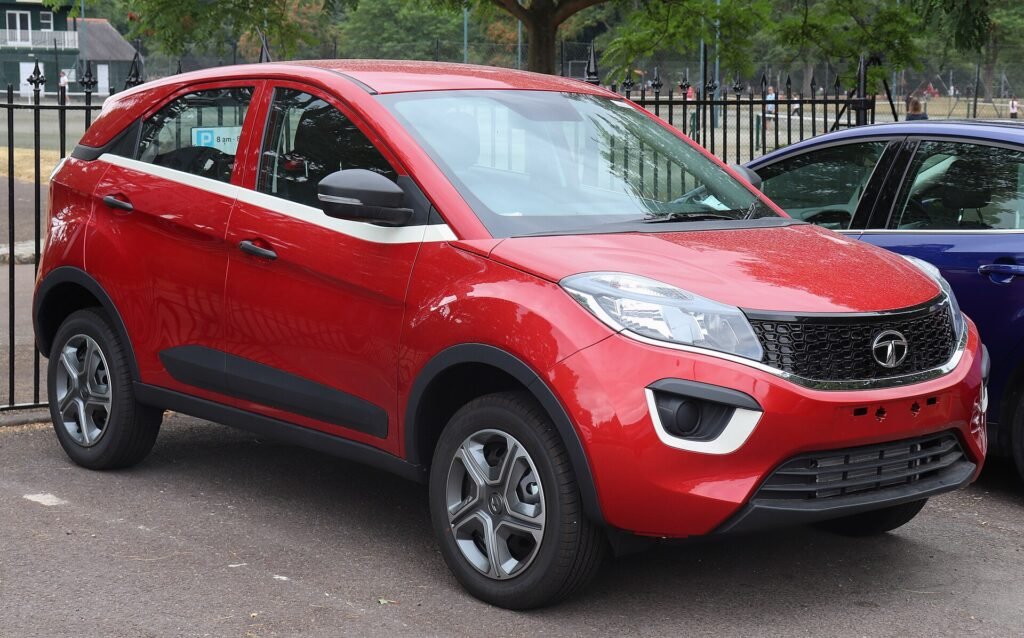
Featured image credit: Image: Vauxford via Wikimedia Commons (CC BY-SA 4.0). Source
By Piyush P. Yadav
Yes, electric car range does drop in cold weather in India, and for most owners the number that matters is a real-world 15 to 30 per cent loss on a Nexon EV, Creta Electric or BE 6 driven through a Himachal or Kashmir winter, rising to 35 to 40 per cent on short, stop-start trips in near-freezing temperatures. The car is not damaged and the battery is not degrading faster — the pack is simply colder than its happy operating window of 15 to 35°C, so it accepts and gives up energy less efficiently, and some of every charge goes into warming the cabin and the battery itself rather than turning the wheels. The practical question for an Indian buyer is not whether this happens — it does, everywhere in the world — but which cars lose the least, and whether the charging network in Himachal Pradesh, Uttarakhand and Jammu & Kashmir can support a winter road trip at all.
How we worked this out
This explainer combines three kinds of verified data, checked in September 2026: independent cold-weather range testing from Consumer Reports and Recurrent (which found a 15 to 25 per cent range loss for EVs with a heat pump against 25 to 35 per cent for EVs without one, worsening to as much as 50 per cent on short trips with heavy cabin-heater use); manufacturer-confirmed thermal-management specifications for the electric cars actually sold in India, cross-checked against each brand’s press materials and Autocar India’s reporting; and government-published EV charging station counts for Jammu & Kashmir and Ladakh, taken from Kashmir Life’s report citing Government of India data (291 stations UT-wide as of 30 March 2026) and Rising Kashmir’s report on Ladakh’s fast-charger rollout (13 stations as of July 2026, five of them inaugurated that month in Leh, Tia Rong, Solar Colony, Chuchot Shamma and Khaltsi). Team-BHP’s community trip reports for the Manali and Leh routes were used only to describe planning practice, not as a source for range-loss percentages.
Why cold weather cuts EV range everywhere, not just in India
A lithium-ion battery pack works through a chemical reaction that slows down as the cell temperature drops. Below roughly 15°C, internal resistance rises, so the pack can accept and deliver less power for the same voltage swing — which is why regenerative braking is often limited or disabled on a cold start, and why DC fast-charging speed drops sharply until the pack warms up. On top of that chemistry penalty, a cold cabin needs heating, and unlike a petrol car’s engine, an EV has no free waste heat to draw on unless it uses a heat pump. A resistive PTC (positive temperature coefficient) heater, the cheaper and more common system in India’s sub-₹20 lakh EVs, converts battery electricity to heat at roughly 1:1 efficiency. A heat pump instead moves ambient heat using a refrigerant cycle, delivering two to three units of heat per unit of electricity consumed — which is the entire reason the winter-range gap between heat-pump and PTC-heater cars is as wide as it is.
Which cars sold in India actually have a heat pump
This is the single most useful fact for an Indian buyer planning winter trips to the hills, and it is scattered across manufacturer spec sheets rather than collected anywhere. As of September 2026:
| Car | Price (ex-showroom) | Cold-weather thermal system | Confirmed feature |
|---|---|---|---|
| Tata Punch EV / Nexon EV | Rs 9.99 – 17 lakh | PTC heater; battery pre-conditioning reported on Nexon EV | No heat pump confirmed |
| Mahindra BE 6 / XEV 9e | Rs 18.90 – 21.90 lakh | Active thermal management with battery pre-conditioning (confirmed at Mahindra Tech Day) | Pre-conditioning yes; heat pump not confirmed |
| MG ZS EV | Rs 17.99 – 20.75 lakh | Heat pump | Heat pump confirmed |
| Hyundai Creta Electric | Rs 17.99 lakh onward | Heat pump; myHyundai app route planning around charging stops | Heat pump confirmed |
| BYD Atto 3 | Rs 24.99 – 34.49 lakh | Wide Temperature Range heat pump, rated to work from −30°C to 60°C | Heat pump confirmed; BYD claims up to 20% winter range gain over a non-heat-pump equivalent |
| Kia EV6 / Hyundai Ioniq 5 / Volvo EX40 | Rs 46 – 66 lakh | Heat pump plus battery pre-conditioning tied to navigation | Heat pump confirmed |
The pattern is blunt: below roughly Rs 18 lakh, heat pumps are still the exception rather than the rule in India, which is exactly the price band where most buyers cross-shop the on-road price and range numbers most closely. If winter road trips to the hills are a real part of your use case, the MG ZS EV and Creta Electric are the two heat-pump cars that fall inside a realistic Indian family budget; everything cheaper is managing the cold with a plain resistive heater.
A worked example: Delhi to Manali in December
Take a Tata Curvv.ev with its longer-range 55 kWh pack, claimed at roughly 502 km on the standardised test cycle. Our own reporting on the gap between claimed and real-world EV range in India already puts a 7 to 40 per cent shortfall on a warm-weather run, driven by AC load, speed and terrain. Add a December cold-weather penalty of 15 to 25 per cent for a PTC-heater car running the cabin heater for a five-hour climb, and a realistic usable range on the Delhi–Manali leg falls from the claimed 502 km to somewhere near 300 to 340 km — before you even count the elevation gain past Kullu, which adds its own energy cost the same way a loaded highway climb would on any EV, hot or cold. That is still enough to reach Manali on a single charge from Chandigarh with margin, but it removes the buffer for a detour, a traffic jam, or running the heater at full blast the whole way.
The infrastructure math gets harder past Manali. Team-BHP’s community trip reports for the Leh route describe exactly the pattern the charging-station data confirms: usable AC charging in Manali itself, an unreliable fast charger in Keylong, and a generator-fed charger in Sarchu that may not support a modern EV’s load at all. Government data now puts 13 charging stations across the whole of Ladakh as of July 2026, concentrated around Leh, against 291 across Jammu & Kashmir as of March 2026 — up sharply from around 157 to 180 a year earlier, but still thin for a region larger than several European countries. A resident of Srinagar or Jammu now has meaningfully more charging options than an owner did in 2025; a tourist attempting Leh via Manali or the Srinagar–Leh highway in winter is still planning a slow-charging expedition, not a road trip with fast-charging stops every 150 km the way you would plan one on the Delhi–Mumbai expressway.
What this means if you are buying an EV for winter hill use
Three practical rules follow from the data. First, if Himachal, Uttarakhand or Ladakh trips are a genuine part of your driving, prioritise a heat pump over an extra few kilometres of claimed range on the spec sheet — the heat pump keeps far more of that claimed range usable once the temperature drops below 10°C, and it also protects DC fast-charging speed, since a warm battery accepts a faster charge than a cold one. Second, use whatever battery pre-conditioning your car offers (Hyundai’s Bluelink and Mahindra’s system on the BE 6 and XEV 9e both support it) by setting a fast-charging stop as a navigation destination 20 to 30 minutes before arrival, so the pack is already warm when you plug in rather than wasting the first 10 minutes heating up. Third, treat any winter trip past Manali towards Leh, or into interior Kashmir beyond Srinagar, as a trip that needs an AC-charging overnight-stop plan rather than a DC fast-charging itinerary; the network there, while growing quickly under the state’s EV push, is not yet built for the kind of confident point-to-point driving that India’s highway charging networks now offer on flatter, warmer routes.
Who this is for, and who should ignore the worst-case numbers
City drivers in Delhi, Mumbai, Bengaluru or Chennai can largely ignore this — plains India rarely sees the sub-10°C conditions where the penalty shows up, and the LFP-chemistry packs common in India’s cheaper EVs (see our breakdown of LFP versus NMC battery chemistry) are, if anything, more exposed to extreme heat than to a mild North Indian winter morning. This is a planning issue specifically for owners who drive to hill stations in December and January, or who live in Kashmir, Himachal or Uttarakhand year-round. For everyone else, buying on claimed range and price remains the right call; for hill-country buyers, treat the heat pump as a genuine feature, not a marketing line, when comparing a standard-range and long-range battery pack for the same car.
Sources & Further Reading
- Consumer Reports: How Much Do Cold Temperatures Affect an EV’s Driving Range
- Kashmir Life: Jammu Kashmir Has 291 EV Charging Stations (GoI data, March 2026)
- Rising Kashmir: Ladakh Gets Five Fast EV Charging Stations
- Team-BHP: Tips on Driving to Ladakh in an EV
- Digit: Top Electric Cars for Cold Weather in India
People also ask
Does electric car range decrease in winter in India?
Yes. Real-world testing outside India shows a 15 to 25 per cent range loss for EVs with a heat pump and 25 to 35 per cent for those without one in cold conditions, and short trips with heavy heater use can lose up to 50 per cent. In Indian hill regions, a 15 to 30 per cent drop is a realistic planning figure for a car without a heat pump.
Which electric cars in India have a heat pump?
As of September 2026, the MG ZS EV and Hyundai Creta Electric are the most affordable Indian-market EVs confirmed to have a heat pump, followed by the BYD Atto 3, Kia EV6, Hyundai Ioniq 5 and Volvo EX40. Tata’s and Mahindra’s current mass-market EVs use resistive PTC heaters, though the Nexon EV, BE 6 and XEV 9e do offer battery pre-conditioning.
How many EV charging stations are there in Ladakh and Kashmir?
Jammu & Kashmir had 291 public EV charging stations as of 30 March 2026, according to Government of India data reported by Kashmir Life. Ladakh had 13 stations as of July 2026, with five newly inaugurated that month at Leh’s main bus stand, Tia Rong, Solar Colony, Chuchot Shamma and Khaltsi.
Can you drive an electric car to Leh or Manali in winter?
It is possible but requires slow-charging overnight stops rather than a fast-charging road-trip plan. Team-BHP’s community reports describe usable AC charging in Manali, an unreliable fast charger in Keylong, and a generator-powered charger in Sarchu that may not support a modern EV’s load, making the Leh route a multi-day plan rather than a quick trip in winter.
What is battery pre-conditioning and does it help in cold weather?
Battery pre-conditioning warms the pack to its ideal operating temperature before a fast-charging stop or a cold start, using grid or engine electricity rather than the drive battery alone. It both restores more usable range and lets the car accept a faster charge once it reaches the charger, and is available on the Hyundai Creta Electric via Bluelink and on the Mahindra BE 6 and XEV 9e.
Does cold weather permanently damage an EV battery?
No. Cold temporarily reduces the rate at which a battery can deliver and accept energy, but it does not accelerate long-term degradation the way sustained high heat can. Once the pack warms up, whether from driving, cabin heat, or pre-conditioning, its usable capacity and charging speed return to normal.