

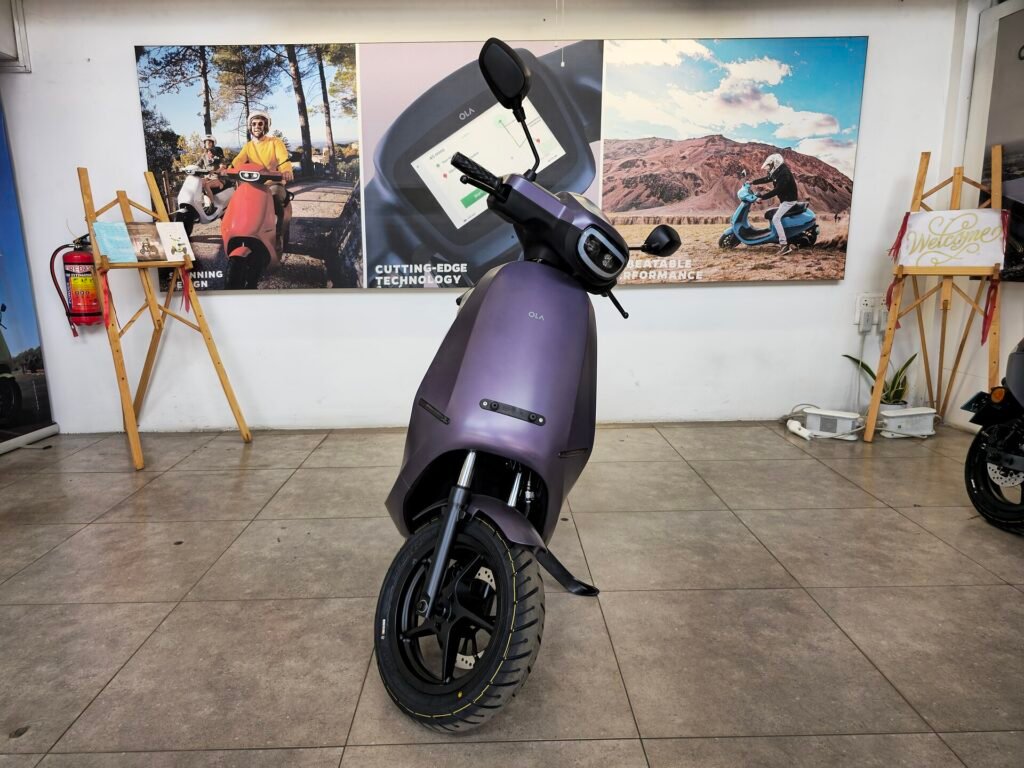
Featured image credit: Image: Ganesh Mohan T via Wikimedia Commons (CC BY-SA 4.0). Source
The Ather Konarc, launched on August 29, 2026 at a starting price of Rs 99,999, is the most aggressively priced scooter Ather has ever built — a deliberate move into the sub-Rs-1-lakh segment that Bajaj and TVS have used to dominate 2026’s sales charts. But is it actually the best value automatic in that price band, or does it cut too many corners to compete with the Bajaj Chetak 3501 and Ola S1 Pro? By Piyush P. Yadav.
Why the Konarc Matters
Ather has built its brand on being the “premium” electric scooter maker in India — bigger touchscreens, faster software updates, and a network of Ather Grid fast chargers. That positioning worked when the company was competing for early adopters, but through 2026 the market has moved decisively toward value: Bajaj and TVS together now account for roughly half of all electric scooter sales in India, largely on the back of scooters priced well under Rs 1.2 lakh. The Konarc is Ather’s answer — a stripped-down, sub-Rs-1-lakh model built to defend volume without abandoning the brand’s tech-first identity entirely.
Konarc: What You Get at Rs 99,999
- A smaller, simplified digital instrument cluster compared to the flagship 450 series’ large touchscreen, aimed at cutting bill-of-materials cost.
- Ather’s core software stack — OTA updates, ride statistics, and navigation — retained even at the entry price point.
- Access to the Ather Grid charging network, one of the largest proprietary fast-charging networks among Indian EV scooter makers.
- A range and top-speed spec positioned to match, not exceed, rivals in the same price band — this is a scooter built to hit a price point first, features second.
Konarc vs Ola S1 Pro vs Bajaj Chetak 3501
| Model | Starting Price | Positioning | Charging Network |
|---|---|---|---|
| Ather Konarc | Rs 99,999 | Value scooter with Ather’s software/UX retained | Ather Grid (proprietary fast chargers) |
| Bajaj Chetak 3501 | ~Rs 95,000-1,05,000 | Mass-market reliability, Bajaj service network | Home charging focus; limited fast-charging network |
| Ola S1 Pro | ~Rs 1,10,000-1,30,000 | Feature-heavy, largest battery options | Ola Hypercharger network |
Note: prices vary by state-level subsidy and exact variant; figures above reflect approximate on-road positioning as of September 2026 and should be verified with the nearest dealership before purchase.
Where the Konarc Wins
The clearest advantage is software continuity. Ather has historically offered longer and more reliable OTA update support than most Indian EV scooter makers, and the Konarc doesn’t sacrifice this despite the price cut. For a buyer who has been burned by inconsistent app performance or slow bug fixes on other brands, that alone can justify a small price premium over the Chetak. Access to Ather Grid — even if you rarely need fast charging on a daily commute — also adds resale and road-trip confidence that cheaper rivals don’t fully match.
Build quality and ride dynamics are another area where Ather has historically differentiated itself, with the 450 series earning a reputation for tighter panel gaps, more planted handling, and better braking feel than several rivals in the same price band. If the Konarc inherits even part of that chassis tuning while cutting cost elsewhere — the instrument cluster and some convenience features being the obvious places to save — it could end up being the rare budget EV scooter that doesn’t feel like a cost-cut version of a better product, but a genuinely well-engineered scooter that happens to be affordable.
Where It Doesn’t
Bajaj’s core advantage remains its service network — the company’s dealership and spare parts reach dwarfs Ather’s in tier-2 and tier-3 cities, which matters enormously for a scooter bought as daily transport rather than a lifestyle purchase. Ola’s S1 Pro, meanwhile, still out-specs the Konarc on raw battery and range options for buyers who prioritize maximum range over software polish, even though Ola’s own market share has been sliding through 2026 amid service complaints.
There’s also a practical charging-infrastructure consideration that cuts against the Konarc’s favour on paper but matters less in daily reality: Ather Grid, while extensive by Indian EV-scooter standards, is still concentrated in metro and tier-1 cities. A buyer in a smaller town may find that the charging-network advantage Ather touts simply isn’t accessible where they live, making home charging the only realistic option regardless of which brand they choose — in which case the Konarc’s software edge becomes the more relevant differentiator than its charging network.
Servicing and Ownership Costs Over Time
Electric scooter buyers increasingly factor in servicing costs and battery warranty terms alongside sticker price, and this is another area worth checking before deciding between the Konarc, Chetak 3501, and S1 Pro. Battery warranty periods and degradation guarantees differ across brands and are periodically revised, so buyers should confirm the current warranty terms directly with the dealership rather than relying on launch-day marketing claims, which can change by the time a specific unit is delivered. Bajaj’s established service network generally translates to lower turnaround times for repairs and part replacements outside major cities, a factor that matters more over a multi-year ownership period than it does at the point of purchase.
The Broader Market Context
The Konarc’s launch has to be read against a market that has shifted meaningfully in 2026. Bajaj and TVS together now account for roughly half of all electric scooter sales in India, a dramatic change from just a couple of years ago when Ola Electric and Ather led on volume and mindshare. That shift has come almost entirely through price — both Bajaj and TVS leaned on their existing two-wheeler manufacturing scale and dealer networks to undercut EV-focused challengers, and buyers responded. Ather’s move into the sub-Rs-1-lakh segment with the Konarc is a direct acknowledgment that premium positioning alone is no longer enough to defend market share in a category where most Indian buyers remain highly price-sensitive.
This also raises a longer-term question for Ather as a company: can it sustain two distinct product identities — the premium, feature-rich 450 series and the value-focused Konarc — without confusing its brand positioning or cannibalizing its own higher-margin sales? Scooter makers globally have struggled with this balancing act, and how Ather manages pricing, features, and marketing across both lines over the next year will be as important to watch as the Konarc’s initial sales numbers.
Who Should Buy the Konarc
The Konarc makes the most sense for existing two-wheeler owners in metro and tier-1 cities who want an Ather-grade software experience without paying Ather’s flagship 450-series prices, and who have reasonable access to Ather Grid charging points nearby. Buyers in smaller towns, or anyone who values service network breadth over app polish, are likely still better served by a Bajaj Chetak. Buyers chasing maximum range per charge should cross-shop the Ola S1 Pro’s higher-capacity variants before deciding. And anyone comparing all three on a test ride should pay particular attention to ride quality over broken city roads, brake feel under panic stops, and how each scooter’s app performs on a patchy mobile network — these are the details that separate a good showroom impression from a good daily-ownership experience, and they rarely show up in a spec sheet comparison alone.
Related Reading
- Ather Konarc at Rs 99,999, Simple Wave Launch and August 2026 E-Scooter Sales
- Top Electric Scooters in India 2026: Bajaj Chetak vs Ather 450X vs Honda Activa e
- Bajaj Crosses 3 Lakh EV Sales in 2026: How Chetak Became India’s No. 2 Electric Brand
- Bajaj Overtakes Ola Electric as Ather, Hero, VinFast Prep New Scooters
Frequently Asked Questions
What is the on-road price of the Ather Konarc?
The Ather Konarc starts at an ex-showroom price of Rs 99,999. On-road pricing will vary by state depending on registration costs and any state-level EV subsidies still in effect.
Does the Ather Konarc get Ather Grid charging access?
Yes, the Konarc retains access to Ather’s proprietary Ather Grid fast-charging network, one of the differentiators Ather has kept even at this lower price point.
Is the Ather Konarc cheaper than the Bajaj Chetak 3501?
The two are closely priced, with the Chetak 3501 generally positioned at or slightly below the Konarc’s Rs 99,999 starting price depending on variant and state subsidies. Buyers should compare exact on-road prices locally before deciding.
Why did Ather launch a budget scooter like the Konarc?
Bajaj and TVS have captured roughly half of India’s electric scooter market in 2026 largely through sub-Rs-1.2-lakh models. The Konarc is Ather’s attempt to compete in that price band without fully giving up its software and charging-network advantages.