

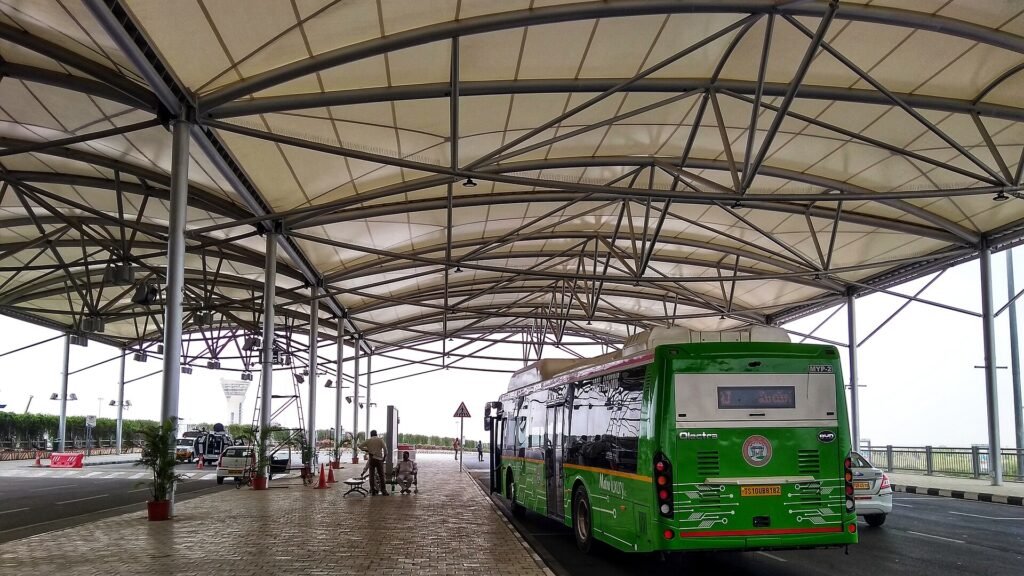
Featured image credit: Image: LoveofZ via Wikimedia Commons (CC BY-SA 4.0). Source
Convergence Energy Services Limited (CESL) has launched a second major electric bus tender covering 6,230 buses — 2,900 under PM E-DRIVE Tender-II and 3,330 specifically for Delhi — building on an earlier procurement of 10,900 buses that made India home to the largest electric bus deployment programme in the world. For fleet operators and bus manufacturers, this second round is where the real competitive battle for India’s e-bus market will play out. By Piyush P. Yadav.
The Two-Tender Structure
CESL’s electric bus procurement under PM E-DRIVE has unfolded in stages. The first major tender resulted in an order for 10,900 electric buses across major Indian cities, with PMI Electro winning the largest share at 5,210 buses, for deployment starting from 2026-27. The second tender, launched in January 2026, adds another 6,230 buses split between 2,900 units under PM E-DRIVE Tender-II (available to state transport undertakings nationally) and 3,330 units earmarked specifically for Delhi — making Delhi’s e-bus expansion one of the largest single-city electric bus procurements anywhere in India.
Why Delhi Gets Its Own Allocation
Delhi’s air quality crisis has made its transport electrification programme a political as well as environmental priority, and the city’s transport undertakings have consistently pushed for faster e-bus adoption than the national PM E-DRIVE pace alone would deliver. The 3,330-bus Delhi-specific allocation within this tender reflects that — it’s a parallel track designed to accelerate Delhi’s fleet conversion independent of how quickly other states move through their own tender allocations.
The Subsidy Structure
PM E-DRIVE allocates Rs 4,391 crore specifically for the procurement of over 14,028 e-buses by state transport undertakings nationwide, with subsidies of up to Rs 35 lakh per standard 12-metre electric bus. That per-bus subsidy figure is significant: it substantially closes the upfront cost gap between electric and diesel buses, which has historically been the biggest barrier to state transport undertakings switching their fleets, even though electric buses carry a lower total cost of ownership over their operating life due to reduced fuel and maintenance costs.
India’s Electric Bus Procurement at a Glance
| Tender/Programme | Bus Count | Key Details |
|---|---|---|
| First CESL tender (PM E-DRIVE) | 10,900 | PMI Electro largest winner (5,210 buses); deployment from 2026-27 |
| Second CESL tender — PM E-DRIVE Tender-II | 2,900 | Launched January 2026; national state transport undertaking allocation |
| Second CESL tender — Delhi allocation | 3,330 | Delhi-specific, part of India’s largest single-city e-bus expansion |
| PM E-DRIVE total e-bus subsidy pool | 14,028+ buses targeted | Rs 4,391 crore allocated; up to Rs 35 lakh subsidy per 12-metre bus |
The Complication: Localisation Deadline Overlap
This tender activity is unfolding at the same time as a separate but directly related policy problem: PM E-DRIVE’s new localisation requirement for e-bus and e-truck traction motors took effect September 1, 2026, with the Society of Indian Automobile Manufacturers (SIAM) having requested — and not yet received confirmation of — a seven-month extension citing rare-earth magnet supply disruption. Any manufacturer bidding on or fulfilling orders from this 6,230-bus tender must navigate that compliance uncertainty simultaneously, since motors that don’t meet localisation thresholds could jeopardize a winning bidder’s subsidy eligibility on delivered buses.
Financing and the Gross Cost Contract Model
Much of India’s electric bus procurement, including CESL’s tenders, has relied on the Gross Cost Contract (GCC) model, under which private manufacturers and operators own, maintain, and operate the buses while state transport undertakings pay a fixed per-kilometre fee rather than purchasing the buses outright. This model has been central to making India’s e-bus rollout financially viable for cash-strapped STUs, since it shifts the significant upfront capital cost — and much of the battery degradation and maintenance risk — onto private operators and financiers rather than state balance sheets already under fiscal pressure. The scale of this second tender means an equally large scale of financing commitment from the private operators and lenders backing successful bidders, which is itself a meaningful signal of financier confidence in India’s e-bus segment holding up over a typical 10-12 year GCC contract period.
What Fleet Operators and STUs Should Watch
State transport undertakings evaluating bids under this tender should confirm each bidder’s compliance status on the traction motor localisation rule directly, rather than assuming that winning a tender automatically guarantees uninterrupted subsidy disbursement if the manufacturer’s supply chain is still import-dependent. Given the scale of this procurement — among the largest in the world — any disruption to a major winning bidder’s production could have outsized knock-on effects on delivery timelines across multiple states.
Lessons From the First 10,900-Bus Tender
The earlier CESL tender offers a useful reference point for how this second round is likely to unfold. PMI Electro’s dominant share of the first tender — 5,210 of 10,900 buses — demonstrated that India’s e-bus market, unlike the more fragmented passenger EV car and scooter segments, has consolidated fairly quickly around a small number of manufacturers capable of executing at fleet scale. Winning a large government tender requires not just competitive bid pricing but proven ability to deliver, service, and maintain thousands of buses across multiple states simultaneously — a bar that has already filtered out smaller players in round one, and is likely to do so again in the 6,230-bus second round.
Deployment timelines from the first tender, targeted for 2026-27, will also serve as an early stress test for whether India’s charging and depot infrastructure can keep pace with rapidly growing electric bus fleets. Electric buses require dedicated depot charging infrastructure sized for overnight or opportunity charging across an entire fleet, which is a materially different infrastructure challenge than the public charging network built for passenger vehicles. Delays or bottlenecks in depot charging build-out during the first tender’s rollout would be an important signal for how realistically the second, larger tender’s delivery timelines should be read.
Why This Matters Beyond Buses
India’s e-bus procurement programme, cumulatively approaching 17,000+ buses across both CESL tenders, is one of the clearest signals of state-level commitment to EV adoption anywhere in the country — arguably more consequential for long-term emissions reduction than passenger car EV sales, given how much distance a single bus covers compared to a private car. The pace and success of this rollout will also serve as a real-world proving ground for India’s domestic e-bus manufacturing base, including how well companies like PMI Electro scale production to meet multi-thousand-unit order books, and whether the manufacturing and financing ecosystem supporting them can be replicated for the truck segment, which lags behind buses in both procurement scale and public visibility despite carrying similarly significant emissions-reduction potential for India’s freight and logistics sector.
Related Reading
- September 1 Localisation Deadline Hits E-Bus and E-Truck Makers: PM E-DRIVE Traction Motor Rules and SIAM’s Plea
- No Extension, No Clarity: What Happens Now That India’s EV Motor Localisation Deadline Has Passed
- India Imports 100% of Its EV Motor Magnets: The Rs 7,280 Crore Rare Earth Plan
- Electric Commercial Vehicles India 2026: Best Electric Trucks, Buses, and 3-Wheelers for Fleets
Frequently Asked Questions
How many electric buses has CESL tendered under PM E-DRIVE?
CESL has run two major tenders: an initial 10,900-bus procurement (with PMI Electro winning the largest share) and a second 6,230-bus tender launched in January 2026, split between 2,900 buses nationally and 3,330 buses specifically for Delhi.
What subsidy is available for electric buses under PM E-DRIVE?
PM E-DRIVE allocates Rs 4,391 crore for procurement of over 14,028 e-buses by state transport undertakings, offering subsidies of up to Rs 35 lakh per standard 12-metre electric bus.
Why is Delhi getting a separate e-bus allocation?
Delhi’s air quality priorities have driven a dedicated 3,330-bus allocation within CESL’s second tender, making it one of the largest single-city electric bus procurements in India, run in parallel with the national tender track.
Does the EV motor localisation rule affect this bus tender?
Yes. The traction motor localisation requirement that took effect September 1, 2026 applies to electric buses and trucks under PM E-DRIVE, and manufacturers bidding on or fulfilling this tender must navigate that compliance requirement, which remains unresolved for many suppliers due to rare-earth magnet supply issues.
What is the Gross Cost Contract model used for India’s electric buses?
Under the Gross Cost Contract (GCC) model, private operators own, maintain, and run the electric buses while state transport undertakings pay a fixed per-kilometre fee, shifting upfront capital and maintenance risk away from state budgets and onto private operators and financiers.