

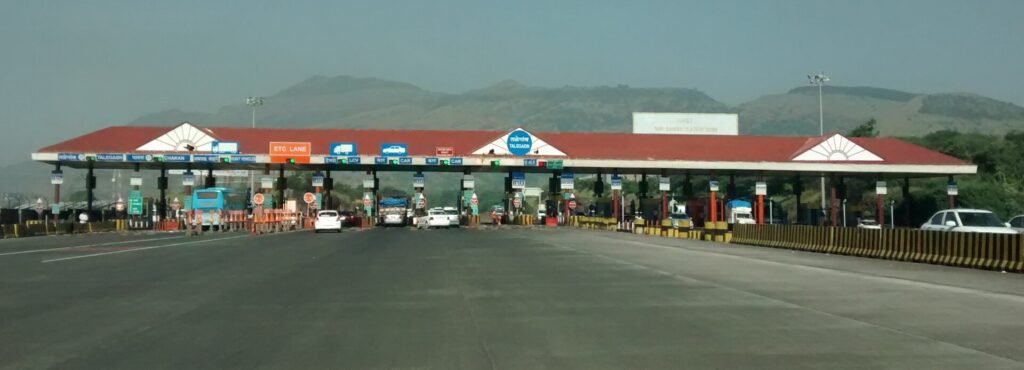
Featured image credit: Image: Rsrikanth05 via Wikimedia Commons (CC BY-SA 4.0). Source
By Piyush P. Yadav
Are electric cars toll-free in India? No, not as a rule. There is no national exemption: the toll rules that govern every National Highways Authority of India plaza make no distinction between a Nexon EV and a Nexon petrol, and a FASTag on an electric car is debited exactly like any other. The exception, and the reason the question is asked so often, is Maharashtra, which since 22 August 2025 has waived 100 per cent of the toll for pure electric passenger vehicles and electric buses on three of its most expensive roads: the Mumbai-Pune Expressway, the Samruddhi Mahamarg between Nagpur and Mumbai, and the Atal Setu sea link. On the Mumbai-Pune Expressway alone that is Rs 320 saved on every one-way trip. This guide sets out exactly where the exemption applies, who qualifies, how it is applied to your FASTag without you doing anything, what to do when a plaza charges you anyway, and why no other state has followed.
How we worked this out
We read the Maharashtra government’s notification as reported by The Tribune and CarDekho on 10 September 2026, checked the plaza-by-plaza toll on the Mumbai-Pune Expressway against the fleet operator Orbitmiles’ December 2025 account of running electric cars through the exemption, and confirmed the absence of any central exemption against the categories of vehicle listed in the National Highways Fee (Determination of Rates and Collection) Rules. We searched for comparable exemptions in Delhi, Karnataka, Tamil Nadu, Telangana, Gujarat and Uttar Pradesh and found none in force. Toll amounts are as published in early 2026 and can be revised annually.
The national position: EVs pay toll like everyone else
Toll on national highways is charged under central rules that exempt a fixed list of categories: certain official vehicles, ambulances, funeral vans, defence vehicles and a handful of others. Fuel type is not a criterion. The Ministry of Road Transport and Highways has never notified an EV exemption, and the annual and monthly pass schemes apply to electric cars on the same terms as petrol ones. Every state road-tax concession described in our guide to EV road tax by state is a state matter; toll on NHAI roads is not, which is why an electric car registered in tax-exempt Delhi still pays full toll on the Delhi-Jaipur highway.
The Maharashtra exemption in detail
| Item | Detail |
|---|---|
| Effective from | Midnight of 21/22 August 2025 |
| Legal basis | Notification under the Maharashtra Motor Vehicles Tax Act, 1958, issued by the state transport department under Transport Minister Pratap Sarnaik |
| Roads covered | Yashwantrao Chavan Mumbai-Pune Expressway; Hindu Hrudaysamrat Balasaheb Thackeray Samruddhi Mahamarg (Nagpur to Mumbai, 701 km); Atal Bihari Vajpayee Sewri-Nhava Sheva Atal Setu (Mumbai Trans Harbour Link) |
| Operator of the plazas | Maharashtra State Road Development Corporation (MSRDC) |
| Vehicles that qualify | Pure battery-electric passenger vehicles in the M categories, electric buses run by state transport undertakings, and electric buses run by private operators |
| Vehicles that do not | Hybrids of any kind, including strong hybrids such as the Innova Hycross; CNG; electric goods vehicles; electric two-wheelers (which do not use these roads) |
| Discount | 100 per cent on the three roads named; the state’s broader EV policy provides for partial concessions on other state highways, which are not yet uniformly implemented |
What it is worth
| Road | Car toll, one way | Saving for a daily commuter (22 working days, both ways) |
|---|---|---|
| Mumbai-Pune Expressway (Khalapur Rs 80 + Urse Rs 240) | Rs 320 | About Rs 14,000 a month |
| Atal Setu (Sewri to Nhava Sheva) | Rs 250 | About Rs 11,000 a month |
| Samruddhi Mahamarg, full length | Distance-based; the full 701 km run is the most expensive single toll in the state for a car | Occasional use; several hundred rupees per intercity trip |
For a Pune-Mumbai weekly commuter the exemption is worth more than the electricity the car uses on the trip. At 8.4 km per unit and Rs 8 a unit, a Creta Electric covers the 95 km expressway stretch for about Rs 90 of electricity while saving Rs 320 in toll. It is, per kilometre, the most valuable EV incentive in the country for the people who can use it, and it comes on top of Maharashtra’s road-tax waiver and purchase subsidy, which we set out alongside the five-year running costs in our electric versus petrol cost comparison.
How the exemption is applied: you do nothing
There is no form, no sticker and no separate pass. The system works off the vehicle’s registration record. When an EV is registered, the RTO records its fuel type as “Electric” or “BEV” in the national Vahan database. The FASTag issuer pulls the vehicle class and fuel type from that record when the tag is issued and linked. At an MSRDC plaza the reader identifies the tag, the toll system checks the vehicle’s flag, and the barrier lifts with zero deducted. Orbitmiles, which runs Citroen eC3, MG ZS EV and Kia Carens Clavis EV cabs through these plazas daily, describes the process as fully automated from the passenger’s side.
It follows that the exemption fails for exactly two reasons: the Vahan record does not say the car is electric, or the FASTag was issued against stale or wrong vehicle data. Before your first trip, check both.
- Look up the registration number on the Vahan citizen dashboard and confirm the fuel type reads Electric or BEV. If it does not, the RTO must correct the record, which takes one to two weeks.
- Open your FASTag issuer’s app and confirm the vehicle class and registration number match the RC. A tag transferred from a previous car, or bought at a plaza with a handwritten number, is the usual cause of a wrongly charged EV.
- On the first pass through Khalapur or Urse, watch the display: it should show zero. If it does not, note the transaction and raise a dispute with the issuer within the app, attaching the RC. Issuers are required to reverse wrongful deductions, and if they do not respond within a week the complaint can be escalated through the NHAI FASTag grievance channel even though the road is MSRDC’s, because the tag itself is governed by the national system.
Why no other state has done this
Toll on a state expressway is state revenue, and MSRDC can afford to forgo it on three roads because electric cars are still a small share of the traffic. Most states’ EV policies stop at road tax and registration, because those are one-time and predictable; toll is recurring and open-ended. Delhi’s EV Policy 2026, the most generous in the country on purchase incentives, does not touch toll, and the Delhi-Mumbai Expressway, the Yamuna Expressway and the Bengaluru-Mysuru Expressway all charge EVs in full. Karnataka has gone the other way entirely, introducing road tax on electric cars this year, as we reported when Karnataka ended its EV tax exemption.
The likelier national change is not an EV exemption but a change in how toll is collected. The move toward satellite-based, distance-charged tolling on national highways would make a fuel-type discount technically easy to apply, since every vehicle’s Vahan record would be checked on every kilometre. Whether the Centre would want to forgo the revenue is another question, and nothing has been proposed.
Who this is for, and the limits of the advice
This applies to private electric cars and to electric buses on the three named Maharashtra roads. Electric goods vehicles, including the Tata Ace EV and the electric pick-ups fleets use between Mumbai and Pune, are not covered. Hybrids are excluded regardless of how much of the journey they complete on electricity. Toll rates on the Mumbai-Pune Expressway are revised periodically, and MSRDC could narrow or end the concession by fresh notification; check the current position before basing a car purchase on it. The exemption does not reduce the electricity, tyre or depreciation costs of the trip, which we cover in our comparison of home and public charging costs.
Sources & Further Reading
- The Tribune: Maharashtra exempts EVs from paying tolls at Atal Setu, Mumbai-Pune Expressway, Samruddhi Highway
- CarDekho: Electric vehicles in Maharashtra need not pay tolls on these roads
- Orbitmiles: Are EVs toll-free in Maharashtra? Plaza-by-plaza account
People also ask
Is an electric car toll-free in India?
Not nationally. NHAI toll rules do not exempt electric vehicles, so EVs pay full toll on national highways. Maharashtra is the only state with a 100 per cent EV toll waiver, in force since 22 August 2025 on the Mumbai-Pune Expressway, Samruddhi Mahamarg and Atal Setu.
Do electric cars have to pay toll on national highways in India?
Yes. The National Highways Fee Rules exempt categories such as official, defence and emergency vehicles, not fuel types. An electric car’s FASTag is debited at the same rate as a petrol car’s on every NHAI plaza, including the Delhi-Mumbai and Yamuna expressways.
Does an EV pay road tax in India?
It depends on the state. Delhi (cars under Rs 30 lakh, to 2030), Maharashtra (to 2030), Tamil Nadu (to end-2027) and Telangana (registrations to 31 December 2026) waive it. Karnataka charges 5 to 10 per cent on electric cars from April 2026, and Uttar Pradesh’s waiver expired in October 2025.
How do I get the Maharashtra EV toll exemption on my FASTag?
There is no application. The RTO records the fuel type as Electric in Vahan, the FASTag issuer reads that flag, and MSRDC plazas lift the barrier with zero deducted. Check that Vahan shows Electric and that the tag is linked to the correct registration; if you are charged, dispute it with the issuer using the RC.
Is an electric car worth buying in India for a Mumbai-Pune commuter?
The toll waiver alone is worth about Rs 14,000 a month to a daily expressway commuter, on top of Maharashtra’s road-tax exemption and an electricity cost of roughly Rs 1 per km against Rs 6 to 7 for petrol. For that use case the five-year saving runs well into lakhs.