

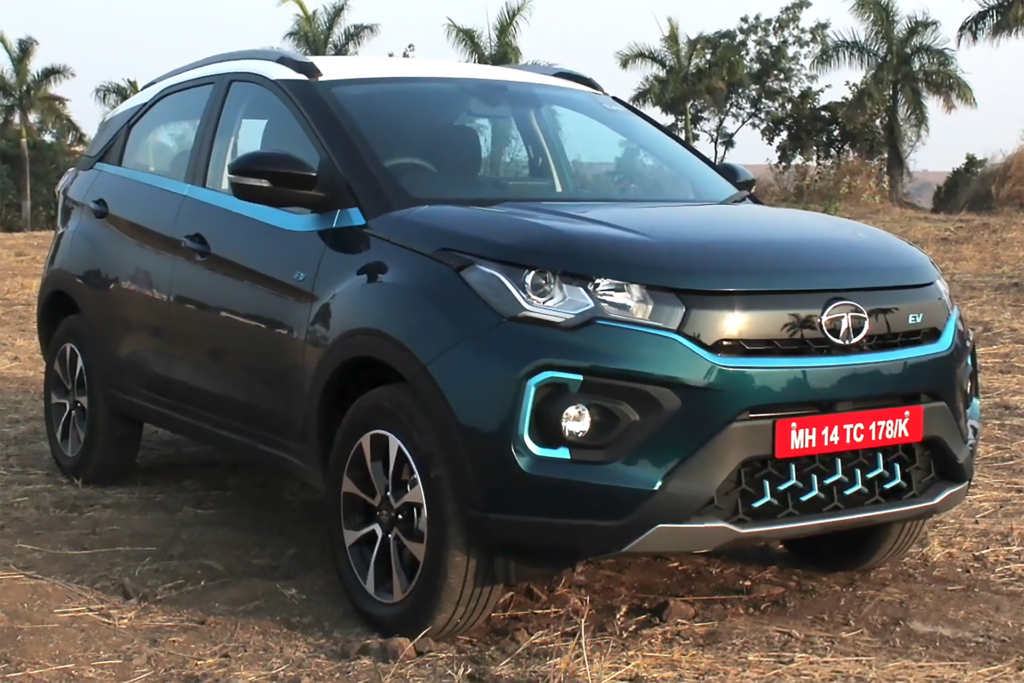
Featured image credit: Image: DriveSpark via Wikimedia Commons (CC BY 3.0). Source
By Piyush P. Yadav
India’s electric car market just posted its best August on record. According to retail registration data released by the Federation of Automobile Dealers Associations (FADA), passenger electric vehicle (PV) retail sales rose 51.89 per cent year-on-year to 30,696 units in August 2026, pushing EV penetration in the car market to 7.6 per cent from 5.8 per cent a year earlier. The broader EV story was even bigger: total EV retail across two-wheelers, three-wheelers, passenger vehicles and commercial vehicles hit 2,98,448 units, up nearly 53 per cent from 1,95,250 units in August 2025, taking overall EV penetration in India’s vehicle market to 12.3 per cent from 9.5 per cent.
FADA President Sai Giridhar called it the “biggest-ever August for electric mobility” in India, and the numbers back that up — every one of the four EV segments tracked by FADA recorded its highest-ever August retail volume. This piece breaks down what actually happened in the passenger car segment, who gained and who is catching up, and what two brand-new entrants mean for buyers shopping for an EV this festive season.
The Headline Numbers: August 2026 EV Retail in India
FADA’s retail data (based on vehicle registrations, not factory dispatches) captures what customers actually drove home, which makes it one of the more reliable monthly pulse checks on India’s EV transition. Here is how each vehicle segment performed:
| Segment | August 2026 Retail Units | YoY Growth | Penetration Aug 2026 (vs Aug 2025) |
|---|---|---|---|
| Overall EV (all segments) | 2,98,448 | +53% | 12.3% (vs 9.5%) |
| Electric two-wheelers | 1,83,204 | +67.05% | Segment-leading growth; TVS Motor topped the chart at 48,938 units, ahead of Bajaj Auto (41,114) and Ather Energy (28,757) |
| Passenger electric vehicles | 30,696 | +51.89% | 7.6% (vs 5.8%) |
| Electric commercial vehicles | 4,702 | +188.3% | Segment share rose to 5.18% (vs 2.06%) |
The commercial vehicle number is small in absolute terms but the growth rate — nearly tripling year-on-year — signals that fleet operators and last-mile logistics players are finally warming up to electric trucks and vans, a trend that lines up with recent moves like UltraTech’s push toward electric freight for cement logistics.
Passenger EV Sales: Tata Still Leads, but the Gap Is Narrowing
Within the 30,696 electric cars retailed in August 2026, five automakers accounted for almost the entire segment. Tata Motors Passenger Vehicles remained comfortably on top, but Mahindra and JSW MG Motor India both posted strong numbers, and two completely new brands — VinFast and Tesla — appeared in Indian showroom registrations for the first time in meaningful volume.
| Automaker | August 2026 PV EV Retail | Approx. Share of PV EV Segment |
|---|---|---|
| Tata Motors | 13,158 | ~42.9% |
| Mahindra & Mahindra | 6,464 | ~21.1% |
| JSW MG Motor India | 4,622 | ~15.1% |
| VinFast Auto India | 2,199 | ~7.2% |
| Tesla India Motors and Energy | 116 | ~0.4% |
| Total passenger EV segment | 30,696 | 100% |
Tata’s lead is built on volume-segment cars — the Nexon EV, Punch EV, Tigor EV and Curvv EV span the sub-15-lakh price bracket where most Indian EV buyers are currently shopping. It is also a big part of why, as we’ve covered before, electric cars still cost more than equivalent petrol cars in India once you back out GST differences and factory-gate pricing — volume brands like Tata are precisely the ones working hardest to close that gap.
Mahindra’s Second Place Is No Accident
Mahindra’s 6,464 units and roughly 21 per cent share reflect a deliberate two-pronged push: the BE 6 and XEV 9e continue to anchor its “Born Electric” range, while the newer six-seater XEV 9S, priced from roughly Rs 25.25 lakh to Rs 30.15 lakh with captain seats, has given the brand a genuine flagship to compete with the Hector Tomahawk EV and BYD’s eMax 7. We’ve also detailed Mahindra’s broader climb — including its BaaS (Battery-as-a-Service) pricing play on the XEV 9S — in our deep dive on Mahindra’s EV strategy, where the company’s overall electric mobility share (across categories) touched 21.5 per cent with 56 per cent growth.
JSW MG Motor: The Windsor EV Effect
JSW MG Motor India’s 4,622 units and roughly 15 per cent segment share continue to lean heavily on the Windsor EV and ZS EV, both of which have found a steady buyer base among first-time EV owners drawn to MG’s battery-subscription pricing model. MG’s continued third-place finish shows that affordable, well-marketed mid-size EVs still have plenty of headroom in India, even as more premium entrants crowd the top of the market.
The New Entrants: VinFast and Tesla Arrive in the Numbers
The most closely watched line items in August’s data are not from the established players. VinFast Auto India retailed 2,199 units, its strongest month yet in the country, built around aggressively priced compact SUVs aimed squarely at first-time EV buyers. Tesla India Motors and Energy, meanwhile, posted 116 units — a small number in absolute terms, but notable because it marks Tesla’s first real presence in Indian retail registration data after its long-awaited India entry.
Tesla’s volumes sit at the opposite end of the market from VinFast’s, competing more with premium imports and locally assembled luxury EVs. That segment has been unusually active this year: BMW’s recently launched i5 LWB, India’s first locally assembled electric sedan, priced at Rs 79.6 lakh, and the upcoming i7 facelift are both fighting for the same small but growing pool of luxury EV buyers that Tesla is now chasing. Even at 116 units, Tesla’s appearance in FADA’s monthly retail count is a milestone worth tracking in the months ahead, since it is the first full month of data reflecting actual customer deliveries rather than pre-launch bookings.
Why Passenger EV Sales Are Accelerating Now
A few factors are converging to push India’s electric car penetration from 5.8 per cent to 7.6 per cent in just twelve months:
- A wider spread of body styles and price points. Buyers can now choose between sub-Rs 10 lakh hatchbacks, mid-size SUVs like the Nexon EV and Creta Electric, and six-to-seven-seat family EVs such as the XEV 9S and Carens Clavis EV — a spread that simply didn’t exist two years ago.
- Improved real-world range confidence. As more owners rack up years of everyday use, concerns about range have shifted from “will it work at all” to more specific questions — including how EVs actually perform in cold weather and hill stations, which is now a mainstream buying consideration rather than a niche worry.
- Financing innovation. Battery-as-a-Service and subscription models, pioneered on scooters and now extending to cars like the XEV 9S, are lowering the effective upfront price for hesitant buyers.
- New entrants expanding the market rather than just cannibalising it. VinFast’s volumes appear to be coming largely from first-time buyers rather than existing EV owners switching brands, based on the segment’s overall growth rate outpacing any single competitor’s decline.
What This Means If You’re Shopping for an Electric Car Right Now
For prospective buyers, August’s data offers a few practical takeaways. First, the sub-15-lakh segment — where Tata and Mahindra’s mainstream models compete — remains the most contested and best-value part of the market, with the widest service network and fastest-growing charging infrastructure support. Second, if you’re eyeing a premium EV, this is the first month in a while where Tesla, BMW and established luxury players are genuinely competing for the same shortlist, so it is worth cross-shopping variants, warranty terms and charging bundles rather than assuming any one brand has a clear edge. Third, whichever segment you’re in, ask any dealer for the actual on-road price breakup — as we’ve explained previously, the gap between an EV’s and a petrol car’s price often comes down to GST treatment and factory-gate costs rather than just battery pricing, and that breakup materially affects your total cost of ownership.
None of this means the transition is complete — even at 7.6 per cent penetration, more than 92 in every 100 new cars sold in India in August 2026 were still petrol, diesel, or hybrid. But the trajectory, and the fact that global entrants like Tesla and VinFast are now showing up in monthly retail counts rather than just headlines, suggests the next twelve months of data will be worth watching closely.
Sources & Further Reading
- The Hans India — EV retail sales hit record August high of 2.98 lakh units, penetration rises to 12.3 pc: FADA
- Newsdrum — Two-wheelers power 53% jump in August EV sales, commercial EVs nearly triple
- EVFY — Electric 4-Wheeler Sales August 2026: Tata Still Leads India
- Morung Express — EV retail sales hit record August high of 2.98 lakh units, penetration rises to 12.3 pc: FADA
Frequently Asked Questions
How many electric cars were sold in India in August 2026?
According to FADA retail registration data, 30,696 passenger electric vehicles were retailed in India in August 2026, up 51.89 per cent from the same month in 2025.
Which company sold the most electric cars in India in August 2026?
Tata Motors Passenger Vehicles led the segment with 13,158 units, a share of roughly 42.9 per cent of all passenger EVs retailed that month, followed by Mahindra & Mahindra (6,464 units) and JSW MG Motor India (4,622 units).
What is India’s EV penetration rate for cars?
Electric vehicles accounted for 7.6 per cent of all passenger vehicle retail in India in August 2026, up from 5.8 per cent in August 2025, according to FADA.
Which new automakers entered India’s electric car market recently?
VinFast Auto India and Tesla India Motors and Energy both appear as new entrants in FADA’s August 2026 retail data, with VinFast retailing 2,199 units and Tesla retailing 116 units.