

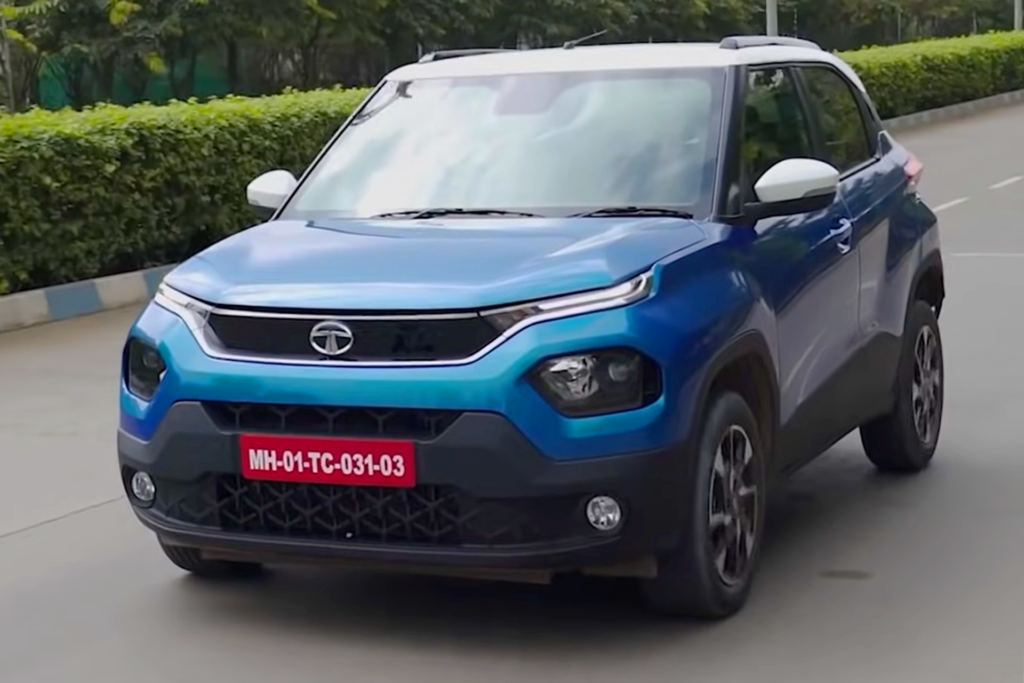
Featured image credit: Image: Athira Murali via Wikimedia Commons (CC BY 3.0). Source
By Piyush P. Yadav
The sub-Rs 15 lakh electric car segment has changed more in the last six weeks than in the previous six months. Kia’s Syros EV arrived in late July as the first India-made Kia electric SUV, priced from Rs 13.50 lakh. Tata Motors and Hyundai both announced price increases effective September 2026. And the festive season, when manufacturers traditionally stack their largest EV discounts, is about four weeks away. If you are shopping for an electric car with a Rs 15 lakh ex-showroom ceiling this month, here is the current field, what each car actually offers, and how to decide. All prices are ex-showroom starting prices as listed in September 2026 unless stated; treat them as indicative and confirm the post-hike figure with a dealer.
Every electric car under Rs 15 lakh in September 2026
| Model | Starting ex-showroom price | Battery options | Claimed range | Body style |
|---|---|---|---|---|
| Tata Tiago EV | Rs 5.84 lakh | 19.2 kWh, 24 kWh | Up to 315 km | Hatchback |
| MG Comet EV | Rs 6.41 lakh | 17.3 kWh | 230 km | Micro hatchback |
| Tata Punch EV | Rs 8.16 lakh | 25 kWh, 35 kWh | Up to 421 km | Micro SUV |
| Citroen eC3 X | Rs 9.45 lakh | 29.2 kWh | Around 320 km | Hatchback |
| MG Windsor EV | Rs 12.36 lakh (listing) | 38 kWh, 52.9 kWh | 332 km to 449 km | Crossover MPV |
| Tata Nexon EV | Rs 12.49 lakh | 30 kWh, 45 kWh | Up to 489 km | Compact SUV |
| Tata Tigor EV | Rs 12.49 lakh | 26 kWh | Around 315 km | Compact sedan |
| Kia Syros EV | Rs 13.50 lakh (Rs 7.99 lakh under BaaS) | 42 kWh, 51.4 kWh | 443 km to 526 km | Compact SUV |
| Mahindra XUV 3XO EV | Rs 13.89 lakh | Not confirmed at listing | Not confirmed at listing | Compact SUV |
Two cars sit just above the line and are worth knowing about. The Mahindra BE 6 Sporteq starts at Rs 15.45 lakh and the Maruti Suzuki e Vitara starts at Rs 15.99 lakh outright, or Rs 10.99 lakh under Maruti’s battery-as-a-service plan at Rs 3.99 per kilometre. Both are within a festive discount of the Rs 15 lakh ceiling.
The price hikes: what changed this month
Tata Motors has raised prices by up to Rs 25,000 across its ICE and EV range from September 2026, citing input costs and inflation, and has said the exact figure varies by model and variant. Hyundai has raised prices by up to 1 per cent across its portfolio; its only EV in this discussion is the Creta Electric, which is above Rs 18 lakh and outside this guide. We covered both revisions model by model in our report on the September 2026 Tata and Hyundai EV price hikes. The practical effect for this list is that the Tiago EV, Punch EV, Nexon EV and Tigor EV may each be up to Rs 25,000 dearer than the listing figures above, which pushes nothing over the Rs 15 lakh line but does narrow the Nexon EV’s advantage over the Syros EV.
Best under Rs 7 lakh: Tata Tiago EV vs MG Comet EV
These are the only two electric cars that compete with a mid-spec petrol hatchback on price. The Tiago EV is a conventional five-seat hatchback with a boot, two battery sizes and a range that, in the 24 kWh version, comfortably clears 200 km in real use. The Comet EV is a two-door micro car with a 17.3 kWh pack and 230 km claimed, brilliant for dense city commuting and tight parking but impractical as a family’s only car. If the EV will be the household’s second car for school runs and errands, the Comet is cheaper to buy and run. If it has to do everything, the Tiago EV is the answer.
Best under Rs 10 lakh: Tata Punch EV vs Citroen eC3 X
The Punch EV is the segment’s default choice and for good reason. It is built on Tata’s dedicated Gen 2 EV platform rather than a converted petrol car, offers a 35 kWh long-range pack with up to 421 km claimed, and has the strongest resale support in the segment thanks to Tata’s volume. Its mid-life update earlier this year sharpened the interior. The eC3 X undercuts it on the entry price and offers a bigger boot, but its 29.2 kWh single pack, thin dealer network and weaker resale keep it a niche pick. For most buyers at this budget, the Punch EV long-range is the car to test first.
Best under Rs 15 lakh: Nexon EV vs Syros EV vs Windsor EV vs XUV 3XO EV
This is where the segment has become genuinely competitive, and where the decision depends on what you value.
| Criterion | Tata Nexon EV | Kia Syros EV | MG Windsor EV | Mahindra XUV 3XO EV |
|---|---|---|---|---|
| Starting price | Rs 12.49 lakh (pre-hike) | Rs 13.50 lakh | Rs 12.36 lakh (listing) | Rs 13.89 lakh |
| Largest battery | 45 kWh | 51.4 kWh | 52.9 kWh | Not confirmed |
| Best claimed range | 489 km | 526 km | 449 km | Not confirmed |
| DC fast charging | Yes | 10 to 80 per cent in 39 minutes at 100 kW | Yes | Yes |
| Battery warranty | 8 years / 1.6 lakh km | Lifetime (first owner) on both packs | Lifetime (first owner) | Not confirmed |
| BaaS option | No | Rs 7.99 lakh plus Rs 3.30 per km | Yes (see MG) | Not confirmed |
| Standout | Widest dealer network, strongest resale | Longest range, fastest charging, frunk, V2L | Space and comfort, MPV-like cabin | Mahindra brand, newest entrant |
The Syros EV has moved the goalposts. A 51.4 kWh pack with 526 km claimed and 39-minute fast charging is a spec that a year ago cost Rs 18 lakh, and Kia’s lifetime battery warranty removes the single biggest anxiety of a first-time EV buyer. Its extended-range variants start at Rs 17 lakh, so what you get under Rs 15 lakh is the 42 kWh standard-range car with 443 km claimed, which is still ahead of the Nexon EV’s 45 kWh long-range on the official number. We looked at Kia’s broader plan in our analysis of Kia India’s EV strategy.
The Nexon EV counters with a proven product, a dealer in every district and the resale value that comes from being the best-selling electric SUV in India for years. After the September hike its price advantage over the Syros EV shrinks to under Rs 1 lakh at the entry point. The Windsor EV is the space champion, with a cabin that feels a class above, and MG’s lifetime battery warranty matches Kia’s. The XUV 3XO EV is the newest entrant and Mahindra’s first sub-Rs 15 lakh electric; we recommend waiting for full specifications before shortlisting it.
Outright purchase vs battery-as-a-service
Three cars on this list can be bought without the battery. Kia’s Syros EV BaaS price of Rs 7.99 lakh plus Rs 3.30 per km, Maruti’s e Vitara at Rs 10.99 lakh plus Rs 3.99 per km and MG’s Windsor BaaS all follow the same logic: a lower upfront price in exchange for a per-kilometre battery rental. The break-even depends entirely on how far you drive. At 1,000 km a month the Syros EV BaaS rental is Rs 3,300 a month, or about Rs 2 lakh over five years, against an upfront saving of Rs 5.5 lakh. At 2,500 km a month the rental is Rs 8,250 monthly and roughly Rs 5 lakh over five years, and the advantage evaporates. We built the full model in our battery-as-a-service cost maths explainer; the short version is that BaaS suits low-mileage city drivers and hurts high-mileage ones.
Running cost: what Rs 15 lakh buys you per kilometre
Every car on this list costs between Rs 1 and Rs 1.50 per kilometre to run on home charging at a typical Rs 7 to Rs 8 per unit tariff, against Rs 6 to Rs 8 per kilometre for a comparable petrol car. Our five-year EV versus petrol cost comparison found the fuel saving alone repays a Rs 3 lakh to Rs 4 lakh EV premium in three to four years at 12,000 km a year. Public fast charging costs two to three times more per unit, so buyers without a home charging point should read our guide to home versus public charging costs before deciding.
Should you wait for the festive season?
Probably, if the car you want is a Tata. Through August, non-X trims of the Curvv EV carried up to Rs 3.35 lakh in benefits and the Harrier EV had exchange and scrappage bonuses; the Nexon EV had the smallest benefits and the Punch EV had none listed. Manufacturers typically announce Navratri and Diwali offers in the second half of September, and EVs have featured prominently in those for the last three years. The Syros EV is too new to expect discounts, and Kia’s early-bird pricing may not last. The Windsor EV has seen periodic MG offers and is a good candidate for a festive deal.
The counter-argument is road tax. Karnataka has already ended its EV road-tax exemption, and other states are reviewing theirs. In a state that still waives road tax, the saving on a Rs 14 lakh EV is Rs 1 lakh to Rs 1.5 lakh, which exceeds most festive discounts. If your state is debating a change, buying before the notification beats waiting for a Diwali offer.
Our picks by use case
- Cheapest real family EV: Tata Tiago EV 24 kWh.
- Best all-rounder under Rs 10 lakh: Tata Punch EV long range.
- Best range and warranty under Rs 15 lakh: Kia Syros EV 42 kWh.
- Best for resale and service access: Tata Nexon EV 45 kWh.
- Best for space: MG Windsor EV.
- Best for low-mileage city drivers on a tight budget: Kia Syros EV or Maruti e Vitara under BaaS.
Sources & Further Reading
- CarWale: Best electric cars under Rs 15 lakh, September 2026
- Autocar India: Kia Syros EV launched at Rs 13.50 lakh
- CarWale: Tata Motors announces price increase from September 2026
- ZigWheels: Electric cars under Rs 15 lakh in India 2026
FAQ
Which is the best electric car under Rs 15 lakh in India in September 2026?
For range and warranty, the Kia Syros EV 42 kWh at Rs 13.50 lakh. For resale and service reach, the Tata Nexon EV 45 kWh. For space, the MG Windsor EV. Under Rs 10 lakh, the Tata Punch EV long range is the clear pick.
What is the cheapest electric car in India right now?
The Tata Tiago EV at Rs 5.84 lakh ex-showroom (before Tata’s September revision of up to Rs 25,000), followed by the MG Comet EV at Rs 6.41 lakh.
Have EV prices gone up in September 2026?
Tata Motors has raised prices by up to Rs 25,000 across its EV range and Hyundai by up to 1 per cent, both effective September 2026. Other brands had not announced changes at the time of writing.
Is battery-as-a-service worth it?
Only for low-mileage drivers. At around 1,000 km a month the upfront saving outweighs the per-kilometre rental over five years; above roughly 2,000 km a month, outright purchase is cheaper.
Do electric cars under Rs 15 lakh get a government subsidy in 2026?
Not from the Centre. PM E-DRIVE’s purchase incentives cover electric two- and three-wheelers, buses, trucks and ambulances, but privately registered electric cars were deliberately left out of the demand-incentive component. What a car buyer actually saves comes from the 5 per cent GST rate and from state road-tax and registration waivers, which in Delhi, Maharashtra, Tamil Nadu or Telangana can be worth over Rs 1 lakh on a Rs 15 lakh car — and which Karnataka and Uttar Pradesh have now withdrawn.
Is the lifetime battery warranty on the Syros EV or Windsor EV transferable if I sell the car?
No — lifetime means the first owner only. On the MG Windsor EV the unlimited-duration battery cover applies solely to the first individual owner of a privately registered car; on resale the second owner falls back to a standard 8-year or 1,60,000 km battery warranty, and MG must be notified of the transfer. Commercial registrations and company-owned cars are excluded from the lifetime term altogether. Treat it as a benefit you consume while you own the car rather than one that lifts its resale price.
How much does it cost to service an electric car in India each year?
Budget roughly Rs 2,000 to Rs 5,500 a year for scheduled servicing on a mass-market EV, against about Rs 6,000 to Rs 10,000 for an equivalent petrol car, because there is no engine oil, oil filter, air filter, spark plug or timing belt to replace. The recurring items are the cabin filter, brake fluid, coolant and tyres. The one bill owners routinely forget is the 12V auxiliary battery, replaced every three to four years at around Rs 5,000 to Rs 7,000.