

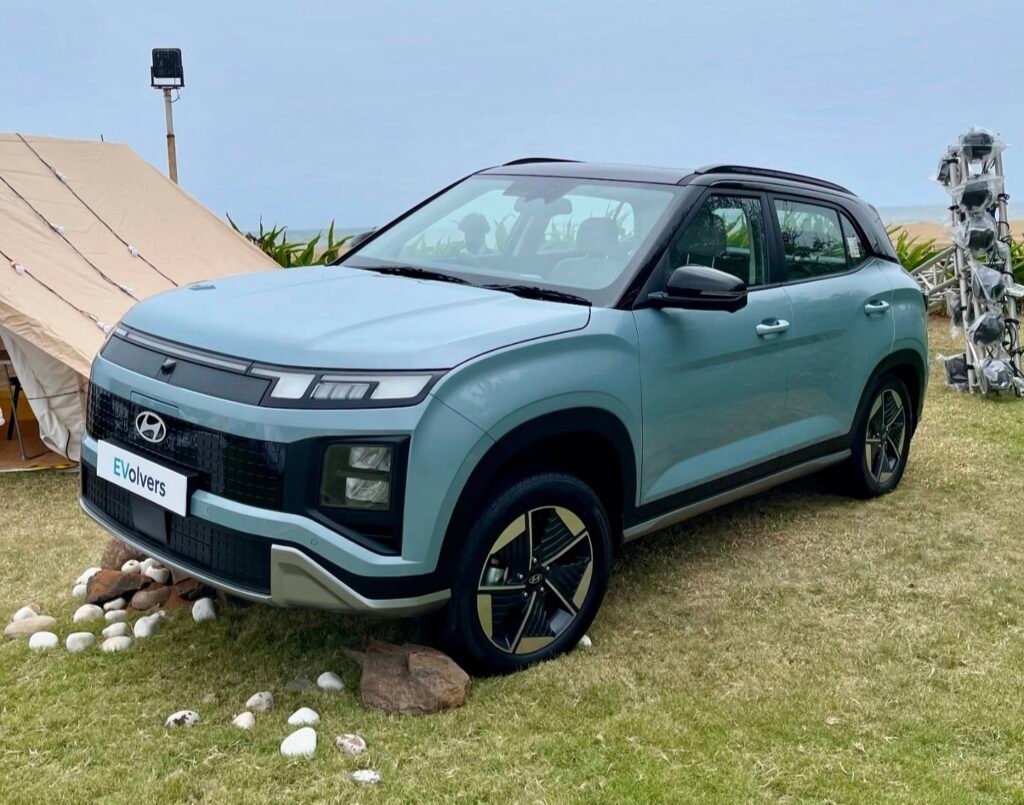
Featured image credit: Image: Avante2025 via Wikimedia Commons (CC BY 4.0). Source
By Piyush P. Yadav
Every electric car brochure in India carries a range figure, and almost none of them is a number you will see on the road. The Mahindra BE 6 claims 682 km and delivered 449 km in Autocar India’s standardised test. The Tata Tigor EV claims 315 km and managed 190. The Hyundai Creta Electric claims 473 km and returned 432. The gap between the sticker and the street runs from 7 per cent to 40 per cent depending on the car, and it is not random: it follows the test cycle the manufacturer used, the battery chemistry, the car’s weight and, above all, how fast you drive.
This buying guide explains where the claimed numbers come from, why some cars lose a third of their range and others almost nothing, what the fifteen most popular EVs actually delivered in independent testing, and how to work out the real range you will get before you sign the booking form. If you are choosing between two cars on range, this is the number to compare, not the one on the poster.
Where the claimed figure comes from: MIDC, ARAI and WLTP
Indian manufacturers certify range on the Modified Indian Driving Cycle, administered by ARAI or ICAT. MIDC is a laboratory test on a dynamometer in which the car follows a speed trace that averages under 35 km/h and never exceeds 90 km/h, with the air conditioning off. It was designed in the 1990s to approximate Indian urban driving for emissions testing, and it flatters electric cars because regenerative braking recovers a large share of energy at low speeds and there is no aerodynamic penalty.
WLTP, the European cycle, is more demanding: it averages about 47 km/h, reaches 131 km/h and runs longer. A car that claims 500 km on MIDC would typically claim 400 to 430 km on WLTP. Luxury imports such as the BMW iX, the Porsche Macan Electric and the Range Rover Electric quote WLTP, which is why their numbers look modest next to Indian brands’ MIDC claims for cars with similar batteries. When comparing across the two standards, discount an MIDC figure by 15 to 20 per cent to get a WLTP equivalent.
| Test cycle | Used by | Average speed | Top speed | Air conditioning | Typical gap to Indian real-world |
|---|---|---|---|---|---|
| MIDC (ARAI/ICAT) | Tata, Mahindra, MG, Hyundai, Kia, Maruti, Toyota | Under 35 km/h | 90 km/h | Off | 25 to 35 per cent |
| WLTP | BMW, Mercedes, Porsche, Volvo, JLR, VinFast (some) | About 47 km/h | 131 km/h | Off | 10 to 20 per cent |
| Manufacturer “real-world” claim | Tata (C75), Mahindra (some launches) | Varies | Varies | Varies | 5 to 15 per cent |
Tata has started publishing a “C75” figure alongside its MIDC claim, meaning the range 75 per cent of drivers should achieve. For the Nexon EV 45 that is 350 to 375 km against an MIDC 489 km, which is close to what independent testers find. It is the most honest number in the industry and worth asking every dealer for.
What fifteen EVs actually delivered
Autocar India published its most comprehensive real-world range test in April 2026, running fifteen mass-market EVs through the same combined city and highway cycle. The results are the best independent dataset available for the Indian market and are reproduced below, sorted by the size of the gap.
| Model | Battery | Claimed (MIDC) | Tested real-world | Gap | Efficiency (km/kWh) |
|---|---|---|---|---|---|
| Citroen eC3 | 29.2 kWh | 246 km | 228 km | -7% | 7.8 |
| MG Windsor EV | 38 kWh | 332 km | 308 km | -7% | 8.1 |
| Hyundai Creta Electric | 51.4 kWh | 473 km | 432 km | -9% | 8.4 |
| MG Comet EV | 17.3 kWh | 230 km | 193 km | -16% | 11.2 |
| VinFast VF7 | 70.8 kWh | 510 km | 391 km | -23% | 5.5 |
| MG ZS EV | 50.3 kWh | 461 km | 339 km | -26% | 6.7 |
| Kia Carens Clavis EV | 51.4 kWh | 490 km | 364 km | -26% | 7.1 |
| Tata Curvv EV | 55 kWh | 502 km | 365 km | -27% | 6.6 |
| Tata Nexon EV 45 | 45 kWh | 489 km | 350 km | -28% | 7.8 |
| Mahindra XEV 9e | 79 kWh | 656 km | 456 km | -30% | 5.8 |
| Mahindra XEV 9S | 79 kWh | 679 km | 478 km | -30% | 6.1 |
| Tata Tiago EV | 24 kWh | 275 km | 187 km | -32% | 7.8 |
| Mahindra BE 6 | 79 kWh | 682 km | 449 km | -34% | 5.7 |
| Tata Harrier EV AWD | 75 kWh | 622 km | 401 km | -35% | 5.3 |
| Tata Tigor EV | 26 kWh | 315 km | 190 km | -40% | 7.3 |
Efficiency figures are derived from tested range divided by usable battery capacity and are approximate. The Comet’s 11.2 km/kWh is the best in the market; the Harrier EV AWD’s 5.3 km/kWh is the worst, which is what a 2.3-tonne SUV with two motors costs you.
Why the gap varies so much
Four factors explain most of the spread in that table.
- How optimistic the certification was. Hyundai, MG and Citroen certified conservatively and their cars come within 10 per cent of the claim. Tata and Mahindra certified aggressively and their cars lose 27 to 40 per cent. Neither approach is dishonest; the MIDC test permits both. But it means a Creta Electric at 473 km claimed and a Curvv EV at 502 km claimed deliver 432 km and 365 km respectively, which reverses the order.
- Weight and aerodynamics. The BE 6 and XEV 9e share a 79 kWh pack; the lighter, sleeker XEV 9S delivers 29 km more than the BE 6 on the same energy. The Harrier EV AWD’s second motor and mass cost it more than a third of its claim.
- Speed. Aerodynamic drag rises with the square of speed. An EV that returns 8 km/kWh at 60 km/h will return roughly 5.5 km/kWh at 100 km/h and under 5 at 120 km/h. On an expressway run the gap to MIDC widens for every car in the table, and the small-battery cars suffer most in absolute terms because they have no margin.
- Air conditioning and heat. Cabin cooling at 40 degrees draws 1.5 to 3 kW continuously, which on a two-hour drive is 3 to 6 kWh, or 10 to 20 per cent of a 30 kWh battery. Battery thermal management adds more. The MIDC test runs with the AC off, so this is entirely unaccounted for in the claim.
A fifth factor, battery degradation, does not appear in a new-car test but matters over ownership. We covered what real-world state-of-health data shows in our guide to EV battery degradation in India; a pack at 90 per cent health after five years takes 10 per cent off every figure above.
How to estimate your own real range
A simple three-step method that gets within 10 per cent for most cars.
- Start with the tested figure from the table above, or if the car is not there, take 72 per cent of the MIDC claim for a Tata or Mahindra, 85 per cent for a Hyundai, Kia, MG or Maruti, and 88 per cent of the WLTP claim for a European import.
- Adjust for your driving. Mostly city under 60 km/h: add 10 per cent. Mostly expressway at 100 km/h or more: subtract 20 per cent. Mixed: leave it.
- Adjust for your climate and habits. Summer with AC at full: subtract 10 per cent. Charging routinely to 80 per cent rather than 100, which most owners do to protect the battery: multiply by 0.8 for your usable daily range.
Worked example: a Nexon EV 45 for a Delhi buyer with a 60 km daily commute and monthly Chandigarh trips. Tested range 350 km. Mixed driving, no adjustment. Summer AC, minus 10 per cent: 315 km. Charged to 80 per cent daily: 252 km of usable range, more than four days of commuting. For the 250 km Chandigarh run, charge to 100 per cent, expect 280 to 300 km at expressway speed with AC, and plan one short top-up on the return.
What this means for which car to buy
Three practical conclusions. First, for a city car, a small battery is fine and cheap: the Comet, Tiago EV and Windsor all deliver 190 to 310 km real, which covers a week of urban commuting between charges. Our guide to the best electric cars under Rs 15 lakh ranks them. Second, for regular highway use, buy on tested highway range, not MIDC: the Creta Electric at 432 km real beats the Curvv EV and Nexon EV despite claiming less, and the XEV 9S at 478 km is the longest-legged mass-market EV in India. Our comparison of electric SUVs between Rs 16 and 25 lakh uses real-world figures throughout. Third, do not pay for a bigger battery than you need. The extra 20 to 30 kWh costs Rs 2 to 4 lakh, adds weight that reduces efficiency, and is used perhaps ten times a year. Fast charging at 60 to 120 kW, now available on most highways, is a cheaper way to cover the occasional long trip, as our home vs public charging cost comparison shows.
Questions to ask at the dealership
Ask for the C75 or manufacturer real-world figure, not just MIDC. Ask what the range readout showed on the demo car at 100 per cent and how many kilometres it had covered since the last charge; the difference is the dealer’s own real-world number. Ask whether the range display is a fixed estimate or adapts to your driving; adaptive displays (Hyundai, Kia, Mahindra) are more useful. And on the test drive, note the battery percentage and trip odometer at the start and end, then divide: a 15 km test drive that used 4 per cent of a 45 kWh pack implies about 375 km, which is a better number than anything in the brochure.
Sources & Further Reading
- Autocar India: Real-world EV range tested of top EV cars in India
- MeraEV: Longest range electric cars in India 2026, every model above 500 km ranked
- MotoMotar: Best electric cars in India 2026, real-world range and price guide
- Autonexa: How to plan a long EV road trip in India, 2026 guide
Frequently Asked Questions
Why is the real range of an electric car lower than the claimed range?
Indian claims use the MIDC laboratory cycle, which averages under 35 km/h, never exceeds 90 km/h and runs with the air conditioning off. Real driving involves higher speeds, AC load, heat and heavier loads, so independent tests find real range is 7 to 40 per cent below the claim depending on the car.
Which electric car in India has the smallest gap between claimed and real range?
In Autocar India’s April 2026 test, the Citroen eC3 and MG Windsor EV lost only 7 per cent and the Hyundai Creta Electric 9 per cent. The Tata Tigor EV lost 40 per cent and the Tata Harrier EV AWD 35 per cent.
Which electric car has the longest real-world range in India?
Among mass-market cars tested, the Mahindra XEV 9S at 478 km, followed by the XEV 9e at 456 km and the BE 6 at 449 km, all with 79 kWh batteries. The Hyundai Creta Electric delivered 432 km from a 51.4 kWh pack.
How do I calculate my own real EV range?
Start with an independent tested figure or 72 to 85 per cent of the MIDC claim depending on brand, add 10 per cent for city-only driving or subtract 20 per cent for expressway use, subtract 10 per cent for summer AC, and multiply by 0.8 if you charge to 80 per cent daily.