

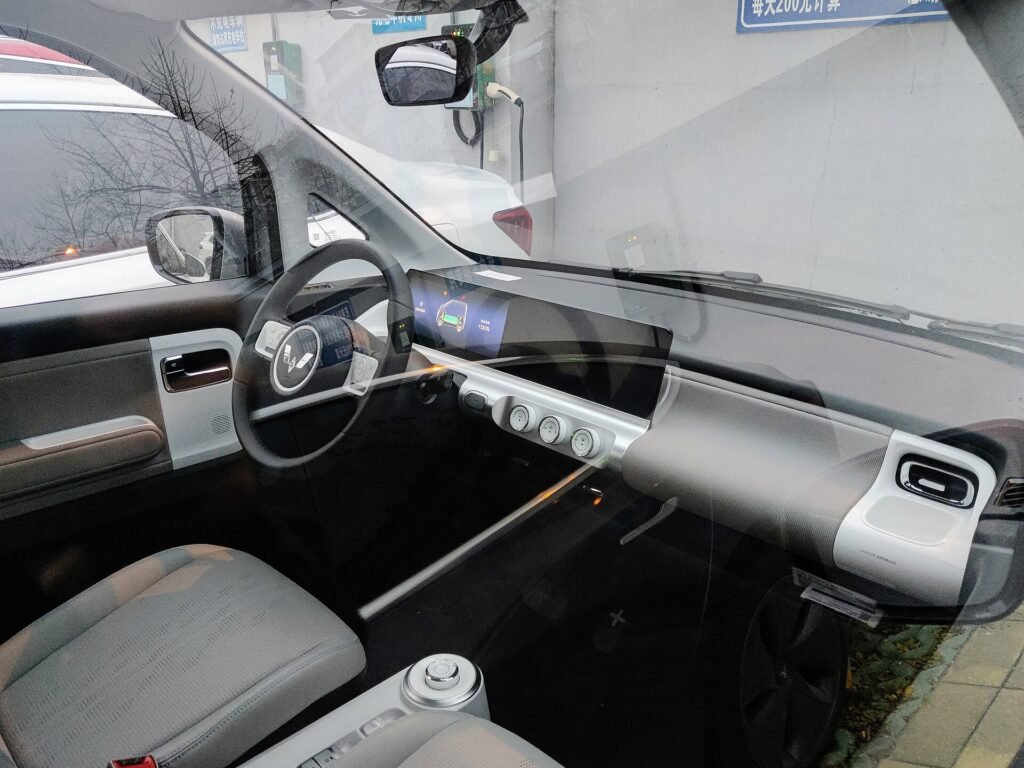
Featured image credit: Image: Zotyefan via Wikimedia Commons (CC BY-SA 4.0). Source
By Piyush P. Yadav
If you are leaving your electric car parked for a few weeks while you travel, the short answer is this: charge it to between 30 and 50 percent, not to 100 and not to empty, park it under cover, and check on it roughly every six weeks. Tata Motors puts the Nexon EV’s storage self-discharge at “approximately 2% over a period of 30 days”, which means a month of standing still costs you almost nothing in range. What actually kills EVs in Indian parking lots is not the big battery at all. It is the small 12V battery, and the fact that most owners leave the car at 100 percent or at 4 percent because nobody told them otherwise.
How we worked this out
Most storage advice online is written for American winters and quotes Tesla settings. So we went to the primary document instead: the Tata Nexon EV Owner’s Manual, section “Vehicle Parking For Long Duration (Non-Use Maintenance)” on page 206 — the one widely available India-market EV manual that spells out a storage procedure step by step. We then checked the insurance angle against the actual IRDAI-filed wording for ICICI Lombard’s Battery Protect Cover, which contains a clause about unused vehicles that almost nobody has read. Both documents were checked on 12 September 2026. Where a number comes from one manufacturer’s manual, we say so rather than pretending it applies to every EV on sale.
The number that matters: about 2% a month
The Nexon EV manual states that “the HV battery undergoes discharge at a rate of approximately 2% over a period of 30 days in storage.” That is the headline fact, and it reframes the whole question. A 45 kWh pack left standing for 30 days loses roughly 0.9 kWh. On a car that does about 5 km per kWh in city use, that is under 5 km of range gone in a month.
So a month of parking is, in battery terms, nothing. Three months is still not much. The risk is not depletion over a normal holiday; the risk is starting from the wrong number.
| Pack size | Charge lost in 30 days (at ~2%) | Starting at 40% SoC, level after 90 days | Starting at 8% SoC, level after 90 days |
|---|---|---|---|
| 24 kWh (Tiago EV MR) | ~0.5 kWh | ~34% | ~2% |
| 30 kWh (Nexon EV 30) | ~0.6 kWh | ~34% | ~2% |
| 45 kWh (Nexon EV 45 / Curvv EV 45) | ~0.9 kWh | ~34% | ~2% |
| 59 kWh (Mahindra BE 6 standard) | ~1.2 kWh | ~34% | ~2% |
| 75 kWh (Harrier.ev long range) | ~1.5 kWh | ~34% | ~2% |
The percentage drop is identical whatever the pack size, because self-discharge is proportional. Park at 40 percent and three months later you are at about 34 percent — perfectly healthy. Park at 8 percent because you ran out of time before the flight, and three months later you are at roughly 2 percent, the zone the manual explicitly warns against: “Do not allow the vehicle to be discharged to 0% in storage.”
Why not 100 percent either
The instinct is to top up to 100 before you leave. Tata’s recommendation goes the other way: “it is recommended that the vehicle must be charged to a charge level in between 30% to 50% before leaving the vehicle for long time storage.” A cell held at full charge sits at its highest internal voltage, and calendar ageing at high state of charge is one mechanism behind long-term capacity fade — our explainer on EV battery degradation and state of health in India covers how that fade is measured on Indian cars.
The manual also tells you what to do at the other end: “After this time period the vehicle must be charged to 100% using Normal Charging or AC charging before use.” Not a DC fast charger. A slow AC charge after a long lay-up lets the pack balance cells properly.
The real failure mode: the 12V battery
Ask around any Indian EV owners’ group and the story is always the same. The car sat for three weeks, the owner came back, and nothing happened when they pressed the start button — while the main battery still showed 60 percent. That is a dead 12V battery, and it is the single most common long-parking failure on electric cars in India.
The manual is blunt about the architecture: the car “uses two types of battery systems”, and “the high voltage battery also charges the 12-volt battery.” That last sentence is the trap. The 12V is topped up through the DC-DC converter, but only when the car wakes up. A car parked with telematics, alarm and body control modules drawing a trickle can flatten a small lead-acid 12V battery in weeks, and lead-acid left deeply discharged does not recover cleanly.
Tata’s instruction for long parking is therefore step 2 in the list, before almost everything else: “Remove the 12V battery terminal cables (first remove the cable from the negative terminal). Ensure that 12V battery is fully charged.” Disconnect it, and disconnect the negative first so a slipped spanner cannot short the terminal to the body.
The full long-parking checklist, from the manual
- Park in a covered, dry and if possible well-ventilated space. In India this matters as much for a 46°C Nagpur April as for a Kerala monsoon.
- Charge the HV battery to 30–50 percent.
- Disconnect the 12V battery, negative terminal first, with the 12V battery itself fully charged.
- Block the wheels or leave it in the appropriate gear mode.
- Inflate the tyres to 0.5 bar above the normal specified pressure and re-check at intervals, which limits flat-spotting.
- Protect painted and bright metal parts; talcum powder on the wiper blades and lift them off the glass.
- Leave the windows very slightly open and cover the car with cloth or perforated plastic — never solid plastic sheeting, which traps moisture.
- Check the HV battery charge every six weeks.
- Do not drain the motor cooling system coolant.
The perforated-cover rule matters most in India: a sealed plastic sheet over a car in coastal humidity is a rust incubator.
The insurance clause nobody reads
Here is the part that turns a maintenance question into a money question. The IRDAI-filed wording for ICICI Lombard’s Battery Protect Cover add-on — the optional cover that exists precisely to pay for water-ingress and short-circuit damage to the traction battery and drive motor — carries an explicit exclusion list. Two clauses are about parked cars:
- The insurer is not liable where the “vehicle stopped due to over discharge of batteries and is not plugged for charge within 24 hrs from the time of stoppage.”
- The insurer is not liable where the “vehicle is left unused for more than 90-days with unplugged condition (A/C main power off).”
Read plainly, that add-on stops protecting a car that has been sitting unplugged for more than 90 days. Go abroad for four months, leave the car in a basement at 5 percent with no power to the charge point, and you may have satisfied the manual while walking outside the add-on’s terms. We cover the wider add-on landscape in our guide to EV loan interest rates and insurance in India.
Does the warranty care?
Battery warranties in India are written around capacity retention and defects, not around parking habits, and no major Indian manufacturer publishes a “you must charge it every N days” clause in its standard battery warranty. That said, every manual instructs you not to leave the pack at zero, and a pack driven into deep discharge and left there is the kind of damage a manufacturer will argue was owner-induced. Our brand-by-brand comparison of EV battery warranties in India lays out what each maker actually promises and for how long.
A practical rule for Indian owners
Up to two weeks, do nothing special: leave it at 50–60 percent and locked. A month or more, follow the 30–50 percent rule and disconnect the 12V, or have the service centre do it. Three months or more, arrange a six-week check — and if there is a working charge point where the car is parked, leaving it plugged in is the better option, because it keeps both batteries alive and keeps you inside the insurance add-on’s wording.
Who this is for, and who should ignore it
This is for private owners parking a car for weeks or months — people posted abroad, families leaving a second car at a farmhouse. It is not for fleet operators, and it is not a substitute for your own car’s manual. The 2 percent per 30 days figure, the 30–50 percent recommendation and the 12V disconnect instruction are Tata’s, published for the Nexon EV. Other manufacturers may specify different numbers, and some models manage storage charge in software. Read your own manual’s non-use section before following a rule written for another car. If your battery is already degraded or the car has an open service campaign, speak to the service centre rather than laying it up.
Sources & Further Reading
- Tata Nexon EV Owner’s Manual — “Vehicle Parking For Long Duration (Non-Use Maintenance)”, p.206
- IRDAI filing: ICICI Lombard Battery Protect Cover add-on wording
- Business Today: Battery damage and EV insurance — what is covered and what is excluded
People also ask
Does an EV battery drain when the car is not in use?
Yes, but very slowly. Tata’s Nexon EV manual puts storage self-discharge at approximately 2 percent over 30 days, so a 45 kWh pack loses under 1 kWh in a month. The faster drain is on the 12V accessory battery, which powers alarms, telematics and body electronics and can go flat in a few weeks if the car is never woken up.
What state of charge should I leave my EV at when parking it long term?
Between 30 and 50 percent. That is Tata’s published recommendation for long-term storage of the Nexon EV, and it matches general lithium-ion practice: a pack held at 100 percent ages faster, and a pack near zero risks deep discharge. Charge it back to 100 percent using normal AC charging, not DC fast charging, before you drive it again.
How long can an electric car sit without charging in India?
A healthy EV parked at 40 percent can sit for three months and still be at roughly 34 percent, because self-discharge is only around 2 percent a month. The practical limit is set by the 12V battery and by your insurance add-on wording, not by the traction pack. Check on the car every six weeks.
What happens when an EV battery goes to 0 percent and stays there?
It is the one outcome every manual tells you to avoid. Tata’s instruction is explicit: “Do not allow the vehicle to be discharged to 0% in storage.” A lithium-ion pack held at zero for a long period can suffer damage that is not covered as a defect, and insurers exclude claims where the vehicle stopped from over-discharge and was not plugged in within 24 hours.
Should I disconnect the 12V battery before parking my EV for a month?
Tata’s manual says yes: remove the 12V terminal cables, negative first, and make sure the 12V battery is fully charged before you do. If you are not comfortable doing that, ask the service centre, or leave the car plugged in to a working charge point instead so the DC-DC converter keeps the 12V topped up.
Is it better to leave an EV plugged in while I am away?
If the car is parked somewhere with a safe, working charge point, leaving it plugged in is usually the easier option: it keeps the 12V alive, lets the car manage its own state of charge, and keeps you inside insurance add-on clauses that exclude vehicles left unused and unplugged for more than 90 days. If no reliable power is available, follow the 30–50 percent storage rule instead.