

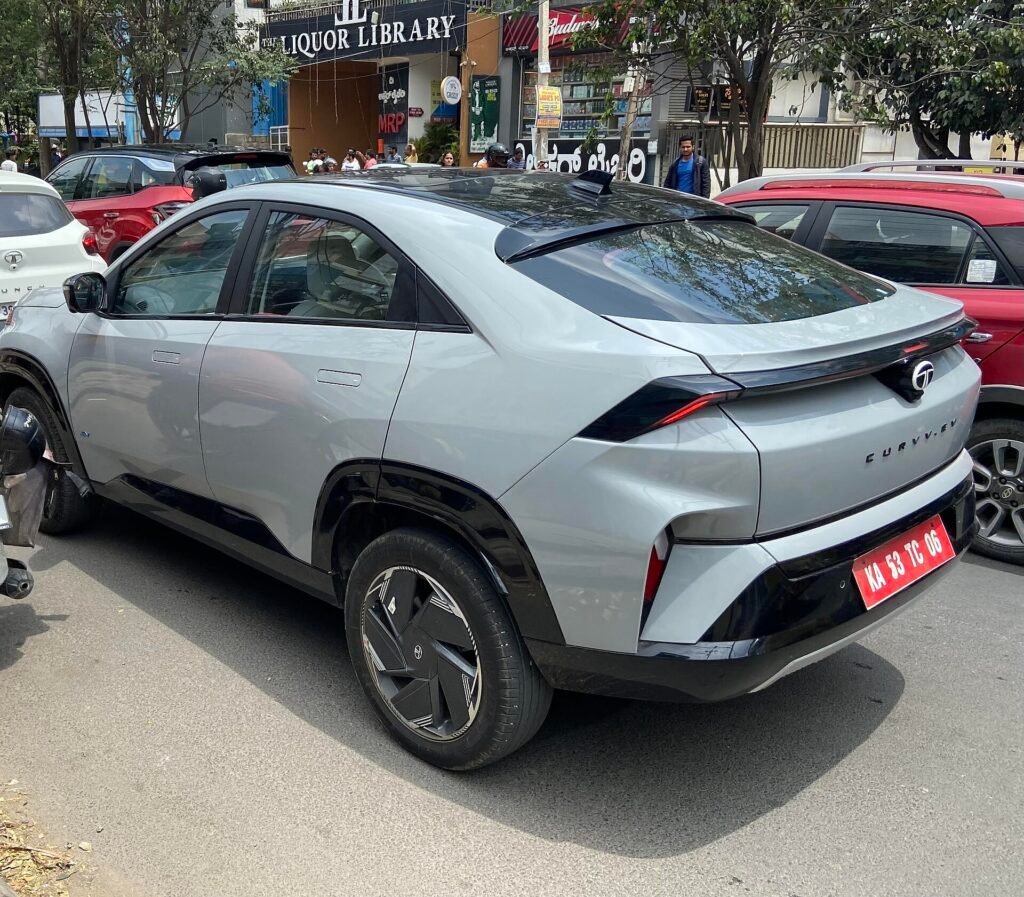
Featured image credit: Image: VideshiBhaktNRI via Wikimedia Commons (CC0). Source
Tata Motors has quietly laid out the most ambitious electric vehicle roadmap of any Indian carmaker: five new EVs by FY30, a dedicated premium sub-brand called Avinya, and a 7-seater Safari EV to plug the gap above the XEV 9S and BE 6. With Tata already commanding over 40% of India’s EV passenger vehicle market in 2026, this roadmap isn’t a bet on the future — it’s an attempt to lock in a lead before Mahindra, MG, and VinFast close the gap. By Piyush P. Yadav.
What Tata Has Announced
Tata Motors has reaffirmed that it will add five new electric vehicles to its portfolio by FY30 (the financial year ending March 2030), designed to cover “every major price point” in India’s EV market — from sub-Rs 10 lakh hatchbacks to premium SUVs priced well above Rs 25 lakh. Two pieces of this roadmap have taken clearer shape through 2026:
- Tata Safari EV — a 7-seater electric SUV built on the same platform lineage as the Sierra EV, expected to slot above the Curvv EV and give Tata a direct answer to the Mahindra XEV 9S and upcoming 7-seat rivals.
- Avinya brand — a standalone premium EV sub-brand, distinct from Tata’s mainstream passenger vehicle badge, targeted to enter the market by the end of 2026 and expected to house the flagship Avinya X in 2027.
The Sierra EV, launched earlier in 2026 at Rs 18.79 lakh, and the Punch EV, which remains India’s best-selling electric car through much of 2026, already anchor Tata’s volume base. The Safari EV and Avinya models are aimed squarely at the segments where Tata currently has the least presence: large 7-seat SUVs and premium/luxury EVs above Rs 25 lakh.
Why Tata Is Moving Now
Tata’s dominance in India’s EV car market is not guaranteed to last. Mahindra’s BE 6 and XEV 9S posted over 125% year-on-year growth in mid-2026 and have pulled the company into a clear second place. MG’s Hector Tomahawk EV and Windsor continue to add volume, and VinFast has aggressively undercut on price with plans for a sub-Rs 10 lakh VF3 micro EV and a Limo Green MPV — the first market outside Vietnam to get that model. Meanwhile BYD, despite premium positioning, has been overtaken by VinFast in monthly EV sales for the first time in 2026.
Against this backdrop, Tata’s five-EV roadmap is best read as a defensive expansion: rather than let rivals pick off underserved segments (large 7-seaters, sub-lakh hatchbacks, premium EVs) one at a time, Tata is trying to cover all of them simultaneously before competitors scale up local manufacturing. The company’s advantage today isn’t just product breadth — it’s the depth of its dealer and service network, built over more than two decades of ICE car sales, which newer EV-only entrants like VinFast and BYD simply cannot replicate in a year or two, however aggressive their pricing.
There is also a defensive logic specific to financing and resale value. Tata’s scale means its EVs carry more predictable resale values and wider used-car liquidity than niche imports, which matters increasingly as India’s EV buyers shift from early-adopter enthusiasts to mainstream, value-conscious families evaluating total cost of ownership rather than just showroom price. A five-model roadmap that spans price points also lets Tata’s dealer network upsell and cross-sell within the EV range the way it already does across its ICE lineup — a distribution advantage that is difficult for any single-segment challenger to match.
How the New Models Compare on Segment Coverage
| Segment | Current Tata Model | Gap Being Filled | Key Rival |
|---|---|---|---|
| Sub-Rs 10 lakh hatchback | Tiago EV, Punch EV | Already covered | MG Comet, VinFast VF3 (expected) |
| Compact SUV | Nexon EV | Already covered | Mahindra BE 6 |
| Mid-size SUV | Curvv EV, Sierra EV | Recently added | Mahindra XEV 9S |
| 7-seater SUV | None | Safari EV (upcoming) | Mahindra XEV 9S 6/7-seat, Kia Carens Clavis EV |
| Premium/luxury EV (>Rs 25 lakh) | None | Avinya brand (upcoming) | BYD Seal, VinFast VF9 |
Why a Separate Brand for Avinya at All?
Tata’s decision to launch Avinya as a distinct sub-brand, rather than simply adding a flagship model under the existing Tata badge, mirrors a pattern seen elsewhere in the auto industry when mass-market manufacturers try to move upmarket — Toyota’s Lexus and Hyundai’s Genesis being the clearest global parallels. The logic is that “Tata” as a brand carries strong mass-market and value associations built over decades of Indica, Nano, and budget SUV positioning, which can work against it when trying to justify a car priced above Rs 25-30 lakh to buyers who might otherwise consider a BYD Seal or a European premium EV. A standalone brand identity gives Tata room to build a separate showroom experience, pricing psychology, and marketing language without diluting or being dragged down by its value-brand equity.
The risk, of course, is execution: sub-brands frequently struggle in India specifically because buyers continue to associate them with the parent company regardless of naming, and because premium buyers are often more brand-conscious and less forgiving of any perceived compromise. Whether Avinya can genuinely command premium pricing will depend heavily on the first model’s build quality, technology, and dealership experience matching — or exceeding — what BYD and VinFast’s premium offerings currently deliver.
What This Means for Buyers
For buyers currently cross-shopping 7-seater electric SUVs, the Safari EV is worth waiting for if you’re not in a hurry — Tata’s after-sales network and charging partnerships are far more extensive than newer entrants like VinFast or BYD, which matters more for a family SUV than for a city hatchback. For buyers eyeing a premium EV, the Avinya brand’s positioning will only become clear once pricing and the first model’s specifications are confirmed; until then, the BYD Seal and Mahindra XEV 9S remain the concrete options on sale today.
It’s also worth noting that none of Tata’s five upcoming EVs have confirmed launch dates or prices yet — “by FY30” gives the company nearly four years of runway, and Indian EV launch timelines have slipped before. Buyers should treat this as a roadmap, not a launch calendar. Anyone budgeting a purchase around a specific Tata model that hasn’t launched yet should have a fallback plan among currently available EVs, rather than delaying a near-term purchase decision indefinitely on the strength of an announced-but-unconfirmed roadmap.
Existing Tata EV owners considering an upgrade should also watch for how the company handles feature and software parity across its expanding range — as the lineup grows from five models to potentially ten within a few years, keeping software update cycles and infotainment consistency across such a wide range becomes operationally harder, and any stumbles there could dent the reliability reputation Tata has built with its early Nexon EV and Punch EV buyers.
The Bigger Picture
Tata’s expansion plan lands at a moment when India’s EV passenger vehicle market itself is growing fast — over 80% year-on-year in parts of 2026 — but remains small in absolute terms compared to petrol and diesel cars. Locking in segment leadership now, while the overall pie is still expanding, is strategically more valuable than fighting for share once the market matures and margins compress. That is the calculation behind Tata’s five-model, two-brand roadmap: cover every price point before rivals do, and let scale do the rest.
Related Reading
- India Electric Car Sales August 2026: Tata Hits Record 44% Share
- Tata Sierra EV Review: Long Range, QWD AWD, But Is It Worth Rs 25.99 Lakh?
- Best 7-Seater Electric Cars in India 2026: XEV 9S vs Carens Clavis EV vs BYD eMax7
- VinFast Overtakes BYD in India: Inside the Rs 7,000 Crore Tamil Nadu Bet
Frequently Asked Questions
When will the Tata Safari EV launch in India?
Tata has not announced an official launch date for the Safari EV. Based on its position in the company’s FY30 roadmap and its platform relationship with the Sierra EV, industry watchers expect a launch sometime in 2026-27, though this is not confirmed by Tata.
What is Tata Avinya?
Avinya is Tata Motors’ upcoming premium electric vehicle sub-brand, separate from its mainstream passenger EV lineup (Tiago EV, Punch EV, Nexon EV, Curvv EV, Sierra EV). It is expected to debut by the end of 2026, with the flagship Avinya X model expected in 2027.
Is Tata still the largest EV car maker in India in 2026?
Yes. Tata Motors held over 40% share of India’s electric passenger vehicle market through much of 2026, though Mahindra has grown faster on a percentage basis and closed the gap in second place.
How many new EVs is Tata planning to launch?
Tata has said it plans to add five new electric vehicles to its portfolio by FY30 (year ending March 2030), spanning from affordable segments to the premium Avinya brand, aiming to have a model at every major price point in the Indian EV market.