

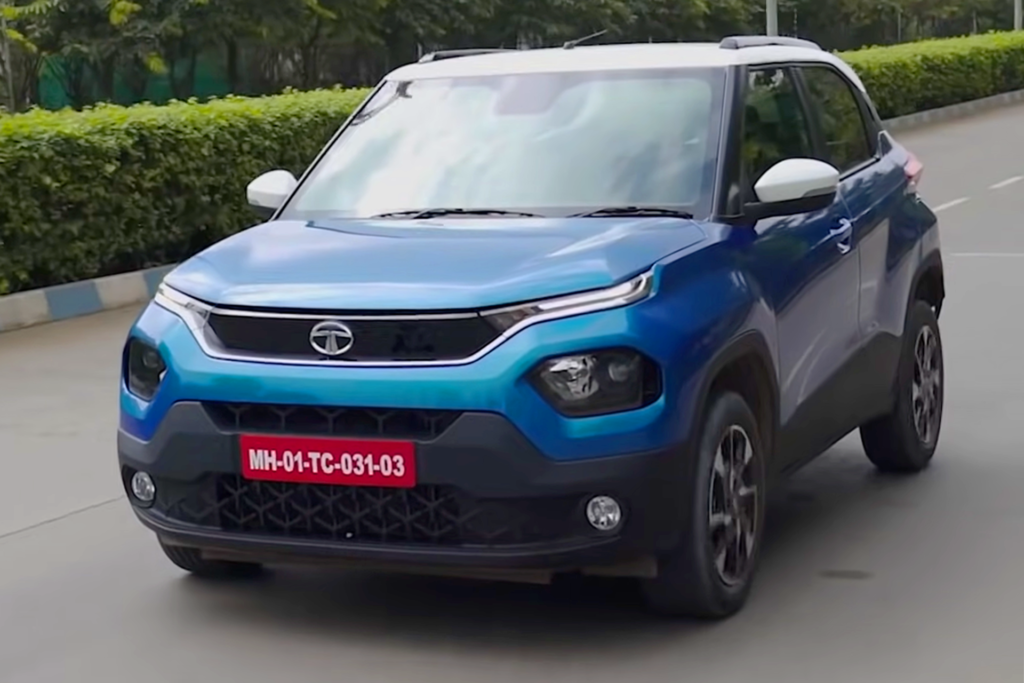
Featured image credit: Image: Athira Murali via Wikimedia Commons (CC BY 3.0). Source
By Piyush P. Yadav
Tata Motors sold 16,549 electric vehicles in August 2026, almost double the 8,540 of a year earlier, and took a record 43.74 per cent of India’s electric passenger-vehicle registrations on the Vahan database. It was the company’s strongest domestic wholesale month of the financial year across all fuels, at 65,253 units, up 59 per cent on August 2025, and the Punch posted its highest ever monthly sales. Those three facts arrived in the same week that Tata raised prices by up to Rs 25,000 across its range and eight days before Hyundai, Mahindra and MG report their own festive-season numbers. This report sets out what Tata actually sold in August, model by model and fuel by fuel, how its electric market share has moved through 2026 after slipping below 38 per cent in the spring, where the competition stands, what the commercial-vehicle side contributed, and why the recovery is happening now.
The headline numbers
| Measure | August 2026 | August 2025 | Change |
|---|---|---|---|
| Total passenger vehicles (domestic plus exports) | 67,753 | 43,315 | +56 per cent |
| Domestic passenger vehicles | 65,253 | 41,001 | +59 per cent |
| Passenger vehicle exports | 2,500 | 2,314 | +8 per cent |
| Electric vehicles (domestic plus exports) | 16,549 | 8,540 | +94 per cent |
| EV Vahan market share | 43.74 per cent | – | Record; 42.54 per cent in July, about 37.6 per cent in March-April |
| Passenger vehicle Vahan market share | 14.7 per cent | – | Second place nationally |
| Month on month, domestic | +4 per cent on July’s 62,611 | – | Eight of nine models up on July |
Electric vehicles were roughly one in four of everything Tata sold in August. The 16,549 figure is wholesale and includes exports; the Vahan retail registration count compiled by Autopunditz was 13,158 electric cars, which is the number behind the 43.8 per cent share. The gap between the two is normal in a month when dealers are stocking up ahead of the festive season and includes the Tata electric commercial vehicles that the wholesale number counts and the car registration data does not.
Model by model
Tata does not split its wholesale numbers between electric and combustion variants of the same nameplate, so the table combines both. The Rushlane compilation gives the August dispatches for each model.
| Model (all fuels) | August 2026 | August 2025 | Year on year | Month on month |
|---|---|---|---|---|
| Punch and Punch EV | 21,320 | 10,704 | +99 per cent | Flat; highest ever domestic month |
| Nexon and Nexon EV | 18,431 | 14,004 | +32 per cent | +5 per cent |
| Tiago and Tiago EV | 8,537 | 5,250 | +63 per cent | +15 per cent |
| Sierra and Sierra EV | 5,622 | Not on sale | – | -11 per cent; lowest since January deliveries began |
| Harrier and Harrier EV | 3,577 | 3,087 | +16 per cent | +8 per cent |
| Altroz | 3,047 | 3,959 | -23 per cent | +6 per cent |
| Safari | 1,953 | 1,489 | +31 per cent | +34 per cent |
| Curvv and Curvv EV | 1,904 | 1,703 | +12 per cent | +12 per cent |
| Tigor and Tigor EV | 862 | 804 | +7 per cent | +14 per cent |
| Total domestic | 65,253 | 41,001 | +59 per cent | +4 per cent |
The Punch and Nexon between them were 61 per cent of Tata’s August volume, and both nameplates carry the electric versions that Tata has said do most of its EV volume. The company confirmed that the Punch EV had its best month ever without giving a number. Two details deserve attention. The Sierra, launched in January and the year’s biggest new nameplate, fell 11 per cent to its lowest month since deliveries began, a sign that its initial order bank has been worked through and that the Sierra EV, launched at Rs 18.79 lakh, will need to carry more of the load. And the Curvv, the model with the largest festive discount in the range at up to Rs 3.35 lakh on non-X trims, grew only 12 per cent, which suggests the discount is clearing old stock rather than creating demand.
The EV market in August: Tata against everyone
| Rank | Manufacturer | Electric car registrations, August 2026 | Share | Year on year |
|---|---|---|---|---|
| 1 | Tata Motors | 13,158 | 43.8 per cent | +63 per cent |
| 2 | Mahindra | 6,464 | 21.5 per cent | +56 per cent |
| 3 | JSW MG Motor | 4,622 | 15.4 per cent | -18 per cent |
| 4 | VinFast | 2,199 | 7.3 per cent | New entrant |
| 5 | Maruti Suzuki | 1,412 | 4.7 per cent | New entrant |
| 6 | Hyundai | 803 | 2.7 per cent | +17 per cent |
| 7 | Kia | 645 | 2.1 per cent | +29 per cent |
| 8 | BYD | 543 | 1.8 per cent | -7 per cent |
| 9 | Toyota | 161 | 0.5 per cent | New entrant |
| 10 | Citroen | 44 | 0.1 per cent | +22 per cent |
| Total | 30,051 | +53 per cent |
The market grew 53 per cent year on year to 30,051 registrations and Tata grew faster than the market, at 63 per cent. Tata and Mahindra together hold 65 per cent. The two significant movements below them are MG’s decline of 18 per cent, which we examined in our report on JSW MG Motor’s August numbers and the Hector Tomahawk EV, and the arrival of VinFast at fourth place with 2,199 units, ahead of Maruti’s e Vitara, whose export-led strategy keeps most of its production out of India. The Vietnamese company’s progress from a standing start in September 2025 is the story of the second half of the table.
How Tata’s share moved through 2026
Tata’s electric share is not a straight line. It slipped to about 37.6 per cent in March and April as Mahindra’s BE 6 and XEV 9e ramped up, MG’s Windsor kept selling and Maruti’s e Vitara arrived, and there was a period in the spring when the industry consensus was that Tata’s dominance was ending. The recovery since has three drivers.
- Product. The Sierra EV in January, the updated Punch EV and the Harrier EV gave the range new metal at three price points, and the Nexon EV 45 with its longer range and lower price kept the core product competitive. The company’s plan for five new electric nameplates by FY30, the Avinya premium brand by the end of 2026 and the Safari EV, which we detailed in our report on Tata’s road to FY30, is now visibly under way.
- Bookings. Business Standard reported at the end of August that Tata’s EV bookings had tripled over six months, which is the pipeline behind the August wholesale number and the reason dealers were stocking ahead of the festive season.
- Mix. Electric vehicles were 17.4 per cent of Tata’s registrations in January to August 2026 against 12.9 per cent a year earlier. Tata is gaining passenger-vehicle share overall, to 14.7 per cent, and its electric business is growing faster than the rest of it.
Against that, the September price increase of up to Rs 25,000, which we covered in our report on the Tata and Hyundai price hikes, lands on top of this momentum, and Tata has been clear that it is passing on only part of its cost increase. The festive discounts still running on the Curvv EV and Harrier EV, tracked in our September 2026 EV discount round-up, are worth far more than the increase on those models.
The commercial vehicle side
Tata’s commercial vehicle business had an equally strong month and its electric component, though small, is the other half of the company’s EV story.
| Commercial vehicle segment | August 2026 | Year on year |
|---|---|---|
| Total commercial vehicles | 44,411 | +49 per cent |
| Domestic commercial vehicles | 36,619 | +33 per cent |
| Heavy commercial trucks | 10,612 | +42 per cent |
| Intermediate, light and medium trucks | 6,859 | +20 per cent |
| Passenger carriers (buses) | 4,701 | +31 per cent |
| Small commercial vehicles and pickups | 14,447 | +34 per cent |
| International commercial vehicles | 7,792 | +227 per cent |
Within those totals, Tata was the largest maker of electric goods carriers in August with 37 per cent of the 3,773 registered, on the strength of the Ace EV, and it is delivering against the 3,400-plus electric commercial vehicle orders it announced in June. The commercial and passenger EV businesses share the Sanand battery plant that the group’s Agratas unit is building, which is the piece of the strategy intended to bring cell costs down from 2027.
What to watch in September and October
- Whether 43.74 per cent holds. Mahindra’s XEV 9S and BE 6 Sporteq are both new and ramping, MG’s Hector Tomahawk EV is in deliveries, and Hyundai has an entry electric SUV due this year. A Tata share in the low 40s through the festive quarter would be a strong result; a return toward 37 per cent would suggest the spring slippage was the trend and August the exception.
- Sierra and Sierra EV. The nameplate’s 11 per cent decline needs to reverse, and the split between the electric and petrol versions, which Tata does not publish, will decide whether the Sierra EV is a volume car or a halo.
- The Avinya launch. Tata has said the premium brand arrives by the end of 2026. Its first product, its price and its positioning against Mahindra’s Rs 25 lakh-plus electric SUVs will define the top of Tata’s range for the rest of the decade.
- Price versus discount. The Rs 25,000 increase and the Rs 2 to 3 lakh discounts cannot both persist. Which one Tata withdraws first in October will show how confident it is in the order book.
Sources & Further Reading
- Autocar Professional: Tata Motors passenger vehicle sales rise 56 per cent year on year in August 2026
- Rushlane: Tata car sales August 2026 cross 65k, 16.5k EVs, CV sales up 49 per cent
- Rushlane: Tata car sales breakup August 2026, Punch, Nexon, Tiago, Sierra, Harrier
- Autopunditz: Electric car registrations jump 53 per cent in August 2026, Tata leads with 43.8 per cent share
- Business Standard: Tata Motors gains PV market share as non-EV sales rise, EVs rebound
FAQ
How many electric vehicles did Tata Motors sell in August 2026?
Tata reported 16,549 electric vehicles in August 2026 including exports, up 94 per cent from 8,540 a year earlier. Vahan registration data shows 13,158 Tata electric cars registered in the month, 43.8 per cent of the Indian electric car market.
What is Tata’s EV market share in India?
A record 43.74 per cent of electric passenger vehicle registrations in August 2026, up from 42.54 per cent in July and about 37.6 per cent in March and April. Tata and Mahindra together hold about 65 per cent of the market.
Which Tata models sold the most in August 2026?
The Punch, with 21,320 units across petrol, CNG and electric, its highest ever month, followed by the Nexon at 18,431 and the Tiago at 8,537. The Punch and Nexon together were 61 per cent of Tata’s domestic volume.
Why did Tata’s electric sales recover in 2026?
New products including the Sierra EV, Harrier EV and updated Punch EV, a tripling of EV bookings over six months according to Business Standard, and a rising electric share of Tata’s own registrations, which reached 17.4 per cent in January to August 2026 against 12.9 per cent a year earlier.