

Featured image credit: Image: Avante2025 via Wikimedia Commons (CC BY 4.0). Source
By Piyush P. Yadav
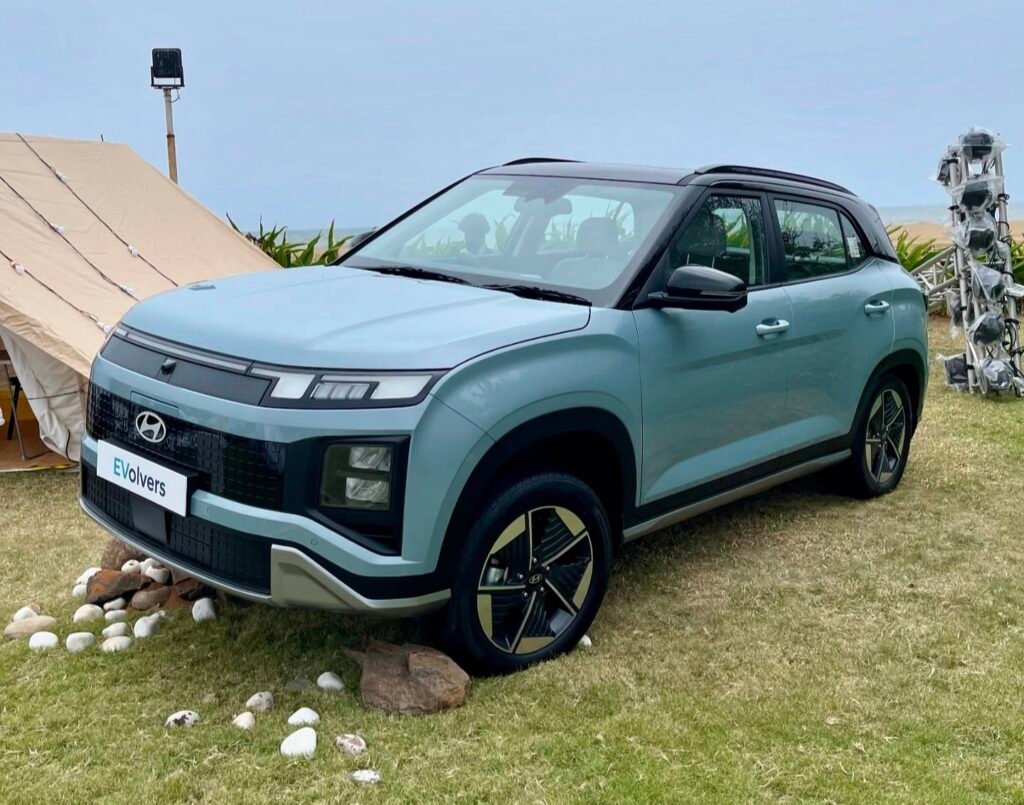
Hyundai Motor India has spent most of the electric era as a cautious follower. It sold the Kona Electric in tiny numbers from 2019, imported the Ioniq 5 as a halo car from 2023, and only entered the volume market with the Creta Electric in January 2025. That posture changed on 26 August 2026, when Hyundai Motor Group’s global CEO Day investor presentation laid out the most aggressive India plan in the company’s three decades in the country: 26 product launches and refreshes by 2030, six of them battery-electric, a locally developed entry electric SUV arriving in the fourth quarter of this year, Rs 45,000 crore of investment through FY2030, 3.2 lakh units of new capacity, and a target for electrified vehicles to make up half of Indian sales by the end of the decade. This article sets out what Hyundai announced, where its electric line-up stands today, and how the plan compares with what Tata, Mahindra and Kia have already committed to.
What Hyundai announced
| Commitment | Detail |
|---|---|
| Product launches by 2030 | 26 launches and refreshes (20 combustion or hybrid, 6 battery-electric) |
| First new EV | Locally developed A-segment electric SUV, Q4 2026, with Level 2 ADAS, positioned below the Creta Electric |
| Hybrids | Eight hybrid models planned as part of the electrified mix |
| Electrified share of India sales by 2030 | 50 per cent (versus an estimated 30 per cent for the market) |
| Investment FY2026 to FY2030 | Rs 45,000 crore (after Rs 40,000 crore plus over the previous 30 years) |
| New manufacturing capacity | 3.2 lakh units, taking total India capacity to about 11 lakh units a year |
| Plants | Chennai (existing) plus Talegaon, Maharashtra (former GM plant, acquired 2023) |
| Localisation | 90 per cent local content by 2030, from 1,400 plus suppliers and 900 plus engineers |
| Exports | About 30 per cent of India output by 2030, to the Middle East, Africa, Asia and South America |
| Global context | India’s 26 launches sit within a 100-plus global programme: 58 in North America, 49 in Korea, 41 in Europe, 22 in China |
The single most consequential line is the 50 per cent electrified target. “Electrified” in Hyundai’s usage includes hybrids, so the six EVs will carry only part of that load. But the market comparison Hyundai itself drew, 50 per cent against a 30 per cent industry estimate, is a statement that it intends to be ahead of the curve rather than behind it, which is a reversal of the past seven years.
Where Hyundai’s electric line-up stands today
| Model | Ex-showroom price (Sep 2026) | Battery and range | Positioning |
|---|---|---|---|
| Hyundai Creta Electric | Rs 18.03 lakh to Rs 24.70 lakh (BaaS from Rs 10.99 lakh plus Rs 3.90 per km) | 42 kWh, 390 km ARAI; 51.4 kWh, 473 km ARAI | Mid-size SUV; 60 per cent buyback for 3 years or 45,000 km added August 2026 |
| Hyundai Ioniq 5 (facelift) | Rs 55.71 lakh | 84 kWh, 690 km ARAI | Premium import; single variant; facelift launched April 2026 |
| Entry electric SUV (unnamed) | Expected Rs 11 lakh to Rs 13 lakh | Not disclosed | Q4 2026; locally developed; below Creta Electric |
Two models in market, one on the way. That is a thin line-up against Tata’s seven electric cars and Mahindra’s three Born Electric SUVs plus the Treo. Hyundai’s response is the entry SUV, which, if it lands near Rs 12 lakh, would compete with the Tata Punch EV, Kia Syros EV and the top of the Nexon EV range, the segment we mapped in our guide to the best electric cars under Rs 15 lakh. The Creta Electric, meanwhile, has struggled for volume against the Tata Curvv EV and Mahindra BE 6 despite Hyundai’s dealer network, which is why the company added the buyback programme and the Battery-as-a-Service option this year.
How the plan compares with rivals
| Manufacturer | EV commitment | Investment | Local cell or battery plan |
|---|---|---|---|
| Hyundai Motor India | 6 EVs among 26 launches by 2030; 50% electrified sales | Rs 45,000 crore (FY26 to FY30) | Localised battery packs with Exide Energy for Creta Electric; no cell plant announced |
| Tata Motors (TPEM) | Avinya premium brand, Safari EV, Sierra EV, Harrier EV; targeting 30% EV share of Tata sales by FY30 | Not disclosed separately | Agratas 20 GWh cell plant, Sanand, supply from 2027 |
| Mahindra | BE 6, XEV 9e, XEV 9S in market; further INGLO models to 2030 | Rs 27,000 crore EV programme (announced 2024) | BYD Blade LFP cells imported; pack assembly in India |
| Kia India | 8 electrified models by 2030; Syros EV, Carens Clavis EV in market | 2 lakh-unit Anantapur expansion | Shares Hyundai group battery sourcing |
| Maruti Suzuki | e Vitara in market; further BEVs to 2030 | Part of Rs 35,000 crore Gujarat expansion | Toshiba-Denso-Suzuki cell JV in Gujarat (TDSG), lithium-ion for hybrids |
Read against Tata’s plan, which we analysed in our report on Tata Motors’ road to FY30 and the Avinya premium brand, Hyundai’s is bigger in rupee terms but later in timing. Tata already has a domestic cell plant under construction and seven EVs on sale; Hyundai has neither a cell plan nor a model below Rs 18 lakh until December. Against Mahindra, whose full electric portfolio we mapped in our Mahindra electric vehicle deep dive, Hyundai’s advantage is a far larger combustion and hybrid base from which to fund the transition. And against sister brand Kia, whose eight-model electrified plan and Anantapur expansion we covered last week, the group as a whole is now committed to 14 electrified launches in India by 2030.
The Talegaon factor
The 3.2 lakh units of new capacity is the largest regional expansion in Hyundai’s global plan after North America’s 5 lakh. Most of it will come from the Talegaon plant near Pune, which Hyundai bought from General Motors in 2023 and has been retooling since. Talegaon gives Hyundai a second production base in western India, closer to the ports that serve the Middle East and Africa, which is where the 30 per cent export target will be delivered. It also gives the company room to build the entry EV at volume without displacing Creta and Venue production in Chennai.
The 90 per cent localisation target is the other half of the cost story. Hyundai’s Indian content is already high for combustion models, but electric drivetrains, battery packs and power electronics are largely imported. Reaching 90 per cent on EVs will require local sourcing of motors, inverters and cells, and the September 2026 traction motor localisation rules that now apply to electric buses and trucks are a preview of what is likely to reach passenger cars under future PM E-DRIVE phases.
What the entry EV needs to do
The Q4 2026 SUV is the product that will decide whether the 2030 plan is credible. It arrives into a segment where Tata’s Punch EV starts at Rs 8.16 lakh and Kia’s Syros EV at Rs 13.50 lakh, and where the Nexon EV has just taken a price increase. Hyundai has confirmed Level 2 ADAS and its next-generation infotainment, which suggests a positioning above the Punch EV rather than against it. If it lands at Rs 11 lakh to Rs 13 lakh with a 35 to 45 kWh battery, it would be the first Hyundai EV with a genuine claim on volume. Buyers considering it should note that Hyundai’s eight-year, 1,60,000 km battery warranty is shorter than the lifetime cover Tata and Mahindra offer to first owners, a difference we set out in our comparison of EV battery warranties across Indian brands.
Assessment
Hyundai’s plan is late, large and hedged. Late, because six EVs by 2030 is what Tata already has on sale in 2026. Large, because Rs 45,000 crore over four years exceeds any rival’s disclosed EV-era investment. Hedged, because eight hybrids sit alongside six EVs, which reflects a company that believes India’s transition will run through hybrids for longer than the pure-EV makers expect. Whether that hedge is wisdom or caution will depend on how quickly the charging network, battery costs and state tax regimes evolve between now and 2030. What is no longer in doubt is that Hyundai intends to compete for the electric market rather than watch it.
Sources & Further Reading
- ANI: Hyundai plans 26 new models in India by 2030, targets bigger role for country in global operations
- AutoPunditz: Hyundai plans 26 India launches by 2030, new electric SUV, hybrids and bigger SUV push
- Autocar Professional: Weekly news wrap, Hyundai maps 26-model India push
- Autocar India: Hyundai introduces assured buyback programme for the Creta Electric
Frequently asked questions
How many electric cars will Hyundai launch in India by 2030?
Six battery-electric vehicles, as part of 26 total launches and refreshes announced on 26 August 2026. Eight hybrids are also planned. Hyundai targets 50 per cent electrified sales in India by 2030.
When is Hyundai’s new entry-level electric SUV launching?
In the fourth quarter of 2026. It is a locally developed A-segment SUV positioned below the Creta Electric, with Level 2 ADAS. Pricing has not been announced; industry estimates put it at Rs 11 lakh to Rs 13 lakh.
How much is Hyundai investing in India?
Rs 45,000 crore between FY2026 and FY2030, covering manufacturing, electrification and new products. This follows more than Rs 40,000 crore invested over the previous 30 years.
Which electric cars does Hyundai sell in India today?
The Creta Electric (Rs 18.03 lakh to Rs 24.70 lakh, or from Rs 10.99 lakh under Battery-as-a-Service) and the Ioniq 5 facelift (Rs 55.71 lakh).